 United Kingdom Edinburgh International Festival 2025 – [2]: Queen’s Hall. (SRT)

6.8.2025 – Mark Simpson (clarinet), Richard Uttley (piano).
Sir James Macmillan – After The Tryst
Mark-Anthony Turnage – Cradle Song
Jay Capperauld – So My Tears Flow
Mark Simpson – Echoes and Embers; Lov(escape)
Zoë Martlew – Pyrrhos
Gavin Higgins – Three Broken Love Songs
Brahms – Clarinet Sonatas Nos. 1 & 2
7.8.2025 – Hugh Cutting (countertenor), George Ireland (piano).
Songs, arias and piano music by Monteverdi, Handel, Schubert, Wolf, Hahn, Howells, Betty Roe, George Benjamin and others.
Mark Simpson is far better known in Scotland as a composer than as a performer, so it was exciting to see a programme in the Edinburgh International Festival that featured his talents in both fields, with a programme of music that set the Brahms clarinet sonatas alongside more contemporary music, most of which had been composed by, through or for him.
He is a compelling and serious performer who knows the clarinet inside out and is also admirably committed to expanding its repertoire. His own Lov(escape), a white-knuckle whirl of energy, was written to perform in the BBC Young Musician of the Year competition, which he won in 2006, and he contrasted that with Echoes and Embers, where pianissimo playing sometimes made it impossible to distinguish the textures of the clarinet from that of the piano, and whose arch-like structure moved from that to a frenetic central section before receding again.
One of the (doubtless unintended) consequences of a programme like this was that the spotlight was unavoidably on Simpson throughout so that, aside from in the Brahms, the good work of pianist Richard Uttley was often sidelined. That was particularly so in the opening sequence of music by MacMillan, Turnage and Capperauld, where the piano’s gently circling lines of chords were left in the shadow of showy clarinet lines that could sing, swoop, slur or shriek. Both found more parity in Gavin Higgins’s Three Broken Love Songs, which began with Rhapsody-in-Blue-style glissandos for the clarinet. However, these were slurs of drunken regret after the collapse of a relationship, lines of music that flickered and crackled before the poignant longing of the final section.
Including both the Brahms Sonatas in this company led to a programme that was too packed, and there were signs that even Simpson was beginning to tire after two hours, with some of the top notes in the F minor Sonata developing a hint of a skirl. However, he had a touchingly lyrical way with Brahms’s long-breathed melodies, lingering lovingly over several phrases as though reluctant to let them go, with gorgeous soft playing in the composer’s slow movements.
One thing of which there has been a lot more since Nicola Benedetti took over the festival’s directorship – and which is surely to be encouraged – is artists speaking from the stage about their programme. Simpson did it very engagingly, and I could have done with more of that from Hugh Cutting in his Thursday morning recital, which was clearly conceived as all-of-a-piece. It was inspired, said the programme note, by a book by Michael A Singer, and I would like to have heard more about exactly how each piece fitted into the theme of peace and liberation, not least because some of the inclusions seemed a little random. Mussorgsky sitting alongside Handel and Vaughan Williams?
Still, you have to applaud artists who think deeply and conceptually about their programme, which Cutting and pianist George Ireland had clearly done, even if some numbers suited them more than others. Cutting’s countertenor voice is clear and ringing throughout. There is occasionally a touch of a quiver to the middle of the register, but the top is clean and exciting, and he understands his repertoire very well. The opera numbers worked best, be it Ottone’s return to Rome in Monteverdi’s Poppea or Alexander’s address to his troops in Handel’s Alessandro. Most gripping of all was a scene from George Benjamin’s Written on Skin, an opera Cutting has performed on the stage, where his voice gave urgency to the storytelling while Ireland’s piano pounded violently to represent the trauma of the scene.
The songs were a more mixed bag Schubert and Wolf suited the voice a bit less, though his final three songs from Piers Connor Kennedy’s Rough Rhymes was enormously engaging, and the haunted melismas of the French numbers from Fauré and Hahn fitted both performers beautifully. Twice, however, Ireland stole the limelight in an uncomplicated lovely pair of pieces by Vaughan Williams, and then in Percy Grainger’s rolling, heartfelt arrangement of the Londonderry Air which, I confess, brought a tear to my eye.
Simon Thompson
The Edinburgh International Festival runs at venues across the city until Sunday 24th August. Click here for further details.
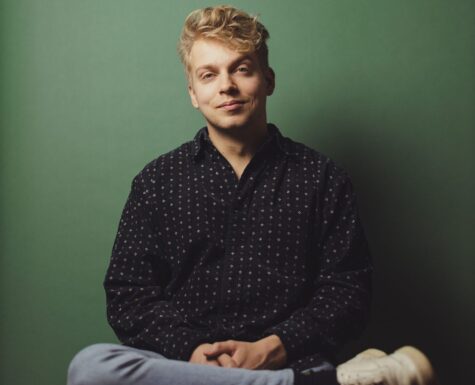
Featured Image: Hugh Cutting © Olivia da Costa