
 United States Various: Vikingur Ólafsson (piano), Philharmonia Orchestra / Santtu-Matias Rouvali (conductor). Cal Performances, Zellerbach Hall, University of California Berkeley, 18-19.10.2025. (HS)
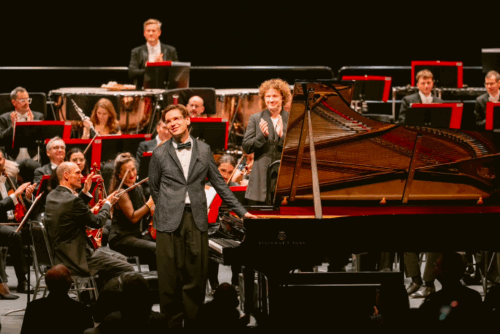
18 October:
Beethoven – Piano Concerto No.5 in E-flat major, ‘Emperor’
Gabriela Ortiz – Si el oxígeno fuera verde (‘If Oxygen Were Green’)
Sibelius – Symphony No.5 in E-flat major
19 October:
Sibelius – ‘Finlandia’
Ravel – Piano Concerto in G major
Shostakovich – Symphony No.5 in D minor
Vikingur Ólafsson clearly likes to re-think how music should be played. The pianist won a Grammy award last year for his take on Bach’s Goldberg Variations, which he toured for almost a year. It was elegant and made judicious use of his technical mastery and intellectual curiosity. It also questioned many of the traditions attached to this mainstay of Baroque keyboard music.
Those traits were on display in back-to-back concerts with the London-based Philharmonia orchestra and its principal conductor, Santtu-Matias Rouvali, over the weekend in Berkeley. Rouvali’s approach mirrored Ólafsson’s restless approach, steering a less majestic, more intricate path through Beethoven’s ‘Emperor’ Concerto and a rhythm-forward, less-subtle-than-usual approach to Ravel’s Concerto in G major.
Rouvali sought his own way with big, oh-so-familiar pieces by Sibelius and Shostakovich. He reveled in the sonic inventions of composer Gabriela Ortiz’s eco-tone poem Si el oxígeno fuera verde, a recent Philharmonia commission. If the results were mixed, there were also many moments of true beauty and grandeur.
Ólafsson, who is designated as Cal Performances’s artist-in-residence for this season (and will be back in April 2026 for a program centered on Beethoven’s Piano Sonata No.30), was billed as the top attraction in both concerts. The Beethoven concerto unfolded with crispness and a well-intentioned, quick pulse. Speed was not a big challenge for this pianist, whose technical abilities can match anyone’s, but I could not help wondering why it wasn’t as exciting as hoped. The pianist and orchestra both shaded the music with attention to dynamics and points of emphasis, but somehow the general arc felt routine.
The piano flourishes, large and small, were executed cleanly, but they lacked the sweep that a great performance can summon. The trills that decorate the entire concerto were crisply played, even when subtler distinctions of style could have been made. He executed the dramatic high-speed, double-octave runs with enviable precision, and the cadenza was a delight that did not last long enough. Best was the slow movement, which floated languidly and melded members of the orchestra seamlessly with the piano. The transition to the finale took its time, holding us in suspense before the boisterous rhythms burst forth. Throughout, the pianist seemed more interested in phrasing the fast-moving parts with intricacy than in whipping up the excitement: a thinker’s concerto.
The Ravel Piano Concerto, with all its jazz references, got off to a surprisingly benign start. The snap of the whip from the percussion was more subdued than I have ever heard it. But once the rhythm settled in, the piano danced with rhythmic emphasis. The phrasing of the jazz-inflected melodic line may have come off as ‘square’ in the first movement, but the deliciously languid second movement created the perfect relaxed mood, and the interplay between the English horn and piano was magical. The finale ripped along at a quick rate, and if the orchestra wasn’t quite in exact step, the overall energy was welcome.
The encores for the concertos were especially thoughtful, even poignant, choosing Baroque-era tenderness to contrast with the concertos’ breathless finales. Following the Beethoven, Alexander Siloti’s arrangement of Bach’s Prelude in B minor gave the pianist a chance to apply his delicate touch to this moment of repose. The arrangement expands upon Bach’s original, adding fuller chords and such, but time seemed suspended. Even better was the encore after the Ravel – Ólafsson’s own arrangement of ‘The Arts and the Hours’ from Rameau’s last opera, Les Boréades. The restful pace framed the gently falling scales and unexpected chord changes into a superb, almost reverential moment. It was exquisite.
In the hands of an accomplished Finnish conductor, the Sibelius Symphony No.5 brought the first concert to a well-earned high point. Rouvali milked the climaxes for greatest effect, whether setting unexpectedly drawn-out tempos or emphasizing key phases. Bringing out the contrasting sonorities of the orchestrations suggested vast Nordic landscapes, especially in the majestic finale. The silence between the famous sharply struck chords at the very end seemed extra-long too, for extra drama.
Extremes in tempo gave ‘Finlandia’, which opened the subsequent concert, an ultra-dramatic feel. The opening started more slowly than what we usually hear, gained momentum and raced through the statement of the first big theme. At the end, the sonorous hymn rang out at a super-serious pace.
In Shostakovich’s Symphony No.5, which famously won the composer Stalin’s approval even though he may have meant the ‘triumphant’ ending satirically, Rouvali got the ponderous feel and everything finished impressively. Along the way, the middle movements fared best. The sardonic second movement, with its snarkiness, danced almost weightlessly. The Largo, with its ever-shifting denseness and often-stalling slow motion, transmitted a clear message that things were not going well for the composer. The first and last movements created a dizzying sense of changing direction that did not always make sense, but things managed to come together for the big finish.
The Ortiz tone poem, which got its world premiere in September by this orchestra at the Concertgebouw in Amsterdam, fit between ‘Finlandia’ and the Shostakovich symphony. Over its 12 minutes, it uses orchestral means to evoke nature. The first three of the four parts, played without pause, experiment with instruments at their extremes, although the music never crosses into harshness. At the beginning, super-high, wavering pedal tones in the violins frame overlapping bird calls from the woodwinds. Textures and curlicues of sound don’t get around to any sort of rhythm until a final, almost ebullient Latin dance for the full orchestra brings things to an exuberant close.
The orchestra’s encores at both concerts turned to Shostakovich – excerpts from the composer’s offbeat, pop-influenced operetta, Cheryomoushki, arranged by Julian Milone, a composer who also plays second violin in the Philharmonia. The expansive ‘Waltz’ provided an appropriate contrast to the Sibelius and the hellbent tempo of the ‘Galop’, ‘A Spin Through Moscow’, brightened the mood after the Shostakovich.
The Philharmonia’s tour of the United States takes it to Carnegie Hall on 28-29 October, with Marin Alsop conducting a different program on 28 October and Rouvali conducting the program with the Beethoven concerto and Ólafsson the next night.
Harvey Steiman
A footnote: In Ólafsson’s account of Bach’s Prelude in B minor, I kept hearing the eight notes of the 16th-note phrases in a rhythm of 3+2+3 instead of 4+4. It was intoxicating, like an optical illusion sketch that could be a vase or two faces. Curious, I found a video of Emile Gilels, and he did the same, although Ólafsson’s recording of the original Bach played it straight (4+4). I asked a pianist friend with an established solo career if that was a traditional way to play it. Perhaps in the Siloti arrangement, he underplayed the 5th note (first of the second four), which then emphasized the highest notes in each phrase (the fourth and sixth in the eight-note sequence)?
‘This is one of those pieces that can go any number of directions’, the pianist replied. ‘It had such humble beginnings in The Well-Tempered Clavier, but Siloti made this extravagant arrangement of it. His playing, too, was so free that it sounded like he was composing music as he was going along. That was a fascinating golden era of pianists. Today everyone is much more attuned to what the score/composer might mean. Then, they broke an awful lot of rules but the freshness and spontaneity in the playing of those days – wow! I am glad we have a good bit of recorded evidence’.
Featured Image: Santtu-Matias Rouvali conducts pianist Vikingur Ólafsson and the Philharmonia in Berkeley © Kristen Loken