Two Young Artists from the 2025 Verão Clássico TalentFest
The stage is gone now. The lights have been struck, the posters taken down, the Sala Luís de Freitas Branco at the Centro Cultural de Belém swept of rosin dust and stage fright. The festival ended three weeks ago, but certain performances – and the shadows they cast – linger.
At Filipe Pinto-Ribeiro’s annual Verão Clássico TalentFest, the names of the faculty are printed in gold on the covers of the program books. The students arrive with marked-up scores and private ambitions – if not to conquer the stage, then to meet it honestly. Sometimes they succeed, and sometimes they astonish.
This year, I spoke to a cellist whose Kodály ignited like a match, and a soprano whose Bernstein glittered with theatrical flair.
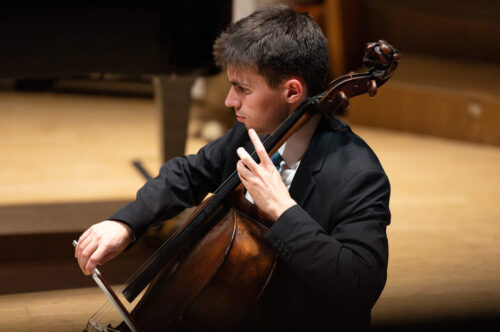
Matteo Fabi: A cellist ascends
When twenty-year-old Italian cellist Matteo Fabi played the last movement of Kodály’s Solo Sonata on the second night of TalentFest, it was less a performance than a reckoning. Pizzicatos flared. Bow strokes scorched. Lines opened out with the sweep of true conviction before he finished off the finale fireworks with a swashbuckler’s grin.
Fabi grew up in a musical household – his father a cellist, his aunt a pianist. He began with piano, then cello, ‘like a game’, he said. But after school ended, he began to take the cello ‘seriously’. He studied at the Cremona Academy with Antonio Meneses and Giovanni Sollima, and he belongs to that new generation of cellists for whom thumb position begins at the top of the fingerboard, whether it is in Bach, Haydn or Kodály.
At Verão Clássico, he worked with Gary Hoffman who challenged him physically. ‘Awareness and control of every part of the body’, Fabi recalled. ‘Not for effect, but to make the cello sing. I haven’t found a position I’m truly happy with, so I asked him to push me’.
Where many students nod and default, Fabi absorbed every idea – agreed or disagreed – and reshaped it into his own system. ‘I try things in performance. I play a piece four or five times, always differently. Then I step back’, he said, clear-eyed, ‘and see what stays’. That thinking – inquisitive, instinctive, undogmatic – marked everything he played. His Kodály was not neat, it played havoc with bar lines and every note was lived to the fullest extremes of what can have been in the composer’s original flash of inspiration.
‘I want to make music at the highest level I can’, Fabi told me. ‘Solo, chamber, teaching, even conducting someday. I’d like to do a bit of them all’.
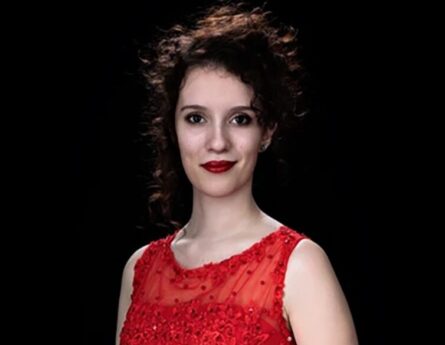
Héloïse Garlopeau: ‘Cunégonde’ as chanson
Héloïse Garlopeau sang ‘Glitter and Be Gay’ from Bernstein’s Candide with the intensity of a Piaf – part confession, part dare, while flirting outrageously with the pianist. Her voice sparkled in the aria’s high-cut coloratura.
She is a young coloratura from Burgundy with a background in piano – long hours at the keyboard that eventually gave way to voice. ‘When I sing’, she told me, ‘I’m no longer only Héloïse. I put emotions I don’t know what to do with into my voice’.
Garlopeau studies now in Switzerland and credits her master classes at Verão Clássico with Anna Samuil, both this year and last, for her artistic outlook. ‘We don’t talk about technique’, she said. ‘We talk about rhythm, line, how to live on stage. And about expression’.
She also slipped into the string master classes, watched rehearsals, absorbed the gestures of other musicians. ‘I like understanding things physically’, she said. Asked what moved her most, she answered: ‘When someone says they cried when I sang. That means it wasn’t just sound – it was emotion’.
Her next steps are recitals, auditions and competitions. But she already carries herself like someone who knows the difference between technique and presence – and is learning how to make both her own.
What the audience doesn’t see
The stage at Verão Clássico shows only the music, the close-up vulnerability and the applause. What the audience doesn’t see are the rehearsals that fall apart, the second guesses, the phrases rebuilt from scratch – and those sudden, private jolts when a player realizes who they are or who they might become.
Fabi, Garlopeau and their fellow performers left everything they had on the TalentFest stage. Where their paths will lead is uncertain – but none walked away unchanged.
Laurence Vittes
Featured Image: Soprano Héloïse Garlopeau