
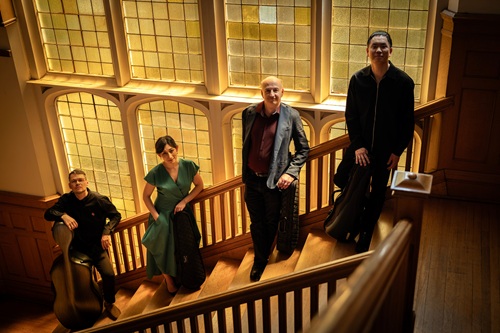
 United States Various: Takács Quartet (Edward Dusinberre, Harumi Rhodes [violins], Richard O’Neill [viola], Mihai Marica [cello]. Carnegie Music Hall of Oakland, Pittsburgh, 28.9.2026. (SJ)
Beethoven – String Quartet No.6 in B-flat major, Op.18
Carlos Simon – Warmth from Other Suns
Brahms – String Quartet No.1 in C minor, Op.51
Encore – Haydn – Fuga a quattro soggetti from String Quartet in C major, Op.20 No.2
Chamber Music Pittsburgh opened its 66th season with faces new and old. The Takács Quartet is a familiar presence, making their eighth appearance in the series. But this marked their first local performance without a founding member, following the retirement of cellist András Fejér earlier this year. Mihai Marica has taken his place, opening a new chapter in the storied quartet’s history that spans over half a century.
The program opened with Beethoven’s String Quartet No.6 in B-flat major, the last of the composer’s Op.18 quartets, collectively a remarkably expansive first foray into the genre he would redefine. The Takács cultivated a refined and polished tone, benefitting from a certain lightness of touch. There was a charming call and response figure between the two violins and a wit and humor that recalled Haydn, the primary model for these early quartets. The closing La Malinconia, however, proved strikingly original and forward-thinking. Music of solemnity and stasis was buttressed by the richness of the cello though the sunny and vivacious material was given the final word.
Situated between Beethoven and the Brahms that closed was a recent (2020) quartet by Carlos Simon. Warmth from Other Suns alludes to the book of the same title by Isabel Wilkerson (which comes from a line of poetry by Richard Wright), a harrowing account of the Great Migration. Simon conceived his musical response in three brief movements, each offering a distinct glimpse of the experience.
‘Rays of Light’ opened in thin wisps in the strings’ highest register before themes took shape, longing and unsettled. The rapid repetitions of ‘Flight’ gave it real urgency, a frenetic soundscape tinged with gritty dissonances. With its grounded, earthy harmonies, ‘Settle’ marked arrival at a new home. Though in no way celebratory, it concluded in quiet resolution.
Like his first symphony, Brahms’s First String Quartet had a long gestation period, ever in the imposing shadow of Beethoven. The String Quartet No.1 in C minor opened in a surge of nervous energy. The Takács gave the work ample space, allowing room for its heft and weight to come through, punctuated by the sweeping melodic lines of first violinist Edward Dusinberre. It was a surprisingly warm and lyrical reading for a piece in C minor; a key often correlated with the most tragic works in the repertoire. The opening movement’s coda approached tragedy, only to land on a plaintive close.
The Romanze which followed was poignant in its outward simplicity and directness, and the quartet’s tone was colored by a stylistically appropriate use of vibrato. There was intricate attention to detail in the memorable third movement, highlighted by a gently descending gesture and trio section that radiated the charm of Schubert. In the work’s finale, we were firmly back in the minor for an impassioned close on a symphonic scale.
As an encore, the quartet selected the wryly humorous closing fugue of Haydn’s Op.20 No.2 Quartet. Its quiet beginnings were all but left behind in a sudden burst of vigor, bringing the program full circle to Haydn who had inspired Beethoven.
Sam Jacobson