
 United Kingdom Edinburgh International Festival 2026 [8]: (SRT)
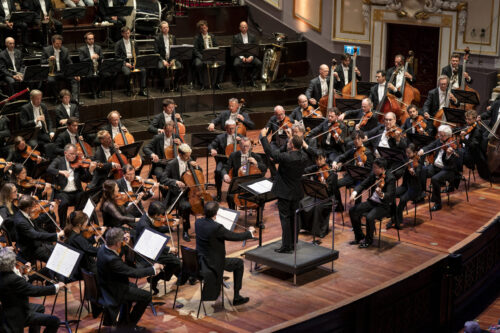
29.8.2026 – Members of the Berliner Philharmoniker. Queen’s Hall
Daishin Kashimoto (violin), Diyang Mei (viola), Bruno Delepelaire (cello), Wenzel Fuchs (clarinet), Stefan Dohr (horn), Alessio Bax (piano)
Zdeněk Fibich – Quintet in D, Op.42
Brahms – Clarinet Trio in A minor, Op.114
Ernst von Dohnányi – Sextet in C, Op.37
29.8 – Berliner Philhamoniker / Kirill Petrenko (conductor). Usher Hall
Elgar – Enigma Variations
Tchaikovsky – Symphony No.4
Last year’s Edinburgh International Festival was in notably straitened financial circumstances, and people like me complained volubly about an international festival where the landmark classical music events all came from elsewhere in the UK. This year, however, the funding model has improved dramatically, and they have put it to good use by bringing to Edinburgh, for the first time in two decades, the mighty Berlin Philharmonic, who close this year’s festival in style with a weekend of concerts under their chief, Kirill Petrenko.
No orchestra comes with a reputation quite like theirs, and whether or not you buy the ‘best orchestra in the world’ label, you can’t argue with the fact that they are a class act, and that it is quite a coup for Nicola Benedetti’s EIF to have snagged them for the festival’s final weekend.
And they hype is worthwhile. Repeatedly, as I listened to their concert of Elgar and Tchaikovsky, I kept finding myself pulled up short by a detail, a fresh take, a blast of the unexpected. The key thing is that nothing, absolutely nothing, is taken for granted, and that’s as much down to conductor Kirill Petrenko as it is to the players. Petrenko cuts an almost comically businesslike figure when he first walks onstage, as though he is intentionally trying to ignore the audience on his march to the podium, like a soldier walking brusquely to his post. Once he gets to the platform, however, he catches fire, and comes alive like an actor, seeming to live every phrase, shaping everything with infinite care, and drawing playing of passionate intensity from the players.
Perhaps the key characteristic of their sound is the way that everything evolves and nothing stays the same. Every repetition sounds different in a way that, in the rapid figurations of Tchaikovsky’s Fourth Symphony, can almost become distracting, so constantly new is the sound. However, it makes the music feel like a living, developing organism, in a way that it always should but only rarely does because not every orchestral team has the skill to make it happen.
Petrenko wasn’t afraid to go for extremes of dynamics to heighten the music’s drama. Tchaikovsky’s Scherzo, for example, began as quietly as I have ever heard it, allowing it to develop with dynamic variety as well as textural subtlety. The loud passages, on the other hand, were hair-raising, and always driven, Petrenko frequently tightening the double basses in a way that clinched the drama of each phrase. The coda of Tchaikovsky’s first movement, for example, felt like a headlong march to the abyss, into which the orchestra duly flung us with a thrillingly tragic final blast. And the playing seemed to find things that lesser orchestras only dream of. The Enigma Variations can rarely have benefited from string playing that caressed each phrase in the way that the Berliners did, with a super-rich middle texture from the violas and cellos, something that brought a lovely swell to Alice’s variation, in particular. Sometimes, as in WMB, that came dangerously close to cloying, but you could forgive anything in the face of the glorious string gloss of Nimrod, which surged and throbbed in a way you just don’t tend to get from British orchestras.
Petrenko’s ear for detail, constantly brought up new things, like the action of the cellos in the countermelodies of Tchaikovsky’s slow movement, and when he needed to pull out the stops he did so completely convincingly. The tutti aspects of Elgar’s final EDU variation sounded like controlled explosions of power, and the overall flash of the composer’s own self-portrait was so bright that you can imagine the self-effacing Elgar being embarrassed by it.
I can see it being too much for some, and I am not sure I would want my orchestra-going to be as intense as this every single week but, for this listener, this concert was an unforgettably fresh, spring-cleaned way to hear how these established masterpieces can sound when they are played without compromise and with vigorous determination by a group of some of the finest musicians in the world.
As if that wasn’t enough, five of the section principals, alongside pianist Alessio Bax, played chamber music that morning in a Queen’s Hall recital that had the distinct air of them letting their hair down. How often, for example, does Wenzel Fuchs’s clarinet get the chance to lead in the way he does in the Fibich Quintet? There was a gorgeous sense of sharing the melody here, particularly in the strangely beautiful slow movement, and the finale transformed itself from upbeat solidity into a headlong rush of adrenaline. Brahms’s Clarinet Trio was even more a co-equal union of partners, Bruno Delepelaire’s cello frequently taking the lead in a way that could argue for the piece to be renamed, and Ernst von Dohnányi’s Sextet was a marvellous union of musical exactitude and, in its finale, tremendous fun.
Simon Thompson
The Edinburgh International Festival runs until 30 August in venues across the city. For information click here.