 United Kingdom Northern Ireland Opera’s Bizet, Carmen: Soloists, Dancers, Chorus and Orchestra of Northern Ireland Opera / Greg Arrowsmith (conductor)/. Grand Opera House, Belfast, Northern Ireland, 12.9.2026. (RB)
When Bizet’s Carmen was first staged in 1875 it caused quite a scandal with reviewers calling it immoral and obscene. Carmen was an unapologetic fiercely independent Gypsy woman who smoked cigarettes, seduced and ditched men and lived by her own rules. The characters in the opera were factory workers, smugglers, gypsies and bullfighters. There was a significant degree of violence on stage: the opening act featured a knife fight between factory women and the opera culminated in the graphic murder of the heroine in broad daylight.
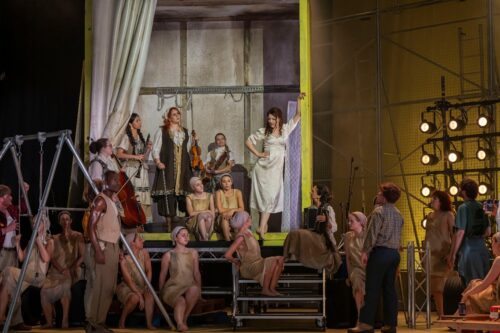
Carmen is of course one of the most popular operas ever written and nowadays audiences have become inured to the violence and seedy underbelly of the piece. Cameron’s Menzies’s gritty, dark new production turned the spotlight once again on to these original themes. Niall McKeever’s set consisted of a sparse, gritty backlot enclosing a container truck, barrels, chairs and steps. There was chain link fencing in the background creating a degree of separation between characters. The yellow sun of Seville was replaced with a toxic, acrid yellow smoke depicting nicotine stains, desire and infection. The opera was not set in any specific time or place so it gave the production a universal quality; these events could occur anywhere.
Menzies used the events of the opera to draw out contemporary themes and parallels. The factory workers emerged barefoot from the back of the shipping container looking like victims of human trafficking. They wore shoddy uniforms and headscarves. At various points in the opera, we saw groups of people locked in by fencing, highlighting the current plight of refugees and asylum seekers. The infectious smoke seemed to conjure up the extreme right-wing movements and undercurrents currently stoking up hatred and racism against minorities. At the end of the opera, Carmen’s murder was witnessed by a chorus of women dressed all in black suggesting they had also been victims of violence. Don José trailed Carmen by her hair across the stage and strangled her with his bare hands (rather than stabbing her), all in the full glare of spotlights. This brought home the sheer unashamed brutality of the violence against women and girls which is all too common.
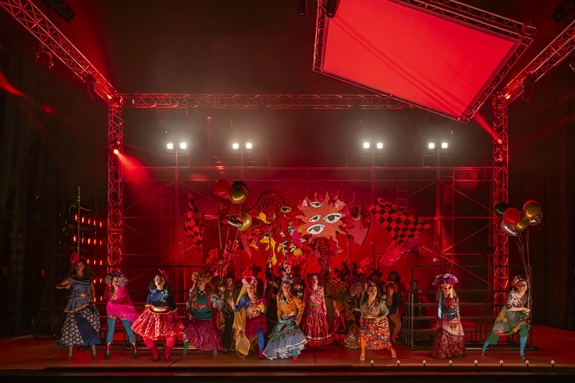
The costumes for the most part were everyday outfits which fitted with the realism of the production. Carmen’s costume changed from a white overall in the opening scene, to more traditional gypsy costumes and a dazzling red and black flamenco dress in the climactic final scene. It added to the emotional impact of the opera that everything was taken away from Carmen when she had everything she wanted and most to lose. Jake Wiltshire’s lighting helped to set the mood and atmosphere of specific scenes. During Carmen’s famous ‘Habanera’ darker orange lighting enhanced the heady atmosphere of the scene, while red lighting was used in the bloody final scene.
Ruby Dibble is a graduate of Julliard and the Curtis Institute and is currently based at Oper Frankfurt. I am pleased to say she grabbed this opportunity to play Carmen with both hands. She dominated the stage in every scene she was in and displayed an impressive range of movement. She was sexy and highly seductive in the first act. The flirtatiousness came to a head in the ‘Seguidilla’ where she rocked back and forth on a swing with her bare legs stretched out in a suggestive way. She played the castanets and danced seductively for Don José in Act II. As the opera progressed, we saw her develop as an independent woman and she displayed flashes of anger and defiance before the final climactic showdown. Dibble has a gorgeous lyric mezzo-soprano voice, and she brought warmth and agility to the vocal line. She displayed a rich, resonant lower vocal register and seamless legato in the ‘Habanera’. Dibble’s phrasing and handling of the ornamentation were impeccable in the ‘Seguidilla’ which had a coquettish, kitten-like playfulness. In her final confrontation with Don José, Dibble demonstrated her dramatic credentials and the power of her voice and ability to cut through heavy orchestration. This was an outstanding performance on every level.
I have seen Noah Stewart perform the role of Don José before and he is clearly an accomplished performer and more than able to negotiate the vocal demands of the role. Unfortunately, this was not his night as he displayed clear signs of vocal strain in this performance. He started off well, but the problems became apparent in Act’s II’s ‘Flower Song’ where he struggled with the top notes and his middle and lower register almost vanished. He did his best with the other set piece numbers, but he was unable to muster the vocal power required for the final scene. Mary McCabe was impressive in the role of Micaëla. She was composed and dignified and not afraid to assert herself at key points in the opera. There was much to admire in her first-act duet although I would have welcomed a greater range of vocal colour. Her performance of ‘Je dis que rien ne m’ëpouvante’ was impressive. She sang the expansive soaring melody beautifully and dispatched Bizet’s ringing top notes with vocal authority. The suspended vocal lines were beautifully controlled and delivered with a voluptuous tone and exceptional control of dynamics. Thomas Chenhall brought machismo and effortless swagger to the role of Escamillo. He made his entrance on a motorbike and did an excellent job working the crowd. He sang the famous Toreador aria with a robust commanding tone and was impressive across the vocal range. The rest of the cast all acquitted themselves well; Petra Wells and Jenny Bourke were particularly impressive in the roles of Frasquita and Mercédès.
The Chorus and Children’s Chorus were firing on all cylinders throughout as they brought Bizet’s rag-tag band of factory workers, soldiers, gypsies and bandits winningly to life. They were particularly impressive at the start of Act IV where they arrived in a blaze of colour and gave a rousing performance of the March of the Toreadors. Dancers performed a series of beautifully choreographed flamenco numbers at various points adding to the vibrancy and spectacle.
Conductor and Music Director, Greg Arrowsmith, created a new arrangement for this production. The orchestration was scaled back to fit with the production’s raw and realistic approach to the opera. Arrowsmith also added an instrumental five-member folk band who performed on the stage between and during numbers. Prior to the Overture and between the first and second acts they performed new folk-inspired music. At other points they simply mimed to the music on stage with a view to conjuring up atmosphere. The new orchestral arrangement worked very well indeed, and the orchestra gave a sterling performance. I was less convinced by that folk band; I was not sure they really added to the dramatic narrative, but they seemed to go down well with the audience.
Overall, this was another superb hard-hitting production from Cameron Menzies and Northern Ireland Opera and Ruby Dibble is clearly a rising star.
Robert Beattie
Featured Image: Northern Ireland Opera’s Carmen Act IV Noah Stewart (Don José) © Neil Harrison Photography
Production:
Director and Costume designer – Cameron Menzies
Set designer – Niall McKeever
Choreographer – Jennifer Rooney
Lighting designer – Jake Wiltshire
Costume design associate – Penny Winter
Chorus master and Répétiteur – Frasier Hickland
Cast:
Carmen – Ruby Dibble
Don José – Noah Stewart
Escamillo – Thomas Chenhall
Micaëla – Mary McCabe
Zuniga – Niall Anderson
Le Dancaïre / Moralès – Ross Ramgobin
Le Remendado – Andrew Irwin
Mercédès – Jenny Bourke
Frasquita – Petra Wells