
 United States Various: American Classical Orchestra / Thomas Crawford (conductor). Alice Tully Hall, New York, 12.11.2026. (RP)
Weber – Overture from Oberon
Franz Berwald – Symphony No.2 in D major, ‘Capricieuse’
Beethoven – Symphony No.4 in B-flat major, Op.60
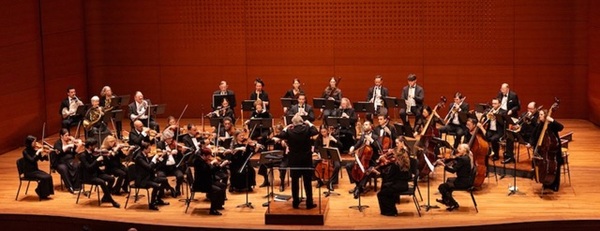
Thomas Crawford and the American Classical Orchestra focused on the Romantics for its second concert of the season at Alice Tully Hall. The first half featured music by Carl Maria von Weber and Franz Berwald, composers of the generation following Beethoven.
The concert opened with the overture from Weber’s opera Oberon, his only work with an English-language libretto. It premiered in London in 1826 with the composer conducting, and it was the last composition Weber completed before his death two months later at 39.
R. J. Kelley’s hushed rendition of the horn calls representing Oberon’s enchanted horn were the first sounds heard, drawing a shimmering response from the muted strings and woodwinds. The mystery gave way to full, vigorous orchestral sonorities, with Crawford and the ACO reveling in Weber’s palette of orchestral colors. The woodwinds took flight with a reflective clarinet solo briefly changing the mood, before Crawford propelled the music toward its jubilant orchestral conclusion.
Crawford and the ACO then gave the US premiere of Franz Berwald’s Symphony No.2 in D major which he titled ‘Capricieuse’. Born in Sweden, Berwald spent considerable time in Berlin and Vienna. Unable to make a living from music, he ran an orthopedic institute in Berlin and managed a sawmill and glassworks in Sweden.
Vienna was where Berwald enjoyed the greatest recognition during his lifetime. Although even there he had his critics, including the influential Eduard Hanslick, who found the man stimulating, witty and prone to the bizarre but lacking creative power and fantasy as a composer. Nonetheless, Berwald was made a member of Salzburg’s Mozarteum. His reputation as Sweden’s leading 19th-century symphonist came largely after his death.
His most important orchestral works date from the years following his arrival in Vienna in 1841. The surviving sketch of the Symphony No.2 dates from 1842 when he was in Sweden. The full score disappeared around the time of Berwald’s death, and the work remained unperformed until an orchestral version was reconstructed from the surviving sketch. It received its first performance in Stockholm in 1914, 46 years after the composer’s death.
The symphony is unusual not only for having just three movements but also for its distinctive mercurial character, created by rhythmic surprises and unexpected turns of phrase. Its capricious flavor is apparent from the opening measures with their dynamic extremes: loud, sustained notes followed by a long trill as a chord gradually takes shape. Crawford wove its irregular phrase lengths (often three or five bars), syncopations and unexpected harmonic shifts into a cohesive, compelling whole, making a persuasive case for Berwald as a composer of considerable originality.
Music of a totally different character followed, with Crawford leading an elegant, hymn-like reading of the Andante. The principal melody was played with exquisite delicacy and feeling by the strings, with the woodwinds adding to its airiness. Crawford brought a welcome tension to the contrasting middle section, notable for some fine horn playing, without disturbing the movement’s carefully balanced proportions. The return of the lyrical opening material and its equally tranquil closing measures was particularly affecting. The result was so lovely and moving that appreciative applause erupted spontaneously from the audience, seemingly taking everyone by surprise.
If the first movement was full of surprises, the Allegro assai had the same capricious spirit, reinforced by rhythmic abandon and irrepressible energy. Crawford captured its whirling, dance-like quality, creating a sense of perpetual motion whose infectious energy and agility were kept well within the bounds of cooler climes than southern Italy. Its rhythmic exuberance was enlivened by particularly characterful woodwind writing, with the bassoons adding a touch of musical mischief. The final measures were rocket-fueled, creating a breathless romp that Crawford brought to a wonderfully crisp, if unexpectedly abrupt, conclusion.
The concert concluded with Beethoven’s Symphony No.4, an elegant and buoyant work. Often described as the most genial and classically proportioned of his nine symphonies, it abounds in rhythmic vitality, surprising harmonic turns and flashes of exuberance. Crawford is never short on charm, wit or precision, and the warmth and distinctive personality of the period instruments added another dimension to this performance.
Crawford found both the mystery and playfulness of the first movement, particularly in Beethoven’s ingenious exchanges among the orchestral sections. Of particular note was the warmth and brilliance of the natural trumpets, as well as the long, quiet timpani roll that created a marvelous tension before the return of the main theme.
The Adagio was distinguished by Crawford’s careful shaping of its long melodies, with the strings singing through the expansive lines. The woodwinds brought a different dimension, particularly principal clarinetist Nina Stern, whose wistful playing was complemented by the lightness of the flute and bassoons.
In the Scherzo, the woodwinds again took center stage, their muscular, energetic playing contrasting with the gentler, more playful Trio. The finale opened with rapid-fire string playing, with the woodwinds again prominent. Crawford brought the movement to a close with a sudden, emphatic orchestral surge that elicited roars of applause from the audience.
Rick Perdian