
 United Kingdom Beethoven, Martinů, Reicha, Dvořák: Trio Bohémo (Matouš Pĕruška [violin], Kristina Vocetková [cello], Jan Vojtek [piano]). Turner Sims Concert Hall, Southampton, 15.11.2026. (CK)
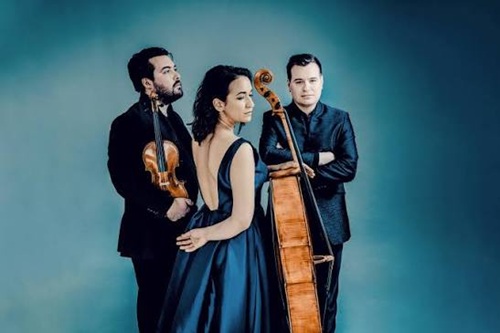
Beethoven – Piano Trio No.3 in C minor, Op.1
Martinů – Piano Trio No.2 in D minor, H327
Anton Reicha – Piano Trio No.1 in E-flat major
Dvořák – Piano Trio No.4 in E minor, Op.90 ‘Dumky’
Trio Bohémo are a young outfit, but they have already scooped a hatful of awards: it only took a few bars of Beethoven for us all, in a well-filled Turner Sims, to understand why. My difficulty is how to express that in words: an endless cavalcade of superlatives can be wearisome to read, and their cumulative impact – unlike the Trio’s playing – can become blunted. But only superlatives will do. This concert is a strong candidate for my personal Concert of the Year.
Beethoven’s C minor Trio is the one that Haydn – master of the delightful and well-behaved piano trio – thought too challenging for domestic consumption, and the one that Beethoven knew was the best of the Op.1 set. The Bohémos brought elegance and grace to the opening, passion and intense focus to the unfolding argument, ferocity where it was needed: strangeness, too, as the music was haunted from time to time by the ghost of a tritone.
The piano entered the fray with a phrase that seemed to anticipate the restless finale of the Tempest Sonata. Vojtek’s touch was crystalline throughout the evening, his hands hovering straight-fingered over the keys; he seemed able to coax limitless dynamics from them, especially in the quiet upper register. Each of the three players had a distinct personality – I would willingly pay to hear any one of them in a solo recital – yet their playing was like the breathing of a single organism.
The Andante cantabile took us back to an earlier, politer world, the piano ushering in the warm, hymn-like theme and gently dazzling us in a couple of the variations. The Menuetto brought sparkling interplay between the players – the piano in particularly playful mood – and the firmly minor-key finale was fierily dispatched. The audience – some of whom had not been able to restrain themselves from applauding after the first movement – exploded.
Cellist Kristina Vocetková gave an attractive and engaging introduction to Martinů’s Second Piano Trio. The opening Allegro was mercurial, the kind of music (and the kind of playing) that opens up vistas and visions in the listener’s imagination. The Adagio was a glorious flood of sound, with cello playing of rare beauty; and there was real fire in their playing of the relentless finale. Astonishing to hear how lightly yet how strongly these players are connected to the music and to each other.
Violinist Matouš Pĕruška gave a drily funny and disarming introduction to Anton Reicha’s Trio, almost as if he were apologising for it, and for their double-CD recording of all six (‘if you don’t like it, there are five more much the same’): judging by the scrum around the merchandise table in the foyer after the concert, this counter-intuitive ploy worked.
My only previous experience of Reicha’s music was at a long-ago BBC Prom (which also featured, memorably and mathematically, Haydn’s Symphonies 22, 44 & 88). A contemporary of Beethoven, Reicha can only suffer by comparison. This Trio was beautifully and brilliantly played – the Lento was particularly engaging – but the performance had me wondering, does playing this good work for or against a lesser piece of music? Advocacy or exposure?
No such qualms with Dvořák’s Fourth – and finest – Piano Trio, the Dumky, in which he embraces his own cultural heritage at the expense of traditional sonata form. Each of the six sections harnesses slow lament and lively dance together, generating tension as well as beauty and excitement. I have rarely heard a cellist coax such eloquence and expressivity from her instrument as Vocetková did here; though all three musicians sound individually as well as collectively peerless.
I have quoted George Hurst’s remark – that the world would be a better place if it listened to more Dvořák – before. The Dumky Trio is a bittersweet work, music that seemed aware of the discord beyond the walls of the Turner Sims: yet, in the hands of musicians such as these, music with healing power. I put aside my notebook and listened.
Chris Kettle