
 United Kingdom Mahler, Symphony No.2 in C minor, ‘Resurrection’: Anna Patalong (soprano); Jess Dandy (contralto); CBSO Chorus; City of Birmingham Symphony Orchestra / Kazuki Yamada (conductor). Symphony Hall, Birmingham, 17.9.2026. (JQ)
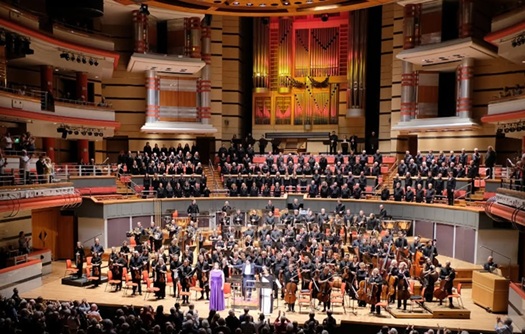
Mahler – Symphony No 2 in C minor, ‘Resurrection’
It is quite a while since I was able to review concerts at Symphony Hall; in fact, my only experiences of seeing the partnership of the City of Birmingham Symphony Orchestra and Kazuki Yamada perform live were some impressive concerts in the days before the Covid restrictions, when he was their Principal Guest Conductor. However, I have read many good things about their work together since he became their Music Director in 2023. Furthermore, just recently I was very impressed by their first commercial recording which paired the two Walton symphonies (review here). So, I thought it was high time that I made another trip to Birmingham, especially as the work with which Yamada had chosen to open the orchestra’s 2026/27 season was Mahler’s huge Second symphony. This is a continuation of a Mahler symphony cycle that he and the orchestra have begun. I am not quite sure how far this project has progressed; I understand they performed the Ninth Symphony in April 2025 and the First in January 2026 but unfortunately I missed those concerts. They will conclude the present season with the Third Symphony in June 2027, a date that was already inked in my diary even before I had heard this performance.
Even nowadays, when performances of Mahler’s music are regular occurrences in our concert halls, a performance of the ‘Resurrection’ Symphony is a singular event. Conceived on a mightily ambitious scale and scored for huge forces, it makes tremendous demands on the conductor and all the musicians involved. In so many respects, it is an ideal way to open an orchestra’s season.
The performance began in electrifying fashion. The strings attacked the opening in a way that commanded attention and the tonal weight of the cellos and double basses was formidable; I checked afterwards and found that there were ‘only’ 10 cellos and 8 basses on duty but it sounded as if double those numbers were playing the opening phrases. There followed a highly dramatic, often visceral account of the enormous first movement. As the music unfolded with great power and urgency I realised that in the five or six years since I last visited Symphony Hall I had forgotten how present and immediate is the acoustic. From the vantage point of my excellent seat in the stalls, the amount of volume produced by the CBSO was overwhelming at times. The percussion battery frequently produced an enormous sound. It was obvious that they were doing so in response to the active encouragement of Kazuki Yamada and the results were very exciting. That said, and even making due allowance for the fact that my ears hadn’t readjusted to the hall’s acoustic after so long, I think the percussion contributions were a bit excessive at times; they tended to overwhelm the rest of the orchestra, even though their colleagues were playing flat out. That caveat aside, the performance of the first movement was a riveting experience. Yamada was in full command of the music and ensured that all the drama of Mahler’s music registered strongly. Equally important was the way in which he relaxed for the episodes when Mahler moves into reflective and nostalgic vein; in these passages, there was great refinement in the CBSO’s playing. Tempi were consistently well judged throughout the movement, though I did wonder if the series of huge, repeated chords which are hammered out by the full orchestra in mid-movement were not perhaps a little too broadly delivered.
Mahler asked for a pause of at least five minutes between the first and second movements. I have always thought this was excessive and most conductors make a pause of just a couple of minutes; that was what Yamada did. I was very glad of the Andante moderato movement for a couple of reasons. First and foremost, it was played delectably. For this movement Yamada put down his baton and conducted most expressively with his hands. The way the CBSO played the music was, except for the brief stormy interlude partway through, graceful and affectionate; I loved the warmth of the string playing in the opening pages. Yamada paid great attention to every aspect of the phrasing, yet although it was clear that the performance had been scrupulously prepared in rehearsal, the results in performance sounded fresh and spontaneous. The movement came as balm after the emotional rigours of the first movement, just as Mahler intended. On a personal level, I realised with hindsight that this music – and this performance of it – allowed my ears completely to settle in the Symphony Hall acoustic. The performance was a delight from first note to last. What a pity, then, that several members of the audience coughed during the final bars, which the orchestra were playing with great sensitivity.
The two soloists made an unobtrusive entry ono the platform before the third movement began. Yamada’s account of this movement was piquant and pointed. His style of conducting is very animated and involved and here you could see him visibly ensuring that every accent was observed; though I doubt the excellent CBSO needed any prompting it was good to see the interaction between conductor and orchestra. In the nostalgic passages I liked the sweetness in the playing but elsewhere the earthy humour was very evident, clarinettist Oliver Janes suitably to the fore in this respect. Just before the movement’s end, Mahler gives us a potent premonition of the finale’s upheavals; the CBSO projected that passage very strongly.
Contralto Jess Dandy sang ‘Urlicht’ very well. Her tone was full and rich and she displayed evident engagement with both the words and the music. The performance of this short movement was very fine but sadly, once again, at the very end the hushed performance was disrupted by coughing. If only the members of what my colleague Mark Berry has memorably named The Phlegm Liberation Front could have restrained themselves for another minute, their coughs would have been completely drowned out as Yamada and his orchestra unleashed the finale.
In every respect, Mahler’s finale dwarfs everything that has preceded it – even the mighty first movement. Not only is it by some distance the longest part of the symphony – here, it played for about 39 minutes – but also the forces involved are huge. Most important of all, nothing has prepared us for the sheer scale of the composer’s vision. The movement is a vast musical fresco and I very much admired the way Yamada held everything together, leading a coherent and gripping performance. The offstage brass and percussion were located out of sight and high above the platform; their contributions made an almost cinematic impact. Yamada established great tension right from the start and maintained it throughout the movement’s span. So many details stood out: the deep brass voicing the ‘Resurrection’ chorale; the huge percussion crescendo which seemed to begin in the deepest cellars of Symphony Hall and which expanded thrillingly as Yamada drew it out until the crescendo peaked and it was as if the graves had opened; the viscerally exciting subsequent passage as the dead seemed to parade past. Everything was vividly exciting: Yamada and the CBSO took no prisoners as the music hurtled towards the abyss and then tipped over in a graphic expansion of the tumult we had heard towards the end of the third movement.
The spatial possibilities of Symphony Hall were exploited to the full as Mahler’s Last Trump echoed round the auditorium. Then, for the first time, we heart the CBSO Chorus intoning ‘Aufersteh’n’. They remained seated to sing this; their sound was hushed yet clear and firm. This is a work they have sung many times so it was no surprise that they sang from memory. The voice of soprano Anna Patalong rose beautifully from the choral texture. Patalong stood in at very short notice for her indisposed colleague, Eleanor Lyons; all her contributions were sung with poise. A little later, Jess Dandy was very committed at ‘O glaube’; she and Patalong were excellent in the pages that followed. At last, the chorus stood after ‘Bereite dich’ and they were able to sing at full power. The closing tableau was immense in every respect. All the singers – soloists and chorus – were fervent while the CBSO pulled out all the stops. The full ensemble was underpinned by the might of the Klais organ (played by the CBSO Chorus’s director, Julian Wilkins) and was given a final boost by the arrival of eight extra brass players – four trumpets and four horns – who stood above the chorus on either side of the organ console.
Unsurprisingly, the substantial audience responded to the performance with a prolonged and vociferous standing ovation. This was a hugely exciting launch to the CBSO’s 2026/27 season. It was also an important occasion in two other respects. This was the 1000th performance by the CBSO Chorus. The choir has come a long way since it was founded in 1973 and has long been recognised as one of the foremost choirs in the UK; tonight offered an excellent example of their work.
It was the last concert for trumpeter Jonathan Quirk who retired after more than forty years with the orchestra – he joined in April 1986. One example of Quirk’s artistry is the posthorn solos on Simon Rattle’s 1997 CBSO recording of Mahler’s Third. I doubt he will forget this concert in a hurry; nor will the audience.
John Quinn
This performance was an ‘anniversary treat’ for me – just over sixty years after the first live performance of Mahler 2 I attended: Georg Solti and the LSO in May 1966 at the RFH. That great performance still lives vividly in my memory (thanks also to the Decca recording, which has deservedly never been out of print!), and so I’m sure will this extraordinary CBSO performance. Thursday’s performance was my 21st in those sixty years, and so I was slightly anxious that (over) familiarity might blunt my appreciation of this work, but no – the CBSO, CBSO Chorus, Jonathan Quirk and Kazuki Yamada were absolutely superb in the wonderful acoustic of Symphony Hall. Sitting up high in the Upper Tier, so engrossed and thrilled was I that not even the Phlegm Liberation League could dampen my enthusiasm…..