
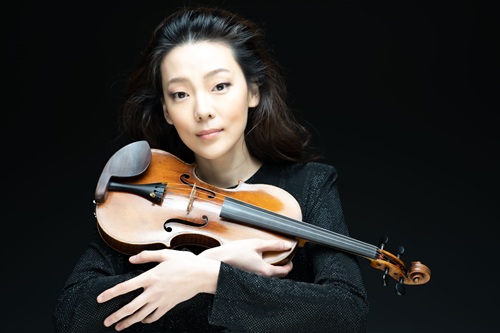
 United Kingdom Schulhoff, Barber, Weill: Clara-Jumi Kang (violin), Scottish Chamber Orchestra / Rya Bancroft (conductor). Queen’s Hall, Edinburgh, 29.10.2026. (SRT)
Schulhoff – Suite for Chamber Orchestra
Barber – Violin Concerto; Adagio for Strings
Weill – Symphony No.2
Kurt Weill wrote symphonies?! You bet he did and, if they are not careful, the Scottish Chamber Orchestra risk turning into Britain’s most accomplished exponent of his concert music.
The only other time (I think) that I have heard one of Weill’s concert works performed was in 2022 when the SCO (with Anthony Marwood) played Weill’s Concerto for Violin and Wind Instruments, and what a treat of a piece it turned out to be; all wiry modernism and proto-Second-Viennese school experimentalism. The Threepenny Opera it wasn’t, and the SCO saw it for what it was, playing it with lightness, fluidity and a bucketload of conviction.
So when I came to hear them playing Weill’s 1934 Second Symphony – yes, he wrote two of them! – it was with a lovely sense of not knowing what to expect and, true to form, any expectations of Weill the theatre composer was duly trumped. Well, most of them. The overall impression was what you might have heard if classical Vienna had inadvertently stumbled into a Bernard Herrmann film score. Weill’s first movement was full of urgent string themes that were straight out of a movie thriller which hadn’t been written by 1934, with strings and brass commenting from the fringes like harried outsiders, conductor Ryan Bancroft marshalling everything forwards like the ringmaster at a circus. The ‘slow’ middle movement moved with irrevocable solemnity but with some cracking solos – chapeau to Duncan Wilson on the trombone! – that seemed to poke fun at the idea that this might be a funeral march. Yet old Kurt then surprised us all by engulfing his music in emotional intensity that you just do not expect from this composer, before a finale that was an extended scherzo-cum-gallop which thumbed its nose so irreverently and so consistently that, really, it couldn’t have been written by anybody else.
The rest of the concert couldn’t quite live up to this level of inventiveness, though Erwin Schulhoff’s Suite for Chamber Orchestra made a pretty good fist of writing some cabaret show tunes to which Weill would have been proud to put his name. Bursting with raucous rhythms and unexpected ensemble effects, it could be derivative at times – Bancroft described it as what it would sound like if ChatGPT did jazz – but was always full of colour. It even included six – six! – percussionists, which never happens at the SCO. They all seemed to be having a whale of a time, especially the chap with the motor horn.
Things became much better behaved in the two pieces by Samuel Barber, and Bancroft’s way with the Adagio for Strings was refreshingly gentle, turning it into a meditative reflection rather than a gaze into the abyss. He also did a good job of bringing out the variety of tone in Barber’s Violin Concerto, reminding us that this piece isn’t just a stroll over the prairies but has heights and depths, too. Yet when the big moments came they sounded glorious, and the orchestra was matched in Clara-Jumi Kang by a soloist who played with remarkable richness and full-blown assertiveness. Probably that is what this concerto needs however, and the undoubted highlight was the throbbing intensity with which she played the oboe’s theme in the slow movement. Alongside so much inter-war irreverence from Weill and Schulhoff, it was enough to bring a tear to the eye.
Simon Thompson