 Spain Verdi, Falstaff: Chorus and Orchestra of Gran Teatro del Liceu / Josep Pons (conductor). Teatre Liceu, Barcelona, 18 & 19.7.2026. (JMI)
Giuseppe Verdi’s final opera has come back to the Liceu after a 16-year absence. This time, it is to close the 2025-2026 opera season which has offered some truly memorable performances. The staging is the well-known one by Laurent Pelly which I saw at the Teatro Real in April 2019, and my opinion remains unchanged. I find it rather uneven, and the problem lies in moving it to the present day which is inappropriate for this opera – the character of Falstaff doesn’t fit well with modern times.
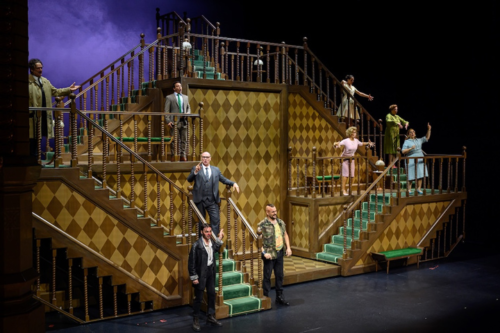
A co-production with Madrid’s Teatro Real, Brussels’s La Monnaie, Bordeaux Opera and Tokyo’s Nikikai Opera: the Pelly production is entertaining, however. Its strongest point is the stage direction, especially in everything that takes place in the Ford mansion. The opera begins at the Garter Inn, presented on a minimal stage that later opens up to reveal a building in the background. The Ford house features a series of staircases that bring the action to life, especially in Falstaff’s scene. Windsor Park is surprising and not in a particularly positive way – it is a bare and very dark set, devoid of even an oak tree. Overall, this is a production with some amusing moments, but it falls short of Laurent Pelly’s other works.
The musical direction was in the hands of Josep Pons who was bidding farewell to his position as music director of the Liceu, and it was only natural that he should conduct this final opera of the season. His performance was adequate though not particularly brilliant, and the orchestra gave a fine performance.
The role of Falstaff was sung in the first cast by Luca Salsi, who is known to opera aficionados as one of today’s outstanding baritones. His experience with the role is not extensive – he first sang it just two years ago in Vienna and will not sing it again until later this year at the San Carlo in Naples. His performance was convincing both vocally and dramatically, and he made excellent use of the belly provided by the production. He had no problems vocally, but in some passages one missed the voice of a true bass-baritone, rather than the pure baritone voice that is Salsi’s.
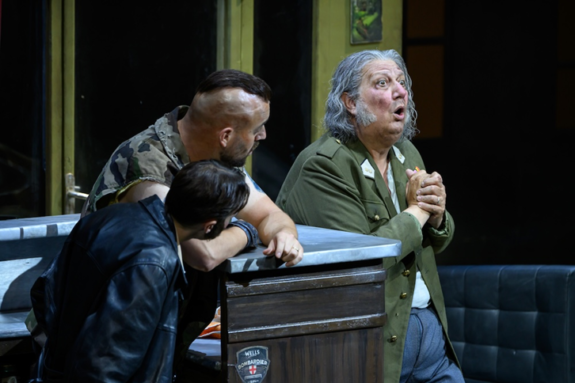
The second Sir John Falstaff was bass-baritone Ambrogio Maestri who has been a leading pancione (‘beer gut’) for many years, at least since Bryn Terfel stopped singing the role. Interestingly, Maestri’s Falstaff has been performed on all the world’s great stages, and it is worth remembering that in 2010 he was the one who sang the role in the first cast at the Liceu. His performance on this occasion was very complete, particularly in terms of stage presence where he reached an exceptionally high level. Vocally, he was well-suited although his voice doesn’t have the great quality of his compatriot, Luca Salsi. In any case, Maestri is a great interpreter of the part.
As Alice Ford, soprano Carolina López Moreno offered a pleasant voice that is suited to the role, and she moved well on the stage. In the second cast, Roberta Mantegna was a good Alice, though less appealing sounds are found in her high notes. Mr. Ford, or Signor Fontana, was sung in both cases by baritone Lucas Meachem who, I believe, was making his debut in the role. He was convincing both vocally and dramatically.
Mezzo-soprano Daniela Barcellona as Mrs. Quickly is an expert singer, although her voice does not offer the freshness of a few years ago. I missed more resonant bass notes in her ‘Reverenza!’ greetings, which require a true contralto which she is not. In the second cast, Mrs. Quickly was sung by mezzo-soprano Marianna Pizzolato, who also lacks the necessary resonance the lower notes required. In all other respects, she did well.
Nannetta was sung by soprano Serena Sáenz, who offered her beautiful light soprano voice, singing with good taste, especially as the Fairy Queen. She had already sung this role years ago in Berlin. Soprano María Miró gave a fine performance as Nannetta, with an attractive and well-controlled voice.
Tenor Santiago Ballerini as Fenton has an attractive voice but exhibited some irregularities in the high notes. César Cortés was also good. Meg Page was sung correctly by Gemma Coma-Alabert in the first cast and by mezzo-soprano Laura Vila in the second cast. The supporting roles were also handled well, especially by Pablo García-López (Bardolfo), Josep Fadó (Doctor Caius) and Alessio Cacciamani (Pistola).
I should mention Ambrogio Maestri’s gesture during the chorus of ‘Tutti Gabbati’, addressing Josep Pons and reminding him that it was his last performance as conductor at the Liceu. It elicited a standing ovation from the audience.
José M. Irurzun
Featured Image: Ambrogio Maestri (r, Falstaff) with Pistola (Alessio Cacciamani) and Bardolfo (Pablo GarcÍa López) © A. Bofill
Production:
Director – Laurent Pelly
Sets – Barbara de Limburg
Costumes – Laurent Pelly
Lighting – Joël Adam
Chorus master – Pablo Assante
Casts:
Sir John Falstaff – Luca Salsi / Ambrogio Maestri
Alice Ford – Carolina López Montero / Roberta Mantegna
Mr. Ford – Lucas Meachem
Mrs. Quickly – Daniella Barcellona / Marianna Pizzolato
Nannetta – Serena Sáenz / María Miró
Fenton – Santiago Ballerini / César Cortés
Meg Page – Gemma Coma-Alabert / Laura Vila
Doctor Caius – Josep Fadó
Bardolfo – Pablo García López
Pistola – Alessio Cacciamani