
 United States Mozart: Golda Schultz (soprano), Samuel White (tenor), San Francisco Symphony / Harry Bicket (conductor). Davies Symphony Hall, San Francisco, 5.2.2026. (HS)
Mozart – Serenade No.6 in D major ‘Serenata notturna’; Symphony No.34 in C major; ‘Deh vieni, non tardar’ from Le nozze di Figaro; ‘Come scoglio’ from Così fan tutte; ‘Or sai chi l’onore’ from Don Giovanni; Symphony No.38 in D major ‘Prague’
When planning an all-Mozart concert, what conductor Harry Bicket did with the San Francisco Symphony makes an excellent blueprint. Why not sidestep the biggest of the compositions and take a stroll through a variety of delights from the most classical of Classical composers?
Bicket, known for his ability to enliven Baroque and Classical-era music, especially opera, started with a relatively obscure example of tafelmusik, a lightweight hors d’oeuvre – Serenade No.6 in D major. Mozart, then 20 years old, wrote it as an assignment for background music for a posh dinner and infused the music with elegance and his typical brio. For this concert, it added the extra frisson of placing five of the orchestra’s principals in the spotlight. Sitting in front of the downsized orchestra, concertmaster Alexander Barantschik, second violinist Dan Carlson, violist Yun Jie Liu and bassist Scott Pingel got to show off with brief but fun and challenging-to-play cadenzas in the finale. Even timpanist Edward Stephan, playing a set of Classical-era drums with hard sticks for full effect, got into the act with a merry solo clatter at the end. Deep music? Hardly. Entertaining? You bet, and the soloists and the orchestra clearly enjoyed the ride.
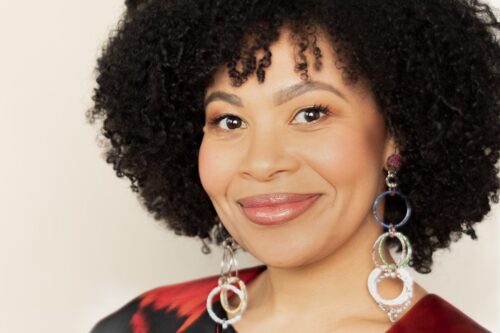
Arias from Mozart’s three operas written with Lorenzo Da Ponte were at the center of this program, chosen to show the range of sound and style of Golda Schultz. The South African soprano, who has sung major roles at the Metropolitan Opera, Salzburg Festival and in San Francisco as the guardian angel in the world premiere of Jake Heggie’s It’s a Wonderful Life, has an appealing voice and an outsized personality that can channel the essential musical and emotional details in Mozart roles. With Bicket establishing the nighttime setting of ‘Deh vieni, non tardar’, Susanna’s aria in Act IV of Le nozze di Figaro, Schultz’s ever-swirling recitative reflected all the thoughts running through the character’s mind with specificity. The aria, with its simple melodies and treacherous challenges for the singer, unfolded with ease and plenty of charm.
‘Come scoglio’, which outlines Fiordiligi’s righteous indignation in Act I of Così fan tutte, drew appropriately sturdier sounds without losing the essential polish and elegance. The many octave skips in the aria didn’t faze Schultz at all. Even better was ‘Or sai chi l’onore’, Donna Anna’s aria in Act II of Don Giovanni after she recognizes the don’s voice as her father’s killer, where she conveyed all the nuances of rage, fear and helplessness. Aided by the presence of tenor Samuel White, a former Adler Fellow at San Francisco Opera, the scene played out with gripping vocal drama without strain.
As an encore, Mozart’s concert aria ‘Chi sa, chi sa, qual sia’ delved into parallel longings of love and suspicion with welcome aplomb.
Two of Mozart’s lesser played symphonies rounded out the program with brisk, pointedly rhythmic performances. Curiously, each of these works comprised only three movements, rather than the usual four. Bicket took the Symphony No.34 in C major’s opening fanfares and pomp seriously, almost like a trial run for the more glorious No.41 ‘Jupiter’, laying the groundwork for the Allegro that completed the first movement. The central movement’s Andante di moto might have benefited from more attention to the ‘sotto voce’ called for in the score, but the rhythmic flow made it a pleasant haven from the noisier outer movements. The finale, a bouncy dance in 6/8, finished things up with verve.
Though played less often than Mozart’s famous final three symphonies, the Symphony No.38 ‘Prague’ has plenty to recommend it. Bicket found distinctive colors for the opening movement’s allegro vivace’s unusual length (at least for this point in music history) with subtle shifts of tempo and presence in the forward momentum. The central Andante, the slower parts overshadowed by the more energetic middle section, continued the arc toward the lively Finale (Presto).
Harvey Steiman