 United Kingdom Shaw, Beethoven: Sunwook Kim (piano/director), Scottish Chamber Orchestra / Stephanie Gonley (violin/director). City Halls Glasgow, 9.10.2026. (GT)
Caroline Shaw – Punctum
Beethoven – Piano Concerto No.4 in G major, Op.58; Piano Concerto No.5 in E major, ‘Emperor’ Op.73
For a contemporary American composer to share a programme with Beethoven shows how highly concert programmers here regard Caroline Shaw; however, this was a mismatch for Shaw’s piece seemed out of place alongside two of the greatest piano concertos. Shaw certainly has achieved remarkable success, being the youngest winner of the Pulitzer Prize for music in 2013 for her Partita for 8 Voices. She is also a violinist, vocalist and regularly collaborates with rappers such as Nas and Kanye West. Punctum was composed in 2009 for her own ensemble, the Franklin Quartet, and rearranged for a string orchestra in 2022 in a commission from the Boston Symphony Orchestra. In her words: ‘One could say the piece is about the sensation of a particular secondary dominant in Bach’s St Matthew Passion.’ This was perhaps a link between last week’s St Matthew’s Passion performed by the Scottish Chamber Orchestra and Chorus.
Shaw uses the ‘Herzlich tut mich verlangen’ from Bach’s St Matthew Passion, with fragments played in the string groups until the themes break up and fade away. Led magnificently by Stephanie Gonley, the strings characterised a beautifully expressive passage of playing, with a deeply emotive grace and passion that was often breathtaking to listen to, yet there seemed to be a lack of real gravitas in the flowing ideas of Shaw’s creativity.
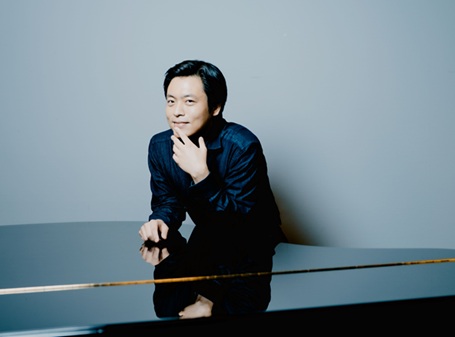
Following his first prize at the 2006 Leeds International Piano Competition, Sunwook Kim has developed a major career both as a pianist and conductor worldwide. He completed an MA in conducting at the Royal Academy of Music and the young Korean has performed as piano/director in touring the Beethoven concertos across Europe.
For these performances, to allow Kim sight of the orchestra, the Steinway piano had its lid closed, with the pianist facing the orchestra and his back to the audience. In the G major concerto, Kim’s opening improvisatory bars in the Allegro moderato, immediately set the tone of lyricism and compassion which was enhanced by radiant tones from the natural horns of Gavin Edwards and Caglayan Barbaros and exquisite play of Steve Hudson and Katherine Bryer on the oboes against the playful playing from Kim on the keyboard. The lyricism and fragility were dominant, with Kim all the while guiding the orchestra with astute nods or gentle gestures, and occasionally with a momentary free hand. The way in which the young Korean handled the challenge of conducting from the keyboard was quite phenomenal.
The Andante con moto was heavenly in its expression of the lyrical colours emerging through the exchanges between the woodwinds and the soloist. The theme of Orpheus taming the Furies appeared with the hard octaves heard in the orchestra against the quiet, pleading harmony of the piano transitioning to pliancy as the theme of Orpheus became triumphant. The Rondo (Vivace) finale was buoyant in its rhythm, as if celebrating the victory of Orpheus over the murky underworld and enhanced by the lively march-like surge bringing the joy to the finale, which closed with exciting dynamics on the piano by Kim.
If the G major concerto was written by Beethoven for himself as the protagonist, owing to his declining hearing, he never played his finest piano concerto, yet it has become one of the greatest of all piano concertos. The ‘Emperor’ Concerto exemplifies the composer as the hero, and this idea is announced by the orchestra’s expansive opening chords being challenged by the cascading scales and trills exhibited by Kim. The Korean introduced from the keyboard the orchestra’s violin theme and the secondary idea on the horns and performed with great majesty throughout the whole orchestra. The strings now adopted a solemn idea as Kim presented an exquisitely heavenly theme, and later, as the piano announced a new, noble, song-like tune, the rondo section burst forward with great excitement and passion, charging through to the final bars with joyous exuberance and brilliance.
This was a terrific evening in this orchestra’s series devoted to Beethoven. It was also a great opportunity to hear this remarkably talented musician from Korea. Just a few weeks ago, another gifted young Korean, Bomsori Kim gave a majestic performance of the Beethoven Violin Concerto here.
Gregor Tassie