
 United States Mozart, Bruckner: Emanuel Ax (piano), San Francisco Symphony / Jaap van Zweden (conductor). Davies Symphony Hall, San Francisco, 29.1.2026. (HS)
Mozart – Piano Concerto No.25 in C major
Bruckner – Symphony No.7 in E major
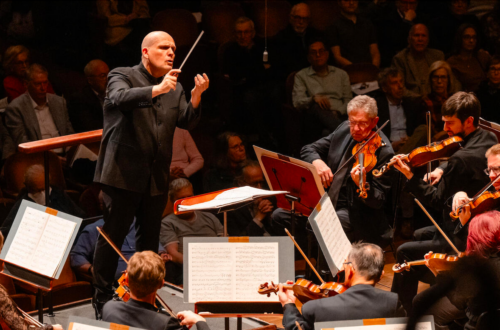
Jaap van Zweden came to conduct the San Francisco Symphony in the second of three visits to Davies Hall this season. The orchestra has been without a music director since Esa-Pekka Salonen departed last year. In a long parade of conductors who have been populating the season from mid-September to mid-June, Zweden has had the most assignments, including a program of two Beethoven symphonies coming in February.
He conducted the season opener back in September, and what I heard from the orchestra then in a program with a Tchaikovsky piano concerto and Respighi’s Pines of Rome was a blockbuster of sheer sound. ‘Big, crowd-pleasing music that bounced off the high ceilings of the concert hall’ is how I described it. The same could be said of this Bruckner Symphony No.7.
Van Zweden went all-in for long, orotund brass passages. He got richly colorful woodwind work and plush strings to emphasize the symphony’s open-armed sonorities. This orchestra relishes assignments like this, and its ability to produce majesty in moments of mass sound can still bring clarity to internal elements of the music. That is what a Bruckner symphony needs. In the Seventh Symphony, in which all the tempos lean toward deliberate tempos – even the Scherzo carries (in German) the qualifier ‘somewhat slower’ – van Zweden set just enough of a pace to keep things pulsating.
Although Bruckner’s symphonies are often compared with Mahler’s because of their length, the two composers had very different aims. Unlike Mahler’s story lines and nature soundscapes, Bruckner is all about building a sonic palette with repetition and expansion. Van Zweden paid a great deal of attention to subtle phrasing within all that, shaping melodies with attention to dynamics within the phrases and the slightest of rubato. This was especially appealing in the innocently lyrical opening minutes before the big guns from the brass and woodwinds took over.
The most memorable moments came from the expansive, slow-moving chorales carried by the four trumpets, three trombones, tuba, four Wagner tubas and five French horns. The second-movement Adagio benefited from soulful work from the low end of the orchestra, especially the Wagner tubas led by French horn principal Diego Incertas Sánchez. Combined with soulful playing by trombones, tuba, bassoons, cellos and double bass, the sound laid the foundation for the quasi-religious music to unfold.
The Scherzo, with ostinatos and dark colors in full-orchestra orchestrations, found a nice contrast with the short but delicately phrased and restful trio at the center. Although the tempo was, as indicated, not fast, there was a feeling of build-up. The movement gathered momentum without speeding up.
The Finale, which turns some of the material from the first movement upside down and re-develops prior material, led to a series of climaxes that had the entire orchestra playing in unison. The phrases were shaped with remarkable unity. Especially striking were the varying colors from the brass in their extended moments and the subtly executed timpani segues, often relatively quiet, played by Edward Stephan.
After all that, the final thrust from the full orchestra comes quickly, and it wrapped up a beautifully fashioned hour.
The concert’s first half consisted of a pleasant if uneventful performance of Mozart’s Piano Concerto No.25 in C major. Emanuel Ax played with clarity and care, but what was missing was the charm that he is well-known to exude. The music was presented plain and simple, even in the virtuosic moments, which fluttered by without much attention to Mozart’s wit.
To be fair, van Zweden didn’t get much Mozartean bounce from the orchestra either. The opening flourish had a sort of broadness to the interpretation that jogged more than it danced. Having an hour-long symphony ahead is what likely prevented an encore from Ax.
Harvey Steiman