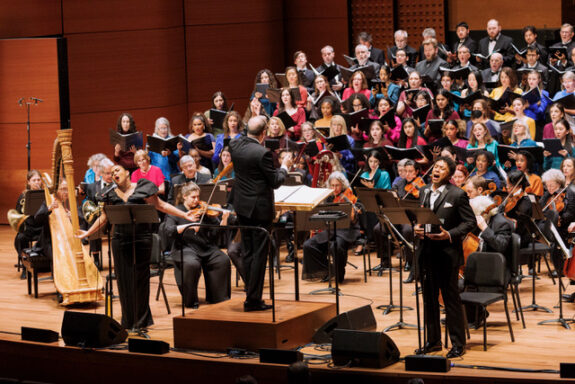
 United States Various, ‘Sins and Grace’: Mikaela Bennett (soprano), Justin Austin (baritone), MasterVoices Chorus, Orchestra of St. Luke’s / Ted Sperling (conductor). Alice Tully Hall, New York, 23.3.2026. (RP)
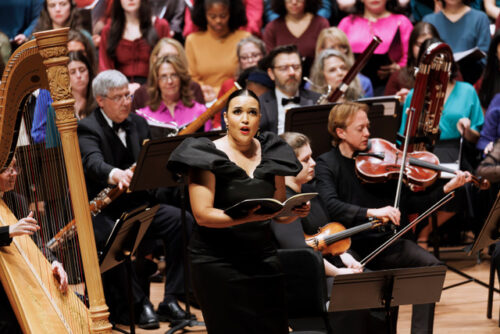
Fauré – Requiem in D minor
Michael Abels, Will Aronson, William C. Banfield, Jason Robert Brown, Heather Christian, Ted Hearne, Gregory Spears – SEVEN: A Cycle of Sins
The title of MasterVoice’s concert was ‘Sins and Grace’, although ‘Romping with the Devil’ would have been just as apt. Even with the Fauré Requiem as a prelude, SEVEN: A Cycle of Sins, an alternatively profound and joyful exploration of the ungodly, triumphed over sanctity.
When Ted Sperling, MasterVoices Artistic Director, was searching for a work to contrast with Fauré’s Requiem, he went for broke. Instead of a work by a single composer, he envisioned a cycle of seven songs, composed by as many composers as there are deadly sins. He required that the pieces use the same forces as Fauré did in his chamber-orchestra arrangement of the Requiem. The one performed on this program called for a solo violin, violas, cellos, bassoons, horns, harp, timpani and organ.
In the Fauré, the approximately 150 singers on the stage were responsive to both the spirit of the piece and Sterling’s reflective interpretation of it. In the softer passages, such as the Offertoire and In Paradisum, their sound, especially that of the sopranos, was light and ethereal. When a more robust sound was called for, as in the Sanctus, they delivered it with robust, ringing fortes.
The Orchestra of St. Luke’s performed with its usual polish and sensitivity. The predominance of the violas added richness to the orchestral fabric, enhanced by the burnished tones of horns. Violinist Emma Frucht’s solos were light and silvery. Equally exciting were the sounds Matthew Lewis drew from Alice Tully Hall’s excellent organ, crafted by the Swiss firm of Orgelbau Kuhn, which added color and drama.
MasterVoices engaged two exciting singers as soloists for the concert, soprano Mikaela Bennett and baritone Justin Austin. They are both fine artists, but SEVEN: A Cycle of Sins engaged them more than the Fauré. Bennett sang Pie Jesu in perfectly-placed, pure, bell-like tones but with little sensitivity to context. Austin was glued to the score and, although his sound was impressive, his performance was bland. The Libera me is the most dramatic movement of the Requiem, but Austin’s account was perfunctory.
Everyone, however, got into the spirit of SEVEN: A Cycle of Sins. Will Aronson’s setting of Dolan Morgan’s lyrics extolled the delights of ‘Gluttony’. With their voices now amplified, Bennett and Austin tripped through life’s joys and disappointments, with the words tumbling out of them to the chorus’s enthusiastic repetition of the refrain, ‘Yum. Everything in the world’. No matter the extent of the excesses, satisfaction was guaranteed.
For ‘Vanity’, Gregory Spears set a passage from Ecclesiastes in the Old Testament of the Christian Bible which contains the well-known phrase ‘Vanity of vanities’. Austin fiercely proclaimed the opening lines of the text, with the agitation in his voice heightened by a repetitive figure in the organ. The mood turned macabre when the chorus entered, singing a menacing and repetitive staccato figure. Spears’s setting of the passage’s final words, which command all people to keep God’s commandments, was loud, harsh and dissonant. Its intensity prompted an outburst of applause from the audience.
Jason Robert Brown wrote that he had more experience with ‘Sloth’, but it was his fate to bring ‘Envy’ to life. In the most personal of the settings, he bared his soul with references to his rejection from The Juilliard School and an oblique one to Milton Babbitt, who taught composition there for over 20 years. The music he wrote was exotic and colorful, with expressive solos for violin, bassoon and soprano. Bennett’s voice gleamed as she sang the languid solo line over a shimmer of bell-like sounds.
Ted Hearne’s ‘Greed’ had a biting political edge, evoking memories of the 2008 financial crisis and Occupy Wall Street. He drew his lyrics from the results of an online search of Google Books relating to former US Treasury Secretary Timothy Geithner’s book Stress Test. A smaller chorus sang the blurbs extracted from Hearne’s searches, which often broke off mid-sentence with the words ‘No preview available. Buy this book’. The entire choir spat them out with venom, and in doing so captured corporate greed more powerfully than Geithner’s words
For ‘Sloth’, William C. Banfield set lyricist Michael R. Jackson’s conversation between two characters: Sloth, the personification of the power of modern technology, and a conscientious objector who resisted its intrusion into his life. As Sloth, Bennett was coy and seductive as she extolled technology’s virtues, which Austin’s idealist rebutted by asserting his humanity and unwillingness to surrender to technology. The chorus got the last word, boldly asserting their refusal to automate themselves or yield to Sloth’s vanity, to the accompaniment of some grand strokes from the organ.
Remember George Carlin’s seven words that you can’t say on television? To those should be added a few more and generally less provocative ones, including ‘Hmm’, ‘Ah’, ‘Oh’ and ‘Uh-huh’. Using no more than these utterances, Michael Abels captured ‘Lust’, or actually a couple having sex, in graphic detail and with a large dollop of humor. The piece ended with the women of the chorus emitting one last ‘Ah’, to which the men responded with a snore. A timpani roll drove the point home.
St. Thomas Aquinas, the Old Testament and Dante’s Inferno served as Heather Christian’s inspiration for her musical portrait of ‘Wrath’. The chorus was divided into seven sections, all alternately wailing, whistling and stomping as well as singing. Bennett added the emotional power of a gospel singer to fuel humanity’s insatiable quest for revenge. The tumult ended with an outburst of rage and a downstage semi-chorus wailing like a siren. Heather Christian composed a nightmare to depict the most hellish of the Seven Deadly Sins.
With all due respect to those who wish to lead a holy life, SEVEN: A Cycle of Sins is a diabolical delight. It is certain to find its place in the repertoire.
Rick Perdian
Featured Image: Mikaela Bennett (soprano), Ted Sperling (conductor) and Justin Austin (baritone) with MasterVoices Chorus and Orchestra of St. Luke’s © Erin Baiano