 United States Puccini, La bohème: Soloists, Metropolitan Opera Chorus & Orchestra / Ramón Tebar (conductor). Metropolitan Opera, New York, 27.9.2026. (RP)
The Metropolitan Opera had a big week. The season opened with Verdi’s Macbeth, starring Quinn Kelsey and Lise Davidsen and marking Louisa Proske’s Met debut as director. New Yorkers know her for her work at Heartbeat Opera, an indie opera company that reimagines the classics. Traditionalists quickly put away their pitchforks: the production spanned the centuries, but it was rooted in tradition.
Mayor Zohran Mamdani then announced ‘Opera for All’ in a video filmed on the Met’s stage with the cast of La bohème. Under the partnership, the Met will release 10,000 free tickets a month in the 2026-27 season, about 70,000 in all. Any New Yorker who has not bought a Met ticket since 2019 can enter the lottery, and the Met has committed to continuing the program in future seasons.
Next, Freddie De Tommaso came to the rescue, stepping in for an ailing Stephen Costello as Rodolfo in La bohème on September 25 and 27. He was also singing Macduff in Macbeth this week, yet Rodolfo was a perfect fit: he partnered Juliana Grigoryan’s Mimì in the Franco Zeffirelli production last season.
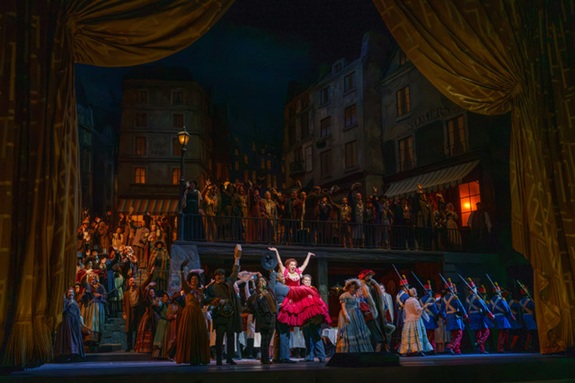
The beloved production, seen more than 500 times since its 1981 debut, has been refurbished thanks to the generosity of Met supporter C. Graham Berwind III. The loving care reveals many of the monumental set’s long-obscured details and ensures it will be fit for years to come. And, thank heavens, the red flowers in the Act IV pots are fewer and more subtle than before.
Finally, despite a rare September nor’easter barreling up the East Coast, the house was full for what was anything but just another performance of the Puccini favorite. After a week like this one, the Met’s season is off to a start that will be hard to top.
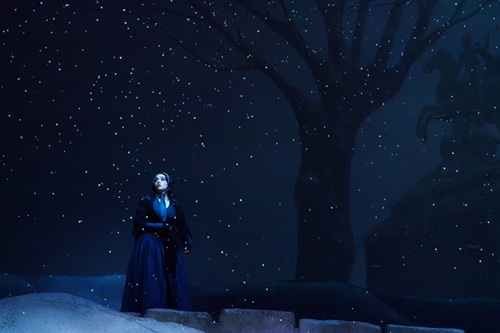
As for the Sunday matinee, Juliana Grigoryan is the epitome of Mimì – slight, pale and coughing – yet radiantly beautiful and coy. From her first knock at Rodolfo’s door, her dark eyes and beaming smile draw you in and don’t let go, and neither does her voice. In ‘Sì, mi chiamano Mimì’, she spins long, soaring phrases that show the evenness and richness of her soprano across the range. She surprises by singing of springtime in almost a whisper rather than letting the word bloom, as if the depth of her feelings took Mimì by surprise.
The Act I duet with Rodolfo revealed the full warmth of her voice, as did the moment in Act III when the lovers agreed to stay together until springtime. This time, however, the warmth had an autumnal glow. In the final scene, Grigoryan’s Mimì entered physically depleted, her voice bleached of color. An echo of that earlier fullness returned when she and Rodolfo relived the past, made richer still by her knowing there would be no future.
De Tommaso was not only in splendid voice but, for all his bonhomie, proved an exceptionally sensitive poet too. The opening scene pulsed with excitement as he and Hansung Yoo’s Marcello complained of the cold and burned the pages of Rodolfo’s drama to keep warm. They made a great team, with Yoo matching De Tommaso in decibels and in the freedom with which they sang.
The tenor’s sensitivity showed not only in the sweetness of his singing but also in his finesse when partnering Grigoryan. Without losing intensity or the visceral impact of his sound, he scaled his voice perfectly to hers. In ‘Che gelida manina’, De Tommaso would sing an expansive, ringing phrase, then surprise with a teasing aside. As Mimì lay dying, he revealed Rodolfo’s vulnerability through restraint, making his almost strangled cries of ‘Mimì!’ doubly potent.
Yoo’s robust baritone captured the extremes of emotion that Musetta’s tempestuousness stirs in Marcello, and his generosity of spirit spilled over to the other two bohemians. Le Bu’s Colline was no head-in-the-clouds philosopher but a high-spirited one, and the power and depth of his voice rang out in the four men’s horseplay. That sunny disposition made Colline’s farewell to his overcoat all the more poignant. Bu’s warmth extended to Gihoon Kim’s Schaunard, whom he treated like a younger brother. Kim’s voice had the presence to stand up to the other three, and his enthusiastic dancing drew laughs.
Rosa Feola sparkled as Musetta, eschewing histrionics for teasing in the Café Momus scene. Her charisma and sensuality were catnip for every man on the stage, especially Yoo’s Marcello. Feola imbued Musetta’s Waltz with glee and glamour while her voice flared in her fiery exchanges with Marcello. The fervent prayer for Mimì in Act IV revealed another facet of this Musetta.
Ramón Tebar is making his Met debut with this run of La bohème. The Spanish conductor was a willing participant in the four bohemians’ high jinks, but in a flash he would pull the rug out from under them with a phrase so wistful and beautiful that it took your breath away. As did the string playing in Act IV, especially the violins, which was pure and perfect in sound and sentiment. The orchestra and chorus were at their formidable best, seeming to embrace Tebar with as much warmth as the audience did.
The test of any La bohème is whether it brings a tear to your eye. This one did.
Rick Perdian
Featured Image: Rosa Feola (centre front, Musetta) in La bohème Act II © Jennifer Taylor/Met Opera
Production:
Production & Sets – Franco Zeffirelli
Revival director – Bruno Baker
Costumes – Peter J. Hall
Lighting – Gil Wechsler
Chorus director – Tilman Michael
Cast:
Mimì – Juliana Grigoryan
Rodolfo – Freddie De Tommaso
Marcello – Hansung Yoo
Colline – Le Bu
Musetta – Rosa Feola
Schaunard – Gihoon Kim
Parpignol – Gregory Warren
Benoît / Alcindoro – Donald Maxwell