
 United Kingdom Schubert, Skryabin: Yunchan Lim (piano), Wigmore Hall, London, 29.5.2026. (MBr)
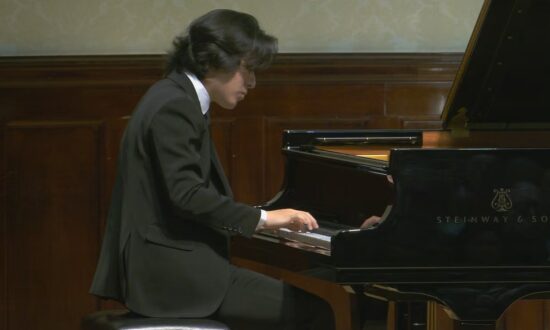
Schubert – Piano Sonata in D, D850
Skryabin – Piano Sonata No.2 in G-sharp minor; Piano Sonata No.3 in F-sharp minor; Piano Sonata No.4 in F-sharp
The queue for returns, Koreans taking photographs outside Wigmore Hall, diplomatic number plates – Yunchan Lim is back in town. And with him a program of Schubert and Skryabin that – on paper at least – looked startlingly odd, a juxtaposition that felt almost pianistically out of place. But this particular Schubert sonata – the D850 – and the Skryabin of the early sonatas are defined by nature, albeit of a different kind. For Schubert there is the rugged Alpine landscape; for Skryabin the literal fantasy of the Black Sea or the metaphysical structure of a sonata themed around the sea and storms conveyed in symbolic poetic terms.
That this felt like a recital of two halves was in large measure due to Yunchan Lim’s ability to succeed with one composer and fall short with the other. The Schubert of the ‘Gasteiner’ Sonata is a composer recovering from syphilis yet at the same time being in one of the happiest places he had been for a long time; it is also a work contemporary to the C major Symphony (D944) – with the sonata having a similarly symphonic, granitic scale to it: it is one of the most monumental of the piano sonatas Schubert had yet composed. Lim clearly saw this parallel in his performance where the structure of the work was given a titanic viewpoint: from a purely pianistic angle, the Allegro’s cascading runs were unleashed with torrential power though any real attempt to give them a geographical or metaphysical footing was largely glossed over. There was no denying the virtuosity (the repeated, relentless triplets played magnificently) but in essence Lim wasn’t particularly interested in taking us through the Alpine landscape to get anywhere except through the notes. The con moto, taken on the swift side, had a good sense of forward momentum; and the syncopated dotted rhythms which stuttered the motion of the music brought with it good dramatic contrast.
The scherzo (Allegro vivace) might have been the most successful movement – it was athletic, often breathtaking, especially in the chordal writing, and the trio was thoughtfully conceived. The final Allegro – in which Schubert writes some of his most affecting music – was a mismatch: Lim was playful in the march-like theme, and there was an over-indulgence of storminess elsewhere that just seemed to highlight his inability to understand the valedictory coda that brings the sonata to an understated close. Technically – apart from some heavy reverberation towards the end of chords – this was an immaculate account of the D850; musically, I don’t think it quite took us on the journey of discovery it was intended to.
The world of Skryabin is one of evolution, and that can be seen and heard in the composition of his ten piano sonatas, even through the lens of the three early ones which Yunchan Lim chose to program in the second half of this recital. These sonatas are rooted in the Romantic tradition (No.2), explore different psychological states and emotions (No.3) and explore new harmonic forms, transcendent states and philosophical language (No.4). The writing is often luminous and highly volatile; melodies soar and take flight. And as is always the case with Skryabin’s piano music the left hand – and how it is used – is essentially the core component of any great performance.
There is, I think, a way to play Skryabin and I wondered if Yunchan Lim would get the margin between lightness and power correctly balanced; he did, and phenomenally well. In the Sonata No.2, for example, in the Presto, he got the continuum of triplets spot on: there was a gorgeous vocal quality to them, but also a transcendent naturalness and spontaneity. The piano sang. Likewise, there was an effortless lightness to the Andante with a pliable left hand that took everything into account to weigh the balance of the instrument to perfection. From the brooding opening, to the second subject where the music glittered and glistened like sunlight on water, there was huge contrast on the keys. Where Skryabin saw colours – synaesthesia – Lim saw the same.
Unlike the 2nd and 4th sonatas the 3rd is in four movements – and on an altogether larger musical scale. Although the work is ‘programmatic’, Skryabin’s authorship of this poetic description is not certain. The first movement was heroically done by Lim – passionate, and assertive. The second, lithe and spritely (again, triplet figures exquisitely done in the trio section). The rest of the sonata looks back to the sea evoked in the 2nd sonata. The Andante was tenderly done – Lim’s left hand, like a coronet of sound, almost evoking shimmering, frosted colours in the melody of a soul floating on the sea. Again, the left hand came to the fore in the final movement in figurations and the chromaticism of the melody. The close of the sonata was almost symphonic – not to say stereophonic – in power.
Sonata No.4, perhaps looking back to the Tristan prelude, manages to contain within its eight or so minutes a musical language that is headily innovative and evocative: this is sensuous, intoxicating music of light, colour, dance, and the cosmos, themes which Skryabin would continue to explore into the new century. Lim was tender and thoughtful in the Andante, but it was the explosive Prestissimo volando (a pyrotechnic blast of repeated chords from Lim to close out the work) that sealed an exuberant and thrilling close to this recital.
Schubert which I felt missed the mark – and Skryabin which more than exceeded it. Yunchan Lim near his best, I think.
Marc Bridle