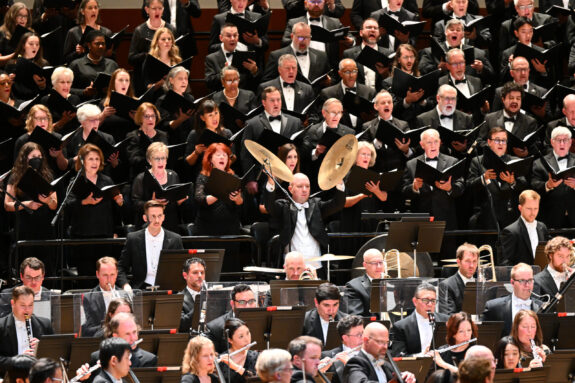
 United States Mahler: Talise Trevigne (soprano), Rihab Chaieb (mezzo-soprano), Atlanta Symphony Orchestra Chorus (director: Norman Mackenzie), Atlanta Symphony Orchestra / Nathalie Stutzmann (conductor). Atlanta Symphony Hall, 6.6.2026. (RP)
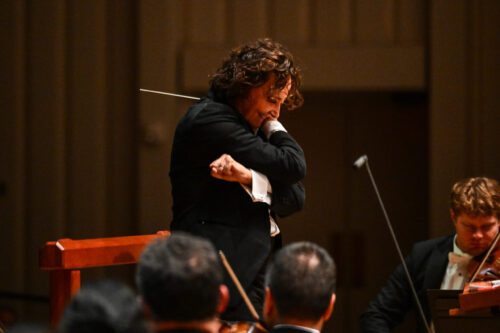
Mahler – Symphony No.2 in C minor, ‘Resurrection’
During her career as a singer, Nathalie Stutzmann studied the score of Mahler’s ‘Resurrection’ Symphony while awaiting her fourth-movement entrance, imagining how she might conduct it. The contralto soloist does not appear until roughly an hour into the vast work, providing her ample time to absorb its architecture and nuances. That investment clearly paid dividends, as she revealed in an impassioned and meticulously detailed performance of this transcendent masterpiece with the Atlanta Symphony Orchestra.
Stutzmann pursued conducting in the early 2000s, studying with Jorma Panula, Seiji Ozawa and Simon Rattle. After founding the chamber orchestra Orfeo in 2009, she went on to become the first woman appointed principal guest conductor of the Philadelphia Orchestra. She became the ASO’s artistic director in the 2023/24 season, with her initial contract being extended through the 2028/29 season. In December 2025, Stutzmann was named Artistic and Music Director Designate of the Orchestre Philharmonique de Monte-Carlo, again becoming the first woman appointed to the role.
Mahler said that in the first movement of the Symphony No.2, it was as if he were looking into an empty grave and asking: ‘What’s the point of life? Why are we even born if all we’re going to do is die? What’s the meaning of it all?’ As a singer, Stutzmann is a vivid storyteller, and that is the approach she brought to the sprawling opening movement. Her tools were structure and rhythmic alertness, which were apparent from the opening measures with their forbidding string tremolos.
The sonic extremes of Mahler’s writing also revealed the combined artistry of Stutzmann and the ASO. For every mighty brass clash and ominous march beat, there were moments of exquisite delicacy, especially from the strings, that provided a respite from the dread. Stutzmann stitched all of the extremes of emotion and sound into a seamless, if at times terrifying, narrative of great emotional depth.
Stutzmann paused before the second movement, mostly to allow for late seating, but did not observe the full five-minute pause before beginning the Andante moderato. For this movement, Mahler composed a sprightly Ländler, an Austrian folk dance in 3/4 time, which the orchestra performed with the lightest of touches and impressive transparency. The pizzicatos in the strings had such character, as did the particularly fine, delicate playing from the flute and harp.
In the scherzo, Stutzmann urged the orchestra to frenzied heights in a surreal kaleidoscope of color and emotions. Principal Clarinet Jesse McCandless wailed away in the frenzied klezmer-inspired dance with abandon. In one of the symphony’s most terrifying moments, the full power of the ASO’s brass and percussion resounded in the famous ‘death shriek’, which cut through the hall with startling force.
The soloists were seated to the rear of the orchestra on Stutzmann’s left. In the fourth movement, mezzo-soprano Rihab Chaieb rose to sing ‘Urlicht’, a poem from Das Knaben Wunderhorn, a collection of German folk poetry that inspired Mahler in the early years of his career. With her youthful, radiant voice, Chaieb sang the poem’s expression of suffering on earth and the hope for divine comfort and consolation with simplicity and sincerity. Matching Chaieb in expressiveness and tonal beauty was the ASO’s Principal Oboist, Elizabeth Koch Tiscione.
The finale began with a torrent of sound which, for all its spontaneity, was perfectly scaled to Stutzmann’s conception of the work. The emotional impact was there but none of the histrionics so often associated with it. The brass players and percussionists moved offstage with military precision. Their execution was equally impressive, creating one of the most awe-inspiring moments of the performance.
Atlanta Symphony Chorus’s entry singing the symphony’s pivotal text, ‘Aufersteh’n, ja aufersteh’n wirst du’ (‘Rise again, yes, you will rise again’), was stunning. Although soft, their sound was clearly audible and resonated with remarkable richness and complexity. Remaining seated, soprano Talise Trevigne’s voice floated above the chorus and orchestra with effortless ease. When singing together, Trevigne and Chaieb achieved an ideal blend.
With bells pealing, Stutzmann spurred the soloists, chorus, organ and orchestra to ecstatic heights. Mahler described the symphony as a cosmic exploration of life, death and spiritual redemption. Stutzmann and the ASO forces traversed that journey magnificently.
Rick Perdian
Featured Image: Joseph Petrasek (principal percussionist) with the Atlanta Symphony Chorus and Orchestra © Adam Hagy/ASO