
 Canada Various: Tiffany Poon (piano). Vancouver Playhouse, Vancouver, 18.1.2026. (GN)
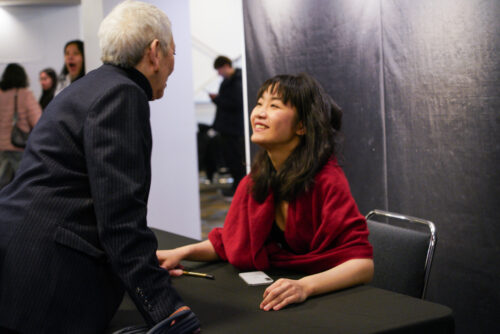
In traditional times, a performer built a reputation through distinguished concert appearances before further details of one’s life crept out in interviews and the like. In these days of social media and creators/influencers, things can be reversed: performers sell a persona and lifestyle to thousands of people digitally before they even start appearing on stage. Since exposure need not imply talent, one can have heathy skepticism about the results. Such is possibly the case for 29-year-old, New York-based pianist Tiffany Poon, who now has over 300,000 YouTube followers and has only recently begun international touring. Luckily, worries are largely allayed here: she is a pianist with a formidable Juilliard training, mentored by none other than Joseph Kalichstein and Emanuel Ax. But she does remain a young pianist who is just starting to wed her sensitivity with her virtuoso skills, and her performances do have an ‘artist in the making’ feel. At this concert, which combined pieces from both her best-selling releases for Pentatone, Diaries and Nature, she succeeded most in Alkan and the impressionist French miniatures but did not maintain concentration and line over the longer Robert Schumann Davidsbündlertänze.
There can be little doubt that Poon draws in a good portion of her digital audience through her absorption in softer, slower pieces and her talent in creating warm moods and feelings. She clearly aims to create a spell. At least in her curated image, this artistic signature is often placed alongside a love of the freedom and peace in nature, ‘day in a life’ vlogs and the joys of her adorable cat, ‘Meow’. However, she does have an accomplished virtuoso side too – which exudes plenty of energy and motion. Warm sentiment and unbridled fire are two of the most likely attributes that could attract uninitiated young listeners to classical music.
Robert Schumann fits the artist’s template perfectly since he revels in the extremes of Florestan and Eusebius, though there is much more to the composer than that. The concert started from the endearing lyrical warmth of the opening piece of Kinderszenen, setting her desired mood. I thought this was reasonably well structured and emotionally felt, though some might feel that the playing was a little too ‘cuddly’ and verged on sentimentality. After a flowing but perhaps a little flighty ‘Mazurka’ by Clara Schumann, Poon then moved to the main event: Robert Schumann’s Davidsbündlertänze.
Her playing was indeed accomplished throughout, but the pianist seemed to treat each of its 18 pieces as a separate miniature. There was little sense in which the work was building to anything as a whole, or that the components were structurally related to each other in some narrative line. It was like the pieces were colour-coded as Florestan-like or Eusebius-like, and anything in between emerged as ‘pretty’ but relatively aimless. The Florestan components were mainly pushed hard and seemed like virtuoso competition pieces; her Eusebius efforts clearly relished the composer’s soft musings and tried to bring out their spell-like dreaminess. However, there was little differentiation in attitude within each type of extreme, and I found that the alternation between the extremes was predictable in advance. The Florestan pieces, in particular, seemed to be frenetic and passionate without a clear sense of style: one actually reminded me of a Slavonic Dance by Dvořák. The pianist needs to find a more layered building in these compositions so they don’t just end up as a flurry of notes. I sometimes worried about her pedaling decisions as well.
I admit that it took a little perseverance to get through this, but that is what happens when you offer breadcrumbs from a piece without embracing its full spirit. She needs to develop charm, meaning and structural continuity, and to find the nobility in (Robert) Schumann too. Perhaps the current result is one downside of playing to a digital following with short attention spans and an ability to only respond to extremes.
The miniatures in the second half of the concert were understandably much better. The devilishly difficult Alkan ‘Le festin d’Ésope’ was excellent in general, taking its technical dash in stride and finding both contrast and balance. The only qualification might be that it needed a little more variation in dynamics and a slightly greater sense of space throughout the different variations. The Couperin and Rameau pieces struck me as nicely articulated and balanced but on the cautious side. The latter’s famous ‘La Poule’ might have had even sharper contrasts and more manic drive – at least that is what I cherish about the most vivid harpsichord performances.
The atmospheric Debussy and Ravel pieces fit with her immersive style, allowing her to use the pedal to get her preferred type of haze and suspension. Debussy’s ‘Bruyères’ and ‘Reflets dans l’eau’ were perfect vehicles to open up a naturalistic dreamlike aura, and the performances had considerable beauty. The gentle filagree fingering and fluidity were notable though there might have been even more lingering here and there, and greater suspension and whimsy. The Ravel Miroirs pieces (Nos. 2 and 3) were possibly even finer. ‘Oiseaux tristes’ certainly brought a compelling, trance-like flow while the longer ‘Une barque sur l’océan’ had the greatest concentration of all, with wonderfully clear limpid playing on top, beautiful control of the filagree passages and tremolos and a full appreciation of the work’s shimmering colour in climaxes.
On this showing, this is the music that suits her artistic sensibility best and allows her to be the most genuine. It was rewarding to see her potential here. Given the cleaner style of contemporary approaches to this repertoire, I think she could be even more transparent and jeweled if she forfeited a little of her pedal. The affecting ‘D’un jardin clair’ by Lili Boulanger closed the concert with the same warm feelings that we started from.
Tiffany Poon has performed an invaluable service for classical music by getting all these young listeners involved. She has done this infinitely better than the aggregate of music reviewers could ever hope to. A second stage is for Poon to now teach her audience how to appreciate the longer structural expanses of the greatest pieces of the piano repertoire, and to exemplify this vision in her own playing. This may be a much more difficult project but equally critical: a life with only miniatures and vignettes is not a full life.
Geoffrey Newman
R. Schumann – Kinderszenen Op.15 No.1; Davidsbündlertänze Op.6
C. Schumann – ‘Mazurka’ Op.6 No.5
Alkan – ‘Le festin d’Ésope’ Op.39 No.12
Louis-Claude Daquin – ‘Le Coucou’
Couperin – ‘Les Papillons’ from Pièces de clavecin, Book 1
Rameau – ‘La Poule’ from Nouvelles Suites de Pièces de Clavecin, Book 5
Debussy – ‘Bruyères’ from Préludes, Book 2 No.5; ‘Reflets dans l’eau’ from Images, Book 1 No.1
Ravel – ‘Oiseaux tristes’ No.2 and ‘Une barque sur l’océan’ No.3 from Miroirs
L. Boulanger – ‘D’un jardin clair’ from Trois Morceaux pour piano
This reads more like a description of how YOU would play the pieces than a measured evaluation of how SHE played them. Any really competent musician can ‘play the ink,’ but after that, it’s all about the interpretation. It seems that your critique is really about her interpretation, which is a matter of taste, I believe. And, let’s be fair — her interpretation is likely to change as she gets older and more experienced. I’d cut her more slack.