 United States Various – ‘Winter Sparks’: Alan Choo (violin), Debra Nagy (oboe), Kathie Stewart (traverso), Sarah Stone (cello), Apollo’s Fire / Alan Choo (director). First United Methodist Church, Cuyahoga Falls, 29.1.2026. (MSJ)
Vivaldi – Sinfonia in G minor, RV157; Oboe Concerto in A minor, RV461; ‘Ciaconna’ from Chamber Concerto in G minor, RV107; ‘Winter’ from The Four Seasons, Op.8 No.4, RV297
Bach – Orchestral Suite No.2 in B minor, BWV1067
Evaristo Dall’Abaco – Concerto No.3 in E minor, Op.5
Marin Marais – Sonnerie de Sainte Geneviève du Mont-de-Paris
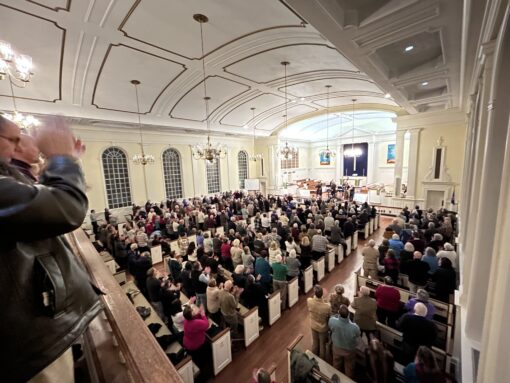
The short version of this review is simply to say that Apollo’s Fire is the kind of ensemble that can draw a full house in the wake of a snowstorm, at 11 degrees Fahrenheit with a foot of snow on the ground and with more snow falling. Those were the conditions on the night of this concert, and neither the weather nor unplowed sidewalks by some of the parking areas could keep patrons from trekking to hear Cleveland’s Baroque orchestra do what it does so well: strike sparks.
For over thirty years, the ensemble has been making sell-out concerts in Summit County, south of Cleveland. That continuity was challenged last season when one of the ensemble’s long-term venues shut down permanently. This ‘Winter Sparks’ concert pioneered a new space, the First United Methodist Church in the small city of Cuyahoga Falls, which is situated between Cleveland and Akron. The church did not look promising at first: narrow hallways that caused long lines, and a peculiar setup where the ticket will-call area was past the point where tickets were being scanned.
At first glance, the sanctuary did not look promising either, with the musicians on an elevated space pushed back from the audience, and a high, barrel-shaped roof that was not acoustically reassuring. But as Vivaldi’s characteristically dramatic Sinfonia in G minor began, it was clear that the church’s sound is actually a step up from the fan-shaped church in Akron where Apollo’s Fire used to perform. This church, while still a little diffuse to those of us seated toward the back, projected sound better than expected and allowed the audience to feel engaged with this small-scale concert that never featured more than eight or nine players at a time. The Sinfonia also gave the audience a glimpse at the concert’s pinch-hitter: scheduled cellist HyunKun Cho had fallen ill but, fortunately, Sarah Stone – the executive director of New York City’s Repast Baroque – was able to jump in with a few small changes in the program. This work, one of the originally scheduled ones, features rippling torrents of notes in the swift finale which Stone deployed with gusto.
Debra Nagy, the artistic director of Les Délices and principal oboe of the Handel & Haydn Society, was the featured soloist in Vivaldi’s Oboe Concerto in A minor. While Nagy blazed through Vivaldi’s virtuosic passages with amazingly varied articulation, she also took advantage of the intimacy of the ensemble to reduce her softest tones to pastel whispers that still carried through the church’s acoustics to breathtaking effect in the Larghetto slow movement.
Kathie Stewart, a founding member of Apollo’s Fire and currently Curator of Historical Keyboard Instruments and Teacher of Baroque Flute at Indiana University’s Jacobs School of Music, brought a wide range of expressive playing to Bach’s Orchestral Suite No.2 in B minor. Apollo’s Fire’s assistant director and concertmaster, Alan Choo, launched the Ouverture energetically, with Stewart’s traverso flute fluttering out over the ensemble with the first concertante passage. Elegance. plaintiveness and proud hauteur alternated in the succeeding dances, the only miscalculation being the Bourrée, so brisk that Stewart’s solo was blurred to those of us in the back. Briskness was spot-on in the mischievous Badinerie that closed the suite, giving Stewart moments of both fiery fingerwork and pearly sustained notes.
Evaristo Dall’Abaco (1675-1742) is one of the lesser-known figures of the Baroque, but his music has been resurfacing in recent years as it has been realized that Dall’Abaco foreshadowed Handel’s cosmopolitan status by traveling around Europe and absorbing local influences in his compositions. The composer would surely be gratified that his feisty Concerto No.3, featuring Stewart and Nagy as soloists, held its own against more famous program mates. While some parts, such as the canonic duet for the soloists in the slow movement, were by-the-book style, there were surprises too, such as the third movement, which abruptly jumped from nervous string toccatas to serene pastoral interludes. The shift was so unexpected, it even brought chuckles from the audience. Great to see when a composer’s sense of humor still lands after three hundred years.
Marin Marais’s Sonnerie de Sainte Geneviève du Mont-de-Paris was a welcome waft of French Baroque, a built-in commercial for the ensemble’s ‘Palace of Versailles’ series of concerts coming in March. The obsessive repeated bass pattern that drives the piece evokes the ringing of bells in a Paris church, and Marais inventively vamps on that pattern for almost five minutes before the first key change brings a sense of relief, though the pattern grinds on. Featuring Choo on violin, Stone on cello and harpsichordist Peter Bennett, the performance combined elegant elan with intensity.
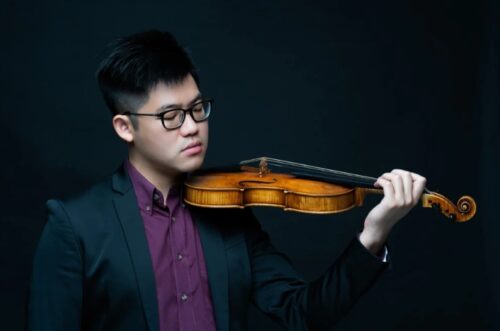
An originally scheduled Vivaldi concerto for several instruments was replaced by a feisty chaconne and one of Apollo’s Fire’s greatest hits: the ‘Winter’ concerto from The Four Seasons. This is familiar fare from the ensemble, but one can’t gainsay its effectiveness on this occasion as it all too vividly pictured the weather outside. The concert is credited in the program with Choo as director and Apollo’s Fire artistic director Jeannette Sorrell as co-director, though she would only be joining the continuo in some of the later performances in the series. There is no question that Choo was absolutely in charge of the ‘Winter’ concerto as both soloist and ensemble leader, living in the moment and not just coasting on autopilot. The ensemble has a long history of Sorrell introducing the Four Seasons concertos with demonstrations of Vivaldi’s scene paintings. On this occasion, continuo theorbo and guitar player William Simms charmingly delivered the introductions with winning glee. Choo’s performance animated the icy concerto with ferocious energy, bringing the capacity crowd to its feet.
Mark Sebastian Jordan
Featured Image: An ovation for Apollo’s Fire at the new venue © Apollo’s Fire