
 United Kingdom BBC Proms 2026 [24] – Berlioz: Soloists, Maîtrise de Radio France, Chœur de Radio France, Les Siècles / Jakob Lehmann (conductor), Royal Albert Hall, London 30.8.2026 (JR)
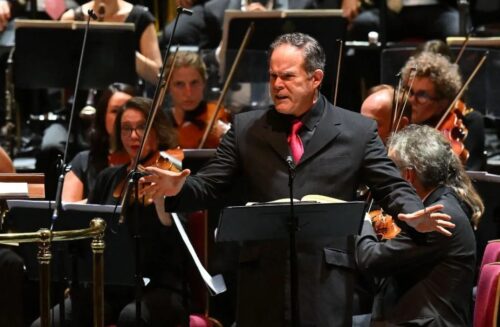
Berlioz – The Damnation of Faust
Faust – John Osborn
Marguerite – Véronique Gens
Méphistophélès – Gerard Finley
Brander – Thomas Dolié
The challenging acoustics of the Royal Albert Hall, the position of the choir right behind the orchestra and period instruments led to a somewhat subdued yet refined performance of Berlioz’s ‘dramatic legend’ (Berlioz’s own description).
Les Siècles were founded in 2003 by François-Xavier Roth and is unique in that they perform the music of each period on historical instruments appropriate to the time the works were written. It meant that whilst we heard intriguing textures (in particular chirping piccolos and incisive timpani), some of the music’s bite, wit and thrill was dissipated. There was no snarl or rasp or sneer from the brass, and the large professional choir occasionally found it hard to cut through the murky acoustic.
Les Siècles have performed this in a staged version at their Parisian home, the Théâtre des Champs-Élysées; even though the work is an opera in the mind’s eye, a semi-staged performance of this work at the Albert Hall might have brought it more to life. There was no visible passion between Faust and Marguerite, little mischievousness from Méphistophélès. One could sense Gerald Finlay was itching to do just a little bit of satanic acting.
John Osborn is an established American lirico spinto tenor with a vocal range well-suited to the role of Faust, though one or two of his top notes eluded him. When needed though, he had plenty of heft. The introductory passages were, however, not rendered with sufficient interest, too much ennui. Véronique Gens was very much a class act, though quite why she chose a red dress was a mystery – was she some agent or collaborator with the Devil? Her soprano sparkled, her ballad ‘The King of Thule’ beautifully sung, the French diction (of course) to die for – which Faust duly did.
Gerald Finlay was a favourite with the audience (the Royal Albert Hall strangely nowhere near full), his cheeky glances as welcome as his mellow, honeyed baritone. Thomas Dolié made as much as could with his drinking song about a poisoned rat.
Not everyone likes the sound of period instruments, but here one revelled in the gossamer strings in the pianissimo sections, the characterful woodwind (a wonderful cor anglais), the mellow viola, four (!) harps and the cymbals. German conductor Jakob Lehmann impressed with his precise control of dynamics and vocalists and his view of the overall structure.
The professional choir of Radio France (I counted just over 60 of them, and if my eyes did not deceive me they included one female bass) were of the highest quality, many not needing to look at their scores. In a less cavernous hall they would undoubtedly have made more impact. It was, however, wonderful to hear a French choir sing in French. They had fun too with the words Berlioz made up for the legions of Hell.
A choir of around 30 young singers (almost all girls – come back boy trebles everywhere!) from the children’s choir of Radio France completed the aural picture as the seraphim escorted Marguerite to Heaven.
John Rhodes