
Khori Dastoor on Houston Grand Opera’s turnaround, new works and James Gaffigan
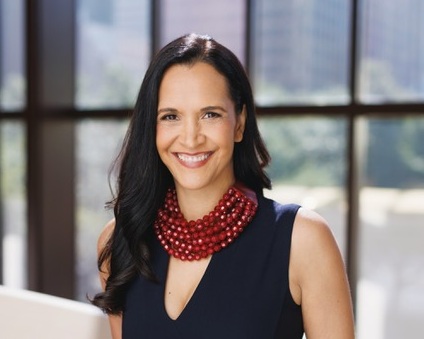
When Khori Dastoor was appointed general director and CEO of Houston Grand Opera (HGO) in June 2021, the organization was pushed to its limits. In August 2017, Hurricane Harvey hit Houston, causing catastrophic flooding that incapacitated HGO’s home, the Wortham Theater Center, and caused roughly $100 million in damage. Less than three years later came the sweeping disruptions of the COVID-19 pandemic. The fallout left HGO financially vulnerable, forcing cuts to staff and programming.
Earlier in October, Dastoor was in New York to celebrate a milestone in the company’s recovery: the release of HGO’s critically acclaimed recording of Missy Mazzoli and Royce Vavrek’s 2016 opera, Breaking the Waves. Dastoor discusses HGO’s turnaround, its commitment to championing American opera and the arrival of Music Director Designate James Gaffigan, who will officially assume the podium as music director in the 2027–28 season.
[This interview has been edited and condensed for clarity.]
Rick Perdian: The last five years have been good to HGO. What are you most proud of, and what do you think that success says about the company’s future?
Khori Dastoor: If I’m honest, what I’m most proud of is the people I work with and those who support the opera today. My job is to galvanize resources and support to make great things happen. I have the 360-degree view of the whole enchilada. I see the patchwork of people who have made a difference, wondering what HGO would be if a certain person had not walked into our lives or made that gift. I’m incredibly proud of the partnerships HGO has maintained and established with various constituents in our city.
We are constantly bombarded with news about the downfall not only of opera, but of all humanity, or warnings that AI will replace us all. That’s not the spirit at HGO right now, and I do give myself some credit for that. As a leader, you have to understand what will resonate with your community. I found Silicon Valley incredibly frustrating because, despite being surrounded by great wealth, there seemed to be an allergy to parting with it. In Houston, there’s a spirit of generosity and philanthropy that’s in the local DNA. You cannot inspire that unilaterally as an institution, even if you’re doing very good work.
When I got here, I understood David Gockley’s vision – he served as HGO’s general director from 1972 to 2005 – as driven by the astronaut, wildcat spirit he tapped into for the company. That outlook remains and I’m proud of it. I’m also fortunate that the bets made over the decades are paying off now. We’re spending 48% more money on great art, our budget has gone from a huge deficit to a balanced budget and the HGO story is one of growth and investment, not cutting and decline.
I think the doom-and-gloom narrative is overblown anyway. I’m in constant conversation with colleagues who are doing wonderful things and making interesting investments. Those investments are paying off on stages across the country, and I want to remind people of that.
RP: Audience building is another major topic of conversation. How do you meet that challenge?
KD: Houston is a very young, diverse city and one of the fastest-growing in the country. HGO’s audiences reflect that. They may be Russians and Ukrainians working in the oil and gas industry who arrive here with an existing relationship with opera. Equally, people in their 20s and 30s wonder what’s going on in town and find their way into our theater. We’re lucky that Houston doesn’t have a gorgeous mountain as competition. On any given night, my audience is mostly newcomers. I find that incredibly inspiring, but it also means we have to offer a compelling experience.
We don’t need to put ourselves in a box about canonical works or subscriptions. These conversations are ongoing, but we need to move past them and free ourselves from the expectations inherited from previous generations.
If you’re in Europe, in a city like Vienna, you have centuries of expectations about what opera looks like, along with a responsibility to your national heritage and to preserving certain traditions. In Houston, we’re liberated from that. We need to be there for our community. The government is not dictating our budget so there is no ceiling on our aspirations.
I think of Leonard Bernstein being told, when A Quiet Place was premiering in Houston, ‘Thank you for bringing opera to this cowtown’. The idea that there could be great opera in Houston was a miracle. We carry that legacy forward. We harness remarkable creativity and new ideas from people with a variety of backgrounds who use their talents for the good of opera. I’m very proud that our marketing director is a Texan and our CFO came from the rodeo. We don’t necessarily need to bring in people like me, who have been involved in the arts since they were eight years old.
RP: How does HGO plan to build on its impressive record of developing and staging new operas?
KD: My first reaction to that question is to establish a clear definition of what a ‘new’ opera is and how that translates to Houston. There are three works under development right now, and various others in the pipeline, and we absolutely intend to premiere them. But many in our community have never seen Carlisle Floyd’s Susannah or Kevin Puts’s Silent Night because they have never been staged here. To those audience members, these are new operas.
I try to focus intensely on the stories and scores, specifically what will resonate with our public. It is true of many great works of art that the first version is not necessarily the best or definitive one; that version may arrive with the second or third production. For Silent Night, I actually asked Kevin to rewrite the choral sections when we staged it last season. It was a completely different era in Minnesota when he composed it around 2010 and that is reflected in the original score. He made very different choices 15 years later.
My view is that new works must be held to the exact same artistic standard as anything else we present. Once you adopt a piece, the gestation process and the responsibility of supporting the creators become yours entirely. Whether we are working with Joel Thompson – Houston’s first full-time composer-in-residence – Missy Mazzoli or Matthew Aucoin, we know we have collaborators who can deliver at the absolute highest level.
In deciding to program any work, particularly a new one, we have to consider how it fits with the other pieces in the season and what is going on in our broader lives. Asking whether it is the right cultural moment to stage a work is essential. Quite frankly, creating a work of staggering genius that no one comes to see, or that is never produced again, is not a successful endeavor.
I always wear my commercial hat. With any piece – whether new or historical – that asks an audience to take a risk, we are demanding not just their money but their time. There has to be a compelling answer to the question ‘Why should they?’ I think about that first and foremost before investing in these works. I also have to consider the scale of our space. We have a massive theater, but many new works are best suited to a smaller, more intimate space, which we do utilize. Ultimately, we only get to present six or seven works a season, so I always have to ask, ‘Is this the one? But gosh, there are so many beautiful works’.
Susannah, which premieres on 23 October, was written in the 1950s during the McCarthy era, yet it resonates strongly today, especially in Texas. The opera poses a haunting question: what does man do to himself in the Lord’s name? I feel anyone who sees it, just as with Silent Night, leaves the theater knowing exactly why we produced it. Unlocking those feelings and depths of understanding in our audience is electrifying.
RP: What made James Gaffigan the right choice for Houston Grand Opera?
KD: It’s hard to believe that it is his first such position in America, isn’t it? After all, he was born in New York City, grew up on Staten Island and attended LaGuardia High School of Music & Art and Performing Arts. He also has ties to Houston, having done graduate studies at the Shepherd School of Music at Rice University.
James is uniquely talented for his generation, and not just because of the electricity he generates on the podium. He also speaks to a new generation about the power of an old genre like opera, galvanizes support for it and is its ambassador. He’s collaborative and open to ideas, and he leads with authenticity, sincerity and emotional honesty. That’s really what you need for this job.
You always hear that opera is for a particular type of person, only for old people or rich people. We need to combat those stereotypes. People know about ballet from The Nutcracker and about the symphony, but not opera. To change this dynamic, HGO has a big footprint. We’re at gospel brunches in churches, launching concerts in parks and working in libraries, schools and homeless shelters. We are everywhere just to let people know that we exist.
Those efforts require a certain type of music director and that is James. He was a kid from Staten Island whose middle-class family had no preexisting relationship with music. He found emotion and energy in a kind of connection that transcends time. He has proved himself as a conductor on the great podiums of the world and now he wants to focus on his own country.
I believe he sees possibilities in Houston that don’t exist in other places. It helps that he has lived in the city and has an affection for it. James and I also have decades of trust dating from when he was studying bassoon at the New England Conservatory and I was a voice major.
We did a global search and looked at several people, and ultimately James was the right person for this moment in Houston. We are thrilled that he is here.
RP: Why did you establish a record label?
KD: Post-COVID, there was a huge shakeup in distribution models and recording labels and many shut down. We were looking for a collaborator that would keep HGO in the creative driver’s seat. We wanted a partnership in which HGO had responsibility for the artistic product and our partner had a brand that spoke beyond our established audience and had a global reach. We found the opportunity to create this new model with LSO, the official, artist-owned record label of the London Symphony Orchestra. They are incredibly knowledgeable and share our values, plus they have expertise we do not.
Houston is a very international city, a global player in oil and gas as well as the medical field. These industries and others have an international reach, so it makes sense for HGO to seek an audience for its recordings from around the world.
New works are one of HGO’s hallmarks and preserving that record strongly aligns with our mission. Breaking the Waves had made its impact over 10 years but no formal documentation of it was available. That was an easy yes. Missy’s art is finding its way to young people and diverse communities. It’s resonating. She is a living example of that, but so are many others. It’s wonderful that she and Royce Vavrek are having their moment, not only with the release of this recording of Breaking the Waves, but also with the world premiere of Lincoln in the Bardo at the Metropolitan Opera.
These recordings help prove that you don’t have to be in New York to create great art. We can do that in Houston and be who we are. I think more companies need to find their way to that point, where they are defined by the community that supports them. It’s a more entrepreneurial approach than striving for an international ranking.
You also have to tap into local pride. There has to be a sense that even if someone does not know about or like opera, they want Houston to win. People want their city taken seriously and see HGO’s success as a win for the home team. Winning a Grammy for Best Opera Recording in 2026 for our recording of Jake Heggie and Gene Scheer’s Intelligence, which we commissioned and premiered in 2023, helps make that case. A win like that helps galvanize the broad coalition necessary to support the art form. But it has to be great opera. It’s too long and too expensive just to be good.
Rick Perdian