
 Germany Tchaikovsky, Beethoven: (SRT)
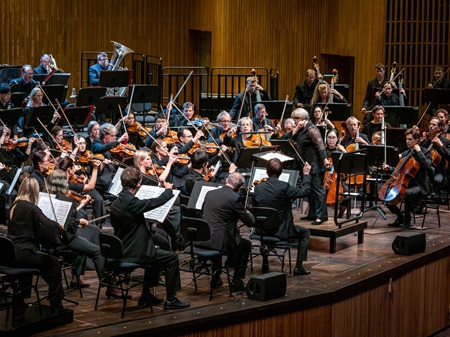
15.10.2026 – Bettina Böttinger (moderator), Beethoven Orchestra Bonn / Karen Kamensek (conductor), Beethovenhalle, Bonn.
Tchaikovsky – Symphony No. 6, Pathétique
18.10.2026 – Elena Bashkirova (piano), Kölner Kammerorchester / Christoph Poppen (conductor), Kölner Philharmonie, Cologne.
Beethoven – Overture, The Creatures of Prometheus; Piano Concerto No.3; Symphony No.5
Walking around Bonn it is easy to forget that it used to be a capital city. Today it feels like a tidy but sleepy provincial town, albeit one containing museums that let it punch above its weight, and with a pretty old town that harks back to its 18th-century heyday.
Make no mistake, however: the main man in the city isn’t a political figure like Willy Brandt or Konrad Adenauer: it’s Ludwig van Beethoven, who was born in Bonn in 1770. Everywhere you look, and not just around the old town, there are traces of Beethoven, be it statues, street names, museums, even a car park.
Beethoven’s name has also been added to the city’s main concert hall, and its orchestra, the Beethoven Orchestra Bonn, who play in the Beethovenhalle. When I heard them, however, it was Tchaikovsky whose music was on the menu. In fact it was the first of their season’s Spiegelkonzerte, evenings that unpack a piece of music in the first half before playing it in full in the second.
Consequently, it might not be entirely fair to judge their Pathétique Symphony by the standards you would apply to other concerts, though it is worth mentioning that the preliminary chat wasn’t particularly revelatory and featured surprisingly little music. Instead, Bettina Böttinger and Karen Kamensek just chatted between themselves, comparing the third movement’s march theme to a fandango and musing over what the secret of the symphony’s programme might be.
Nor, I am sorry to say, did the actual performance get off to a particularly great start, with some tentative playing that didn’t really take off until the violins entered, and rather too many lapses of ensemble. Too often it felt like listening in on a rehearsal rather than witnessing the finished product; and, to be fair to them, there is an element of truth in that, because they were to play the Pathétique in a full-scale concert the following evening, which might excuse some rough edges.
Things definitely improved as the symphony progressed, however, particularly in the strings, who found marvellous freedom of expression in the waltz, and the got just the right level of darkness to the wilting phrases of the finale’s coda as it ebbed into unanswerable darkness.
For some music by Beethoven himself, I travelled up the Rhein valley to Cologne where, a few days later, the Kölner Kammerorchester opened their season with a concert that they entitled ‘Beethoven Pure.’ Beethoven evenings like this used to be guaranteed box office in years gone by though, in the UK at least, they have somewhat gone out of fashion as programmers look for more innovative ways to produce their music.
So there was something pleasingly retro, almost guilty, about settling into Cologne’s Philharmonie to wallow in three of Beethoven’s greatest hits, and ‘wallow’ is the word, especially when considering the way the orchestra shaped their sound. They are a chamber orchestra alright – 2 double basses, 4 cellos, up to 7 first violins – and they use modern instruments, but they played with the luxurious richness you would expect to have heard coming out of a symphony orchestra about 50 years ago. Hearing how they played, and watching Christoph Poppen conduct them, I kept thinking this was the sort of thing Neville Marriner or Colin Davis would have produced in the 1970s, almost as though the period instrument revolution never happened.
There is nothing wrong with that, of course, provided it is done well, but the aural textures sounded homogenized and smoothed over here, sometimes even slightly sickly, and Poppen’s leisurely tempi didn’t help. The Creatures of Prometheus overture uncurled slowly in its opening adagio, and its ensuing allegro was too careful to be exciting. Beethoven’s Third Piano Concerto lacked propulsive drive, too, so that the slow movement verged on the soporific, and not even the final Rondo broke a sweat, Elena Bashkirova picking her way through the notes as though she had all the time in the world.
That said, there is something lovely about hearing Beethoven played in this style today, just when you had thought orchestras had forgotten how to do it this way. The first movement of the concerto might never have gotten out of first gear, but the strings sounded majestic in their delivery, and the big climaxes of the Fifth Symphony sounded massive in their scale, if not quite in their attack. Poppen gave the impression of enjoying himself enormously, and if his delivery was relaxed then at least that helped in the string swell of the symphony’s slow movement and the blaze of the C major closing chords.
Simon Thompson