
 United Kingdom Various: Clare Hammond (piano). The Venue, Leeds Conservatoire, Leeds, 26.11.2026. (PC)
Hélène de Montgeroult – Études Nos. 37, 67, 107, 110 and 111
Grażyna Bacewicz – Sonatina
Chopin – Barcarolle
Emma-Ruth Richards – 3 Études
Earl Wild – 7 Virtuoso Études after Gershwin: Nos. 7, 4 and 6
Rachmaninov – Études-Tableaux, Op.33
Stravinsky (arr. Guido Agosti) – The Firebird Suite: Danse infernale du roi Kastcheï, Berceuse, Finale
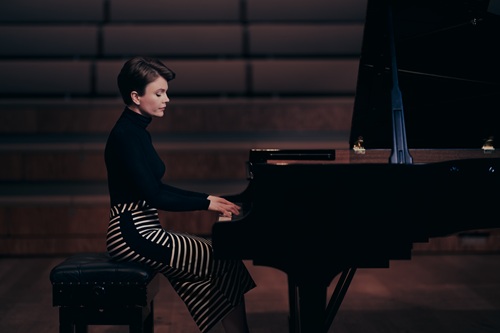
Forming part of the Leeds International Piano Series, Clare Hammond’s recital given in The Venue at Leeds Conservatoire on 26 November ranged widely, presenting music from various countries by composers of the Classical and Romantic eras, as well as 20th-century and contemporary pieces. The programme included diverse examples of ‘Études’, or studies, in which the poetical and expressive aspects of the music were given due prominence, transcending merely technical considerations.
The programme began with a selection of five Études by the French composer and pianist Hélène de Montgeroult (1764-1836). This repertoire was a perfect match for Clare Hammond’s fine balance between pianistic bravura and interpretative sensitivity. No.37 had a tender, flowing elegance and No.67 ranged over the keyboard in music of liquid fluency. No.107 was fiercely impassioned, contrasting effectively with the coolly elegant, delicately ornamented No.110. The intense and impetuous No.111 brought this impressive sequence to a dramatic conclusion.
Dating from 1955, Grażyna Bacewicz’s Sonatina had a bold assurance that belied the diminutive of the title. A spirited, playful and crisply rhythmic opening Allegro non troppo was followed by an uneasy slow movement, which unfolded like a haunted lullaby. The impetuous, dance-like finale was rounded off by a delightfully insouciant closing gesture.
Chopin’s Barcarolle, Op.60 was completed in 1846 and forms one of his last major works. In a deeply considered account, the score’s free-flowing, rhapsodic elements were given full scope, without obscuring the narrative’s subtle integration of ternary structure and sonata form. Forward-looking aspects, such as chromatic shifts and rich, sometimes dissonant, harmonies, contributed, together with the music’s liltingly expressive content, towards a reading of great depth and reach. With elegantly shaped phrasing and limpid lines, this heartfelt performance was further elevated by the pianist’s flair for engaging story-telling and an innate feeling for colour and timbre.
It was shrewd programming to follow this late Chopin work with the 3 Études by Emma-Ruth Richards, written in this decade. The last two of these sophisticated, eloquent pieces were composed for Clare Hammond, who premiered them earlier this year. Inspired by images of birds in flight, the three studies evoked, respectively, the expansion and contraction of flocks of starlings, the alternating wingbeats and silent gliding of finches and the nocturnal journeys of swifts rising from the depth and soaring on the wing. This versatile music was vividly and inventively pictorial, yet when approached as pure music independent of its avian associations, the protean material seemed like a natural development of the filigree ornamentation, harmonic sophistication and formal complexity encountered in the previous Chopin work. Striking an ideal balance between picturesque musical painting and formidable technical control, this was a finely honed, instinctive performance of music of enduring worth.
To close the concert’s first half, three of Earl Wild’s 7 Virtuoso Études after Gershwin (1976) found the pianist in relaxed, light-hearted spirit. ‘Embraceable You’ had a communicative immediacy, its expansive treatment complementing the sharp and lively ‘Fascinatin’ Rhythm’ and ‘I Got Rhythm’ that framed it.
After the interval, Rachmaninov’s Études-Tableaux of 1911 provided further opportunities for the pianist to exploit her talent for characterisation. The buoyancy of the opening Allegro non troppo contrasted well with the shimmering textures of the following eloquent Allegro, while the opening of No.3 (Grave) had a hypnotic quality, suggesting considerable reserves of power held in check. Other pieces ranged from wistfully introspective (Nos.5 and 8) to a moto perpetuo-like dynamism (No.6) and the fanfare-like energy of the Allegro con fuoco (No.7) was bright and celebratory in tone. The final Grave brought the sequence to a resounding, brilliant conclusion. In every piece, thoughtfully chosen tempos were sufficiently elastic to accommodate a fresh, improvisatory treatment.
There followed three movements from Stravinsky’s The Firebird Suite, transcribed for the keyboard in 1928 by Guido Agosti. In Danse infernal, Clare Hammond strained her technical abilities to the limit to capture the music’s frenzied spirit. A less committed artist might have held back, ensuring the performance remained polished as well as exciting, but this pianist is invariably at pains to realise the composer’s intentions above any considerations of sheer beauty of sound. The result was as genuinely thrilling, and unnerving, as the music and the story demanded. A mesmeric reading of the folk-like Berceuse was sufficiently measured to resonate profoundly, while the jubilant Finale contained dignity and hope, as well as climactic bravura.
Desdémona from Mel Bonis’s Femmes de légende (1898) by Mel Bonis made a fluent and gracefully pensive encore. It was well received by the healthy-sized audience, who responded keenly and appreciatively throughout the evening’s music-making. Placing virtuosity entirely at the service of characterisation and interpretative insight, this exceptional recital was graced by refinement, clarity, and breadth of imagination.
Paul Conway