
 Hungary Beethoven, Mozart, Brahms, Liszt, Bartók, Kurtág: József Balog (piano), Dezső Ránki (piano), Hungarian Radio Symphony Orchestra / János Kovács (conductor). Budapest’s Institute of Musicology 10.10.2026 and Ferenc Liszt Music Academy, 13.10.2026. (AK)
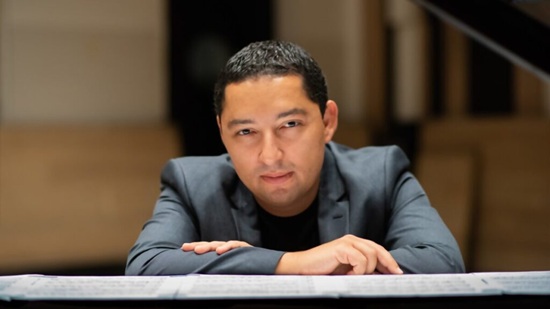
During my six-day trip to Hungary (7th – 14th October 2026) I had the privilege of attending concert performances by distinguished pianists József Balog and Dezső Ránki respectively. They are of a different generation, with Ránki (born 1951) almost three decades older than Balog (born in 1979). However, their artistic integrity, lack of showmanship, technical command and profound musicianship prompt me to discuss these two excellent players within one report even if Balog gave a solo recital while Ránki performed a concerto.
Both artists enter the stage with focus on the piano, neither play-act to influence the audience. Both sit at the piano with exemplary posture, allowing them to convey their musical interpretation to the full. Ironically, on these occasions, both artists had to negotiate some unforeseen dramas of different intensity.
Balog gave a concert in London the evening before and was scheduled to fly back to Budapest next morning, in time for a rest before his early evening concert. However, his WizzAir flight was three hours late and Balog just managed to reach his concert in time to play.
The drama at Ránki’s concert occurred just before he was due to play his concerto. At the end of the previous number, a lady in the fourth or fifth row of the stalls went sick and fainted. A member of the audience (who happened to be a concert going music lover but a paramedic medical doctor in his day job) noticed from the balcony, rushed down and skilfully took out the lady – closely followed by the doctor on duty – from the concert hall. There was further delay while a cleaner made the surrounding of the incident acceptable.
Clearly, Balog had more of a non-musical drama to contend with but the occurrence of unforeseen dramatic events prior to both pianists performing is uncanny.
Balog’s commitment proved to be extraordinary. Not only did he play his planned programme with utmost artistry in spite of probable physical exhaustion owing to his WizzAir experience but he also presented a few Kurtág pieces as a group of encores.
Ránki’s concerto performance was governed by his long decades of diligent studies and playing experience but also by his affinity with the deeply musical conductor János Kovács. Kovács, in turn, elicit respect and discipline from the Hungarian Radio Symphony Orchestra who delivered excellent performances of all three items on the programme.
These two concerts showed that Hungarian music life continues to uphold high artistic values and that Hungarian piano playing upholds the traditions of, for instance, Liszt, Dohnányi and Bartók. Individual pianists come and go but the tradition is maintained.
Agnes Kory
Programme of József Balog’s recital, 10.10.2026
Beethoven – Six bagatelles, Op.126
Brahms – Three intermezzi, Op.117
Liszt – Petrarca-sonnet No.104
Bartók – Improvisations on Hungarian folksongs, Op.20
Programme of concert with Dezső Ránki (piano) and the Hungarian Radio Symphony Orchestra / János Kovács (conductor), 13.10.2026
Haydn – Divertimento (Cassation) in G major, Hob.II:2
Mozart – Piano Concerto No.23 in A major, K.488; Symphony No.41 in C major, K.551 (‘Jupiter’)