
 United Kingdom Various: Lucy Farrimond (soprano and piano). Sheffield Cathedral, South Yorkshire, 4.11.2026. (PC)
Britten – The Salley Gardens; The Last Rose of Summer
Quilter – Dream Valley; Now Sleeps the Crimson Petal
Traditional (arr. Nathan Armstrong) – Bonny at Morn
Traditional (arr. Jay Althouse) – Scarborough Fair
Vaughan Williams – The Sky Above the Roof
Haydn Wood – A Brown Bird Singing
Novello – We’ll Gather Lilacs
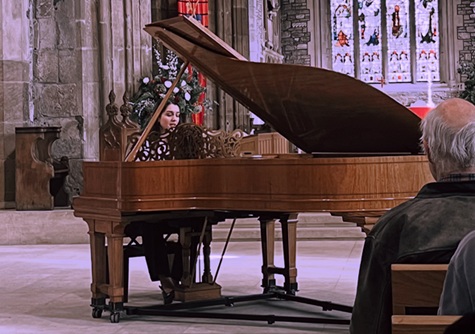
A highlight of the current Sheffield Cathedral lunchtime recital series was a concert given on by Lucy Farrimond in which the soprano accompanied herself on the piano in a thoughtful selection of British art songs and folk melodies. This engaging performer established an instant rapport with her audience, introducing the items on the programme and describing the concert, which forms part of a UK tour she is undertaking, as a happy combination of her two most cherished roles of singer and pianist.
She began with The Salley Gardens, Britten’s lucid arrangement, published in 1943, of a traditional Irish song to verse by W. B. Yeats. Ideally paced, this made an attractive opening. The vocal line was beautifully controlled and enhanced by sensitively shaped piano accompaniment.
Britten’s 1957 folksong arrangement The Last Rose of Summer to words by the Irish poet Thomas Moore, was a darker piece, with chromatic keyboard writing and a greater range of expression and character required from the singer. This dramatic vocal line suited Farrimond, who was able to draw on her operatic experience to provide light and shade and to capture effectively the music’s changing moods.
Roger Quilter’s Dream Valley from Three Songs of Williams Blake (1916/17) was tinged with an affectingly nostalgic hue and a subtly melancholic undertow. In this appealing setting, the performance had an improvisatory freshness, with both piano and vocal lines delivered with rhapsodic spontaneity. Published in 1904, Quilter’s eloquent Tennyson setting Now Sleeps the Crimson Petal was graced by a relaxed, flexible pulse. Keyboard and vocal lines were thoughtfully interpreted, and the words were given sufficient time to register and resonate.
There followed a couple of folksong arrangements. In Bonny at Morn, the simple opening accompaniment caught the ear. The music gained a natural fluency as it unfolded, becoming brighter and more relaxed. Scarborough Fair benefitted from Farrimond’s flowing and flexible approach to the familiar tune, bringing different tints of colour to each restatement of the theme.
Measured and introspective, Vaughan Williams’s The Sky Above the Roof (1908), to words by Mabel Dearmer after Verlaine, was atmospherically presented. Pauses were given due weight, phrase endings allowed to make their mark and the softly rising, arpeggiated, left-hand piano figure in the closing bars was delicately rendered.
Haydn Wood’s gentle ballad A Brown Bird Singing (1922) was imbued with a richly romantic yearning, well-suited to the sentimental words of Royden Barrie, a pseudonym of writer Rodney Bennett. It was performed with a keen understanding of the music’s essential style and character and made a strong impression with its emotional honesty and directness of utterance.
The final item on the programme, Ivor Novello’s We’ll Gather Lilacs brought the concert to a satisfying conclusion. Written near the end of World War II, this familiar number from the composer’s musical romance Perchance to Dream was tenderly expressed and vividly characterised.
Enriched by her own responsive and sophisticated piano accompaniment, Lucy Farrimond’s rewarding song recital offered sensitive and generous musicianship in attractive repertoire. Her relaxed and inclusive style of performing ensured that her listeners were always attentive and she was rewarded with a deservedly warm response from a highly appreciative audience.
Paul Conway