
 United States Various: Pablo Ferrández (cello), San Francisco Symphony / Xian Zhang (conductor). Davies Symphony Hall, San Francisco, 16.10.2026. (HS)
Kodály – Dances of Galánta
Tchaikovsky – Rococo Variations
Encore: Cassadó – Finale from Cello Suite
Dvořák – Symphony No.8
If the San Francisco Symphony and conductor Xian Zhang wanted to put together a program that reveled in melody, Tchaikovsky and Dvořák certainly make a great pairing. Add Kodály’s trademark Hungarian-flavored tunes and bounce to open, with a highly energetic conductor like Zhang and a soloist the caliber of Pablo Ferrández, and you get a field day for fun.
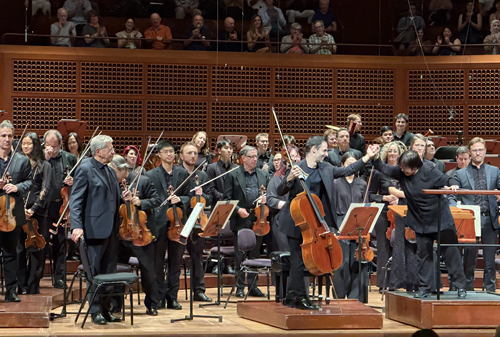
That is pretty much what happened in Davies Symphony Hall. Zhang, music director of both the New Jersey and Seattle Symphonies, wields a spirited baton and the orchestra responded with brio. She can also shape a phrase with dynamics to create beguiling curvatures, and the program sprang to life in exhilarating ways.
Kodaly’s Dances of Galánta started with a gradually blossoming tune in the cellos, then opened up into a feast of Roma folk melodic turns. Especially good were extended solos by principal clarinet Carey Bell and contributions from the flute of Yubeen Kim, the oboe of Eugene Izotov and the English horn of Russ de Luna, both as solos and pairing off. Zhang’s sense of rhythmic twists, slowing just enough occasionally to emphasize another moment, all felt natural and resulted in highly perfumed moments. Especially appealing were sudden changes in volume.
Ferrández, the Spanish cellist who made an impression with this orchestra on the Elgar Concerto in 2024, returned for a splendid traversal of Tchaikovsky’s Rococo Variations (by definition a celebration of melody). I have seldom heard a soloist in this piece carve out such distinctive piquancy in each variation – light and airy here, more supple there, digging in on the expansive ones, sweet in the penultimate variation and finally letting it rip in the rapidly paced, virtuosic finale.
The sheer physical impression this music made, as it emerged with such power from his Stradivarius cello, was breathtaking. It is a big sound, as if naturally amplified, and Ferrández’s dexterity corralled it into distinct personalities with a deft touch. Zhang duplicated the cello’s textures and rhythms in the orchestra and kept things in sync with dynamics as well. As in the Kodály, the woodwinds were delightful when they intertwined musically with the soloist in several of the variations.
For the encore, Ferrández turned to his Spanish roots with the finale of Gaspar Cassadó’s unaccompanied Cello Suite. A student of Pablo Casals, Cassadó emulated Spanish guitar technique with strumming flamenco harmonies and keening melodies. Ferrández executed the slow, elaborate introduction and then rode a rhythmic groove to a delightful climax.
Zhang really got into physical conducting for Dvořák’s Symphony No.8, emphasizing downbeats with vigor and extending the melodies as if embracing them. The orchestra responded with full-bodied sound that contrasted with lovely softer episodes. A sense of unity carried the feast of melody nimbly, and it was chock full of melodies. The cellos built a foundation with the warm blanket of an opening tune and flutes then countered with a livelier strand. Each recurrence had a different feeling as the composer’s endless wheel of ideas began to spin. In the slower second movement the strings and woodwinds alternated in creating a gently rustic atmosphere. The third-movement waltz raised the bar on elegance, Zhang making it flow engagingly.
The brass got going in the finale, starting with crisp fanfares from the two trumpets and plenty of power from the trombones and tuba in response. The cellos’ articulation of the broad main theme couldn’t have been more polished. Zhang patiently stoked the fiery rhythms leading up to the big finish with an explosion of brass and percussion that brought things to a satisfying close.
Harvey Steiman