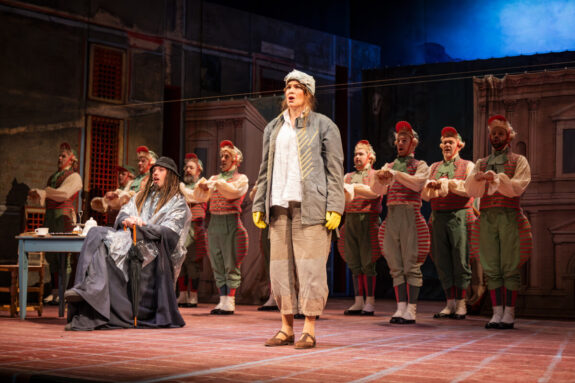
 Sweden Rossini, La Cenerentola: Gothenburg Opera Soloists, Male chorus and Orchestra / Giancarlo Andretta (conductor). Gothenburg Opera main stage, 28.8.2025. (NS)
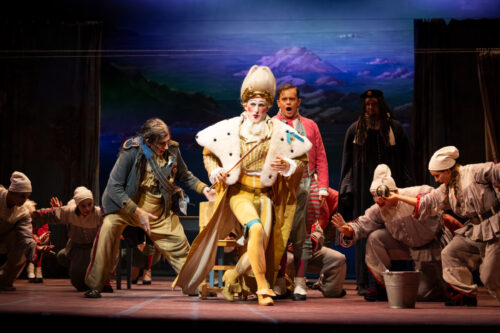
David Radok’s much-loved production of La Cenerentola premiered in 2003 and was last revived in 2015. Ten years on a revival is a lovely way to open the new opera season. Ivan Theimer’s set is deceptively simple, using a series of decorative curtains to change the depth of the stage, give different backdrops and allow seamless scene changes. The lighting by Torkel Blomkvist and Joakim Brink makes the stage appear suffused with sunlight and the warm colours of an Italian landscape by Turner.
A joyful sense of light and colour is fully felt from the orchestra as well. Giancarlo Andretta’s conducting has beautiful phrasing and a wonderful sense of the rhythm and flow of Rossini’s score. The orchestra is raised higher than usual in the pit, bringing them closer to the singers and the audience. The result was sparkling playing and enthusiastic applause from the audience after the interval.
Another superb aspect of this production is the choreography by Håkan Meyer and Sara Suneson. The six dancers not only do much of the work in the scene changes but also comment on the action and add some delightful physical comedy. The sense of rhythm and movement extends to the whole cast; even when the music repeats there is always something new happening on stage. The male chorus are very much part of the choreography, making two of their entrances riding imaginary horses.
Åke Zetterström has moved from the role of Dandini ten years ago to Don Magnifico. Zetterström gave a multi-faceted performance, adept both at the ridiculous pomposity of his opening aria ‘Miei rampolli femminini’ and at his sickening sycophancy towards the ‘Prince’. He also brought out a genuine sense of danger when warning Angelina not to reveal her true status and forbidding her from going to the ball. His patter in ‘Se qualunque delle figlie’ was wonderfully clear and witty.
Clorinda (Mia Karlsson) and Tisbe (Erika Tordéus) made an excellent comic pairing, with Karlsson’s cooler soprano reflecting her character’s (attempted) sophistication and maturity while Tordéus’s bright mezzo-soprano was deployed in shamelessly showing off the younger sister’s advantages for the Prince. They also made an excellent scenic and vocal contrast to Angelina’s warmer sound and greater dignity.
Kristoffer Töryä’s Alidoro was dignified though with a nice twinkle in his eye, sung with a warm and attractive bass. Hannes Öberg’s Dandini was in contrast delightfully undignified – his first entry dressed up as Prince in Act I was gloriously over the top, swathed in cloth of gold and carried into Don Magnifico’s house by a bevy of servants. Öberg’s baritone was versatile, switching from an aristocratic drawl when in character as the Prince to a rich and sonorous voice when he is a mere valet. His physical comedy was terrific, most of all when he got royally tangled in his robes in Act II. He also made a great comic pairing with Liam Bonthrone’s Don Ramiro, especially in the Act I quartet where Dandini as ‘Prince’ offers his valet as consolation husband to whichever of the two sisters he does not choose.
Liam Bonthrone is a thrilling discovery for me, taking on the demanding role of Don Ramiro with vocal poise and acting from the heart. He immediately set out Don Ramiro’s character as a youthful idealist and his first meeting with the ragged Cenerentola in ‘Un soave non so che’ was beautifully bashful. His second meeting with Angelina (this time the unknown beauty at the ball) was heartwarming in his joy when she declared to the ‘Prince’ Dandini that she loved his valet. This became a springboard for a showstopping ‘Sì, sì trovarla io giuro’ in which Bonthrone displayed a warm Rossinian tenor with an impressively open top.
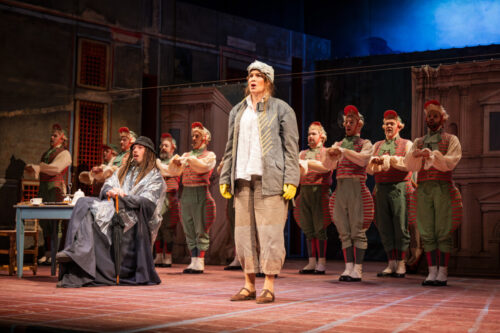
Ann-Kristin Jones was captivating as Angelina, with a warm and expressive mezzo that was a contrast with the voices of her stepfamily but a lovely complement to Don Ramiro’s tenor. Jones was adept at retaining Angelina’s underlying dignity even when she is being cruelly abused by her stepfamily; but also showing her character’s vulnerability above all in her duets with Don Ramiro. Her overtone-rich voice was lovely in solos and duets but also projected wonderfully in the big ensembles, including the thrilling finale to Act I. Jones demonstrated a beautiful mezzo coloratura in her magnificent final aria ‘Nacqui all’affanno … Non più mesta’. This superb cast and production are a perfect musical demonstration of Rossini’s ‘triumph of goodness’.
Niklas Smith
Playing until 19 September. For tickets and more information see the Gothenburg Opera website here.
Production:
Director – David Radok
Revival direction – Mattias Ermedahl
Set design – Ivan Theimer
Costume design – Katarina Hollá
Lighting design – Torkel Blomkvist
Lighting design revival – Joakim Brink
Choreographer – Håkan Meyer
Choreographer’s assistant – Sara Suneson
Choirmaster – Martin Nagashima Toft
Cast:
Don Ramiro – Liam Bonthrone
Dandini – Hannes Öberg
Don Magnifico – Åke Zetterström
Clorinda – Mia Karlsson
Tisbe – Erika Tordéus
Angelina (Cenerentola) – Ann-Kristin Jones
Alidoro – Kristoffer Töyrä
Dancers –
Hanna Brehmer, Julie Dariosecq, Gustaf Jönsson, Vadim Nuñez Belousova, Lina Räftegård, Agnes Stålhammar