
 United Kingdom Beethoven: Dame Mitsuko Uchida (piano). Wigmore Hall, London, 14.10.2025. (CSa)
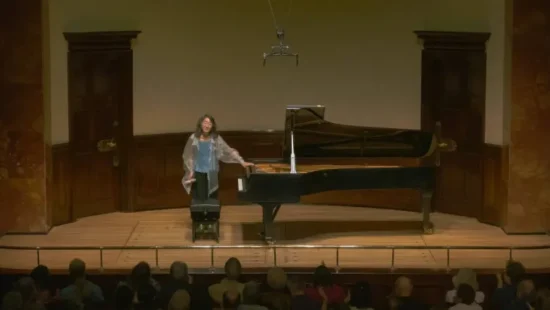
Beethoven – Piano Sonata No.30 in E, Op.109; Piano Sonata No.31 in A flat, Op.110, Piano Sonata No.32 in C minor, Op.111
Each year offers an abundance of good concerts, and if critics in this and other publications are right, many great ones. Yet there are few musical experiences so sublime that they burn themselves into memory and leave one with the feeling that history is quietly being made. Such was the most recent performance of Beethoven’s final three piano sonatas by Dame Mitsuko Uchida at London’s Wigmore Hall.
This trilogy of keyboard works, composed between 1820 and 1822, found Beethoven living frugally and in chaos, mostly in Vienna. He was wracked by chronic ill-health, frequently depressed, and was totally deaf. He communicated by ‘conversation’ notebooks in which visitors recorded their side of the exchange to which Beethoven replied aloud or in writing. There are contemporary accounts which describe him pounding on the piano with such ferocity that the strings broke. Despite his inability to hear even the loudest sound, ‘his inner ear was alive with music, vaster and more pure than any sound on earth’, claimed his pupil Carl Czerny. This period of profound silence in Beethoven’s life resulted in an outburst of supreme creativity, and opened an internal emotional world characterised by deep contemplation, liberated imagination and perseverance.
It goes without saying that Uchida invariably brings technical perfection, intellectual rigour, and clarity of expression to all her performances, a seamless fusion which she also combines with penetrating emotional insight and deep human sensibility. All these qualities were on display in the Wigmore Hall.
Uchida’s sinuous physical grace and energy bely her 76 years. Approaching the platform with composure and wearing a diaphanous Issey Miyake top that seemed to float around her, she bowed low from the waist and took her place at the piano. On this occasion the hall’s concert grand had been substituted for her own warm-toned 1962 Steinway. After taking a moment to run her fingers through her grey flecked hair and to reach above the keyboard to locate her glasses, she embarked on the first of the sonatas, No.30 in E, Op.109. Uchida brought a burnished warmth to the opening Vivace, and a sense of pressing urgency as she transitioned to the Adagio. Then followed a thrilling eruption of energy in the second movement Prestissimo. The third movement, an expressive Andante famously marked Gesangvoll, mit innigster Empfindung (Songful with the most intimate feeling) began and closed in serene, almost devotional simplicity, while the central sections surged with insistent energy and passages of contrapuntal complexity decorated with intense, extended trills.
Uchida’s account of Sonata No.31, Op 110, was equally authoritative. A delicately smooth, sweet lyricism rippled through the first movement Moderato cantabile, contrasting with the crisp staccato drive and propulsive exuberance of the Allegro. The third movement Adagio with its hymn-like introduction, played here with glowing lyricism, culminated into a radiant and brilliantly executed fugue.
The second half of the recital comprised the last and arguably greatest of Beethoven’s 32 sonatas, and one of the five he wrote in two movements, Opus 111 in C minor. The opening chords of the Maestoso rang with solemn authority, setting the stage for the unrelenting tension of the Allegro con brio. In Uchida’s hands, Beethoven’s spiritual turbulence was intensely dramatic, but perfectly controlled, and never gratuitously percussive. From the first prayerful notes of the Arietta to the syncopated, prophetic, jazz-infused variations, her pacing was impeccable and her tone translucent. When the end came – a seemingly endless and slowly evaporating series of shimmering trills held in the right hand – time hovered and stood still. That moment of transcendence ‘does not end -it ceases to be audible’ wrote the musicologist Donald Tovey.
The audience, transfixed, sat in reverential silence for two full minutes, and the applause, when it came, felt like an unwelcome intrusion. Uchida had taken us on a spiritual voyage which will be remembered as a moment of musical history.
Chris Sallon