
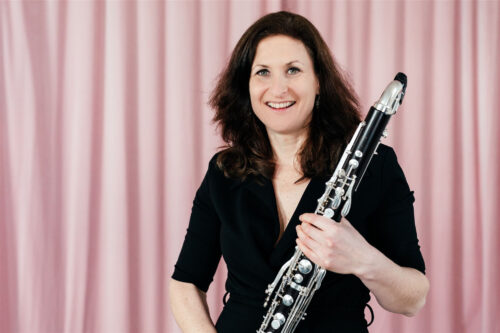
 United Kingdom Gipps, Coleridge-Taylor: Mayflower Ensemble (Liz Peller, Catherine Lawlor [violins], Ruth McGibbon [viola], Nicola Heinrich [cello], Alison Hughes [clarinet]). Winchester Cathedral, 14.10.2025. (CK)
Ruth Gipps – Rhapsody in E-flat for Clarinet and String Quartet, Op.23
Samuel Coleridge-Taylor – Clarinet Quintet in F-sharp minor, Op.10
For this well-attended lunchtime concert in Winchester Cathedral the ever-flexible Mayflower Ensemble were without their regular pianist, Samantha Carrasco, though cellist Nicola Heinrich and clarinettist Alison Hughes were joined by three string players: Liz Peller and Catherine Lawlor on violin and Ruth McGibbon on viola. And in the Cathedral’s generous acoustic what a beguilingly beautiful sound they made!
The Ensemble have been particularly effective in championing the music of lesser-known women composers: in the last couple of years or so I have heard them play the music of Alice Verne-Bredt, Alice Mary Smith, Phyllis Tate, Morfydd Owen and Louise Farrenc (and Clara Schumann, though, thank heaven, she can perhaps no longer be regarded as ‘lesser-known’). Alison Hughes continues to research the music of women composers; and to that list Ruth Gipps can now be added.
Gipps was energetically active in the second half of the twentieth century as a practising musician – conductor, oboist and pianist – though she found it hard to gain a foothold as a recognised composer. She wrote symphonies, and concertos for piano and most of the standard string and woodwind instruments. The Rhapsody we heard in Winchester Cathedral suggests that she broke no new ground, but that she wrote music of individuality and character. The influence of Vaughan Williams is soon clear: she studied with him at the Royal College of Music (where, 30 years later, she herself became a Professor). One senses that there must have been many like her (perhaps there still are): well-known names in the music world of their day, while their own music continues to languish in obscurity.
Her Rhapsody opens with gorgeous, summery sounds, the clarinet singing unhurriedly and elatedly over a lush warmth in the strings: the music visits different moods during its 11-minute span, but the natural flow is never lost. A tiny, folksy cello solo ushers in a more animated tempo; there is a sudden stillness; a perky theme high on the clarinet, sounding almost like a different instrument: Alison Hughes revelled in its bubbling joy. The music slows, and the first violin partners the clarinet; a final, gently flying clarinet solo, and the music comes to rest. Played like this, the Rhapsody is entirely captivating.
Samuel Coleridge-Taylor’s music is becoming better known than it used to be, thanks to the advocacy of Chineke! and other ensembles. He embodies the same problem as Gipps (and so many others): how are we to respond to music that missed its own time and is rediscovered in ours, when musical tastes and concerns have moved a long way on? That is not entirely fair to him – The Song of Hiawatha was wildly popular and enjoyed thousands of performances over half a century – but nothing else really ‘stuck’. I have heard his delightful Symphony in A (performed by Chineke!, review here), written when he was a 20-year-old student; and I was eager to take the opportunity (thank you, Mayflower Ensemble) of hearing the Clarinet Quintet, only two opus numbers further on.
If Ruth Gipps’s music is influenced by Vaughan Williams, it is the spirit of Dvořák that presides benevolently over that of Coleridge-Taylor. The half-hour Clarinet Quintet (written, apparently, in response to a challenge by Stanford after a performance of the Brahms Quintet) opens in the minor key, but with the vigour, health and ‘outdoor’ feeling that characterises so much of Dvořák’s music (and that so often eludes his mentor Brahms). In the beautiful Larghetto affettuoso the clarinet plays gently but with a sense of untrammelled freedom while the strings weave a graceful and delicate texture beneath. The Scherzo had a delightfully off-kilter skip in its step; the Trio, begun by strings alone, brought pleasant but less distinctive music – fun to play, judging by the smile on the viola player’s face. The return of the Scherzo material brought a wonderfully neat and animated close. There was energy and purpose in the finale too, easing to more relaxed music and a passage of something like stillness before the vigorous finish.
A rewarding concert, as ever with the Mayflower Ensemble. Soon they are playing piano and wind quintets by Holst and Mozart in Romsey Abbey: such is their curiosity and conviction that I half expect the featured music to be by Imogen Holst and Constanze Mozart.
Chris Kettle
Featured Image: Mayflower Ensemble at this concert