 United Kingdom BBC Proms 2026 [2]- Jolas, Sibelius, R. Strauss: Sueye Park (violin), BBC Philharmonic / John Storgårds (conductor). Royal Albert Hall, London, 21.7.2026. (KMcD)
Betsy Jolas – Tales of a Summer Sea (UK premiere)
Sibelius – Violin Concerto in D minor
R. Strauss – Also sprach Zarathustra
There was a satisfying logic to John Storgårds’s Prom with the BBC Philharmonic. Betsy Jolas’s Tales of a Summer Sea, Sibelius’s Violin Concerto and Richard Strauss’s Also sprach Zarathustra explored different kinds of elemental power, creating a programme that felt carefully considered rather than simply assembled. The BBC Philharmonic responded with playing of equal intelligence, making a persuasive case for all three works.
Receiving its UK premiere, Betsy Jolas’s Tales of a Summer Sea was inspired by the Atlantic coast of Brittany, where the composer spent much of her childhood. Originally conceived as incidental music for a television adaptation of The Tempest, it later became a self-contained orchestral work built around what Jolas described as successive ‘wave trains’ – constantly shifting currents of sound that suggest the sea without attempting to depict it literally. Storgårds clearly relished its vivid orchestral palette, drawing playing of tremendous vitality from the BBC Philharmonic. The percussion section was particularly impressive, adding tremendous impact to Jolas’s vivid evocation of the Atlantic, while quieter passages revealed the imagination of her orchestration. It was a compelling performance that made a persuasive case for a work still encountered all too rarely.
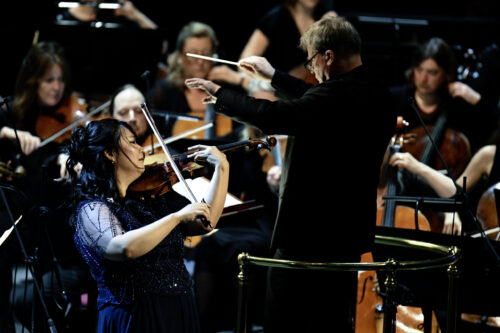
If Jolas’s score explored the power of nature, Sibelius’s Violin Concerto turned inwards, its drama unfolding through the voice of a single instrument. Sueye Park’s BBC Proms debut could hardly have been more assured. She had the measure of Sibelius’s demanding concerto from the outset, combining effortless technical command with an unforced musicality that never drew attention to virtuosity for its own sake. Her focused, silvery tone brought real warmth to the lyrical passages while retaining sufficient bite for the concerto’s more rugged writing.
Storgårds proved an ideal partner, maintaining exemplary balance between soloist and orchestra and allowing Sibelius’s richly detailed orchestral writing to emerge with remarkable clarity. The finale possessed all the necessary rhythmic drive without ever becoming merely a display piece, Park carrying it to an exhilarating conclusion that prompted a prolonged ovation from the capacity audience. Her encore, the Largo from Bach’s Third Sonata for Solo Violin, was beautifully judged, its poise and serenity holding the hall spellbound.
Few pieces of orchestral music are more instantly recognisable than the opening of Also sprach Zarathustra. For many, Strauss’s great sunrise will forever be associated with 2001: A Space Odyssey, yet hearing those famous opening bars in their proper context is a reminder that they form only the beginning of one of the composer’s most imaginative orchestral scores. The BBC chose to accompany them with dry ice and an elaborate light show. Whether it was really necessary is open to debate. Strauss’s score generates more than enough theatrical power of its own.
Once the visual distractions became irrelevant, the performance itself proved deeply satisfying. Storgårds balanced the score’s monumental climaxes with an impressive ear for detail, ensuring that Strauss’s luxuriant orchestration never became opaque. The woodwind excelled throughout, while leader Zoë Beyers brought elegance and poise to the violin solos in the Dance Song, one of the evening’s many orchestral highlights.
The closing pages were especially memorable. Twelve bells, sounding from high in the Gallery, created striking spatial effects before dissolving into Strauss’s extraordinary conclusion. Storgårds resisted any temptation to overstate the ending, allowing those final questioning harmonies simply to hang in the air. For all the familiarity of its celebrated opening, Also sprach Zarathustra remains a work that refuses easy answers, and Storgårds allowed its enigmatic conclusion to speak entirely for itself.
Keith McDonnell
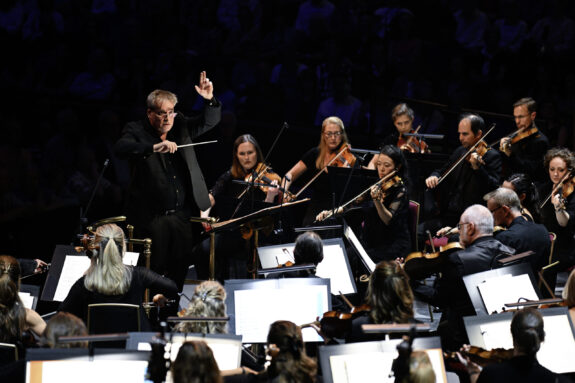
Featured Image: John Storgårds conducts the BBC Philharmonic © BBC/Chris Christodoulou