
 United Kingdom Beethoven: Orchestra of the Age of Enlightenment / Ádám Fischer (conductor). Queen Elizabeth Hall, London, 8.2.2026. (JR)
Beethoven – Symphony No.4, Op.60; Symphony No.5, Op.67
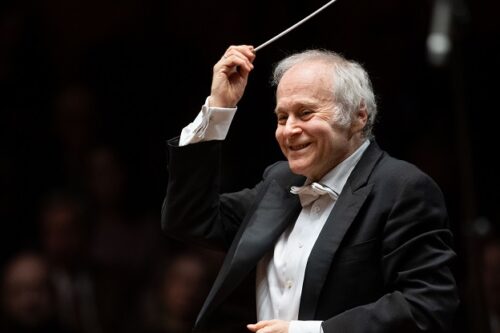
A packed Queen Elizabeth Hall was fortunate to witness scintillating performances of two Beethoven symphonies everyone knew well. We were fortunate too that venerable Hungarian conductor Ádám Fischer recovered from his fall at the end of last year (he cancelled concerts in November and December) to conduct, at 76 years of age, with the energy of a much younger man.
Ádám Fischer is general music director of the Austro-Hungarian Haydn Orchestra and principal conductor of both the Düsseldorf Symphony Orchestra and the Danish Chamber Orchestra. (He is the elder brother of Iván Fischer, founder and Music Director of the Budapest Festival Orchestra). The Orchestra of the Age of Enlightenment, one of Britain’s foremost period instrument orchestras enjoys playing familiar music differently, more in line with how the composer would have heard it in performance. The orchestra does not, in the main, use authentic instruments but historically available instruments – the contrabassoon used in this performance, from Vienna and numbered 001 by its Austrian maker, was an exception.
In a pre-concert talk, three orchestra members confirmed their respect for Ádám Fischer who has a clear personal interpretation of these works. Fischer suspends time in places which keeps the instrumentalists on their toes. Having said that, they confirmed that Fischer just lets the players play, does not dictate, and always has a smile on his face. That mutual respect came over loud and clear during both symphonies. There was never a moment of boredom for orchestra or audience, even though we knew these works well.
In the Fourth Symphony Fischer whipped up the energy after the opening Adagio, with incisive hard-stick timpani adding to the drama and excitement. The second movement Adagio was elegant and graceful (‘celestial sweetness’ as Berlioz succinctly put it). The Fourth is sometimes viewed as a poor cousin to its blockbuster neighbours but this scintillating performance dispelled that notion. Fischer played the symphony (without score, of course) for all that it is worth; with fast speeds, some sudden gear changes, unusual contrasts and accelerandos, extreme dynamics, and always full of verve and commitment. It was highly enjoyable, full of joy, wit and mischief – and, on hindsight, almost more impressive than the beefier Fifth Symphony which followed in the second half of the concert.
Beethoven’s Fifth Symphony did give the orchestra the opportunity to show off its secure brass and characterful woodwind. In the opening movement, after the famous four-note motif and opening bars, it was the two horn players (Richard Bayliss and Martin Lawrence) who displayed their prowess, ensuring the Allegro vivace was full of energy and attack. The cello section then shone in the elegant slow movement Andante con moto. The last two movements merged into one and were played at quite a lick – the string section (ably led by Matthew Truscott) in the pizzicato section and the bassoons (athletic work from Fergus Butt and Sally Jackson) had their work cut out to keep up with the conductor’s whirlwind pace. The timpanist, Adrian Bending, for whom I have nothing less that the utmost praise, managed the quietest of drum rolls before controlled explosive thwacks to lift us out of our comfy leather seats. Bending was also the informative compère in the pre-concert talk.
The lengthy ending to the Fifth showed off Beethoven’s novel use of three trombones (alto, tenor and bass), contrabassoon and piccolo – Fischer punching it out to bring this wonderful concert to an exhilarating and triumphant close. Standing ovation fully deserved.
May we hope for more Beethoven from Fischer and the OAE next season? Meanwhile, we can look forward to performances of Mozart’s final three symphonies (39, 40 and 41) at the Royal Festival Hall under the baton of Robin Ticciati (26th February).
John Rhodes
First, a disclaimer – I was performing in the orchestra. And there is no personal resentment as I am one of the horn players favourably named in the review. Thank you!
I am not sure of the distinction between ‘authentic’ and ‘historically available’ instruments. We use instruments that Beethoven would have recognised rather than their modern equivalents. But that doesn’t necessarily mean using instruments from the time, if that is the distinction you are making. After all, Beethoven’s players weren’t using 200 year old instruments. Mine was a 20 year old accurate copy of a horn from about 1790. Certainly authentic, like my colleagues…