
 United Kingdom JS Bach: Christian Tetzlaff (violin). Wigmore Hall, London 7.6.2026. (CSa)
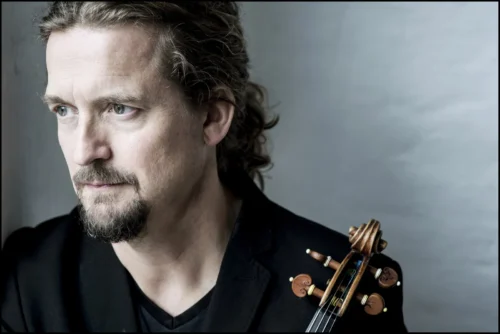
JS Bach – Sonata No.1 in G minor for violin BWV1001; Partita No.1 in B minor for violin BWV 1002; Sonata No.2 in A minor for violin BWV100; Partita No.2 in D minor for violin BWV 1004; Sonata No.3 for violin in C BWV1005; Partita No.3 in E for violin BWV1006
Max Reger’s famous dictum that Bach is the beginning and end of all music echoed over Wigmore Hall’s 125th anniversary celebrations. By featuring Bach’s solo violin works at both the inaugural and concluding concerts, the hall fittingly framed its birthday series with works which continue to represent the source and mountainous summit of Western music. While Alina Ibragimova gave us a memorable extract from Partita No.1 in B minor in the first of the recitals, (review here) the great German violinist Christian Tetzlaff dedicated the entirety of the last recital in this series to the three sonatas and three partitas written by Bach for the unaccompanied violin.
Tetzlaff, recently turned 60, has played the Bach cycle since he was 13 years old and recorded it twice, describes the experience as an unforgettable journey and the best thing ever written which incorporates every human emotion from the wildest joy to the deepest despair. He believes that that these pieces were composed as private expressions of the soul and were for Bach something of a personal prayer book.
Beyond the enormous technical and physical demands involved, the greatest challenge for any performer is to transform what feels like a deeply private dialogue into something shared, conveying the reflective and inward nature of these compositions to an audience. In a performance of exceptional technical brilliance and remarkable generosity, Tetzlaff, a virtuoso without vanity, kept everyone in the auditorium completely captivated. His artistry is intensely communicative yet there is nothing ostentatious about his Bach. He reaches the emotional core of the music without resorting to theatrical gestures, allowing the expression to emerge naturally from the score.
Tetzlaff previously performed on a 1770s Stradivarius but now prefers to play on a modern violin made by the German luthier Stefan-Peter Greiner modelled after a Guarneri del Gesù. Although not as lush or as mellow as one might expect from an older instrument, the sound is bright and laser-focused, and the dynamic range immense. Tetzlaff has pointed out that although he chooses to play on a modern instrument, he tries to speak the language of time.
He began the evening with Bach’s First Sonata No.1 in G minor. The slow-moving chords of Adagio, overlaid with exquisitely lyrical ornamented lines, unfolded with an air of quiet consolation while the multi-voiced intricacies of the second movement Fuga followed by lyrically inward Siciliana were made to seem effortless. One could sense a collective intake of breath as Tetzlaff drove the final movement Presto at breakneck speed, but never at the expense of note-perfect, diamond-tipped accuracy. Turning next to the glorious dances which comprise Partita No.1 in B minor, we were given a languorously tender Sarabande, a spirited Bourrée, and a pyrotechnically precise final Double. The first half concluded with Sonata No.2 in A minor. The expressive Grave was shaped with grace and played with the freedom of a bird in flight. A playful Fuga followed, floating seamlessly into a softly pulsing Andante, concluding with an Allegro distinguished by its exceptional clarity.
The musical journey continued after the interval with Partita No.2 in D minor. Written by Bach after the sudden death of his first wife Maria Barbara while he was away, the piece has been described by Tetzlaff as a set of death dances which are not just profound rhythmic structures, but which were for Bach five ways of dealing with loss. Partita No.2 is arguably the greatest of these monumental six solo works and Tetzlaff performed it with exceptional intensity. Intricate passages, sweeping arpeggios, and demanding triple stops were dispatched not only with technical mastery but with deep humanity. He infused the opening Allemande with warmth and tenderness, brought impeccable poise and control to the buoyant Courante, drew out a rich serenity in the Sarabande, and approached the Gigue with irrepressible vitality. The great Chaconne was delivered with exquisite refinement and proved profoundly moving. Without ever losing sight of the music’s dramatic arc, each phrase was shaped with delicate nuance, allowing even the subtlest tonal shifts to deepen and enrich the emotional impact.
Sonata No.3 BWV 1005 and Partita No.3 BWV 1006, which concluded the recital, form a contrasting pair of masterpieces; one serious and structurally complex, the other luminous and dance-like. In the sonata, Tetzlaff brought clarity and control to each of the four movements, brilliantly shaping its dense counterpoint. The Partita No.3, by comparison, was all bright exuberance, each of its seven dances filled with contrapuntal rigour, and vitality. As the last echoes of Bach disappeared into the ether, the Wigmore Hall remained hushed for several unforgettable moments before erupting in a wave of cheers and heartfelt applause – a fitting tribute to a performance of rare artistry and insight.
Chris Sallon