
 United States Aspen Music Festival 2026 [7]: Gil Shaham (violin), Akira Eguchi (piano). Harris Concert Hall, Aspen. (HS)
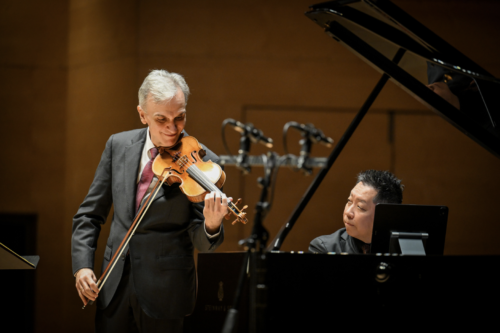
6.8.2026: Beethoven – Violin Sonata No.1 in D major; Violin Sonata No.2 in A major; Violin Sonata No.3 in E-flat major; Violin Sonata No.9 in A major, ‘Kreutzer’
8.8: Beethoven – Violin Sonata No.4 in A minor; Violin Sonata No.5 in F major, ‘Spring’; Violin Sonata No.10 in G major
Encore: Beethoven – Adagio from Violin Sonata No.6 in A major
11.8: Beethoven – Violin Sonata No.6 in A major; Violin Sonata No.7 in C minor; Violin Sonata No.8 in G major
Encore: Beethoven – Adagio espressivo from Violin Sonata No.10
Violinist Gil Shaham and pianist Akira Eguchi launched their odyssey through all ten of Beethoven’s violin sonatas on Thursday evening pleasantly enough with sprightly renderings of the First, Second and Third. The three gentler early sonatas could not have more clearly drawn, each creating a different eco-system.
Their delicacy and refinement lulled us before the thrills of No.9, the ‘Kreutzer’. It took off like a rocket, darting this way and that with all of Beethoven’s sudden changes in tempo, developing into a miraculously unified performance that celebrated every turn, every nuance, every panoply of expression. For the virtuosity and power required, it somehow kept focus and never went over the top.
At times it seemed as if Shaham’s violin and Eguchi’s piano had melded into a single instrument, their intent so beautifully in sync. ‘Kreutzer’ challenges both musicians to wheel repeatedly from Adagio sostenuto to Presto in the first movement. The extremes came excitingly and precisely, replete with details, never fussy but with added depth and meaning. In the second movement Andante, each variation found perfect bowings and piano textures to accentuate the differences. The Presto finale stepped lively without losing any of the thread. It was the best version of this sonata I can recall, live or on recordings.
The second recital reinforced the idea of each sonata being its own realm but also forged connections. They played No.4 and No.5 without pause, and it worked splendidly. The final measures of No.4 stepped back from storminess to a surprisingly gentle ending that had the audience holding its breath to decide when to applaud. Before anyone did, the players eased into the gently lilting opening of No.5 (‘Spring’). I asked around. No one could recall anyone else tying the two together, but the moment and the performances were magical.
The recital finished with No.10 which reached its dizzying theme-and-variations finale with finesse and impressive depth of expression. Their encore teased the upcoming final recital with a sublime reading of the Adagio from No.6.
That last recital continued to emphasize the distinctiveness of the three sonatas written between ‘Spring’ and ‘Kreutzer’. And as in the first two programs, they topped off the evening with the most rambunctious. The twists and turns of No.6 got things going in a relatively gentle mood, gaining depth with the Adagio that had been previewed as the encore on Saturday and expanding nicely with thoughtful changes of color in the finale’s theme and variations.
The C minor seriousness of No.7 managed to never feel heavy, instead gaining in nobility when it moved to the Adagio cantabile. The Scherzo lightened things up briefly before the finale’s dramatic pendulums between hushed and hollered.
Both of these sonatas benefited from the clarity and unity of intent that everything else had offered but No.8 went further. It took off like a whirlwind and never let up. As fast as the tempo was, we could hear every detail of the musical tornado. A surge of energy from both musicians spun through the call-and-response feeling in the first movement. The Minuet, which lived up to its marking of ‘grazioso’, served as a breather before the finale kicked into a romp of a rondo. The back-and-forth in that one was intoxicating to the finish.
Notable recordings and live performances of the Beethoven violin sonatas typically pair star violinists with famous pianists, emphasizing sheer virtuosity and the distinctiveness of the musical personalities involved. There is something especially rewarding from unified intent and so much attention to detail played with such ease and nimbleness. With Shaham and Eguchi, the excitement in Aspen was unforgettable.
Harvey Steiman