
 Ireland Mahler, Symphony No.2 ‘Resurrection’: Tara Erraught (soprano), Dame Sarah Connolly (mezzo-soprano), National Symphony Chorus Ireland (chorus director: David Young), National Symphony Orchestra Ireland / Alexander Shelley (conductor). National Concert Hall, Dublin, 11.9.2026. (RB)
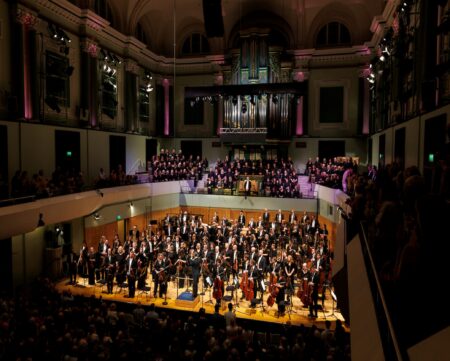
The National Symphony Orchestra Ireland (NSOI) launched their new season in spectacular fashion with a performance of Mahler’s titanic Second Symphony under the baton of their principal conductor, Alexander Shelley. The NSOI gave a stunning performance of Mahler’s Fifth Symphony at the end of May, so they certainly have form in this repertoire. They were aided in this performance by two distinguished soloists, Dame Sarah Connolly and Tara Erraught.
Mahler composed his Second Symphony between 1888 and 1894. He initially drafted a narrative programme for the work which described a hero’s struggle, death, and resurrection, but he later withdrew it. The symphony is a vast five‑movement work that charts a journey from death, doubt, and existential struggle to transfiguration and renewal. It begins with the standalone symphonic poem Totenfeier (‘Funeral Rites’) and culminates in a choral finale inspired by Friedrich Klopstock’s Die Auferstehung (‘Resurrection Ode’).
It was clear from this performance that Shelley was on top of every detail in the score and he had drilled his players to ensure there was a perfectly coordinated response to the work’s immense demands. In the opening movement, the NSOI’s lower strings brought a visceral, jagged sense of menace to the opening theme, setting the dark tone for the work. Shelley succeeded in achieving a vivid contrast between this opening material and the more expansive lyrical second subject. The music built to a series of thunderous climaxes which then scaled back into silence. These startling contrasts brought Mahler’s terrifying funeral rite vividly to life. The final downward chromatic scale plunged the National Concert Hall into silence.
In line with modern custom and practice, Shelley did not observe Mahler’s request for a five-minute interval between the first and second movement. The strings played the opening of the Ländler second movement with enormous cultivation and polish. The music summoned up images of the gilded ballrooms of fin de siècle Vienna. I was impressed with the degree of clarity which Shelley and the orchestra brought to the writing and the contrasts they evinced between the graceful opening and the more urgent material. The pizzicato episode in the strings was a moment of pure delight as violins and cellos played melodies and counter melodies with exquisite finesse. Catriona Ryan on the flute and Andreja Malir on the harp acquitted themselves well.
The third movement is a grotesque scherzo which expands on Mahler’s Des Knaben Wunderhorn song, ‘St Anthony’s Sermon to the Fish’. Several timpani strokes opened the movement before the violins entered with the winding lines which run through it. Shelley urged his players to give shape and definition to the lines. The NSOI’s principal clarinet, Matthew Billing, conjured up the eerie wailing sound Mahler demands in his klezmer-inspired solo, helping to create a surreal atmosphere. The NSOI’s percussionists added to the sardonic mix with the composer’s highly innovative effects. The movement built to a thunderous climax before the NSOI’s brass and percussion pierced through the hall in the terrifying ‘Cry of Despair’.
The fourth movement entitled, Urlicht (‘Primeval Light’) uses a traditional poem from Des Knaben Wunderhorn. Dame Sarah Connolly observed Mahler’s instruction to sing with solemnity and simplicity. She sang the beautiful vocal line with quiet conviction and conveyed the intense spirituality of the poem. Connolly engaged in a nuanced and affecting dialogue with the brass, strings and woodwind.
The finale of this symphony is over 30 minutes long and is very difficult to bring off in concert. Shelley successfully created a coherent narrative arc through the fragmented movement. The off-stage brass calls heralding the apocalypse were well coordinated with the main orchestral narrative and had a distinct and highly evocative quality. The ‘March of the Dead’ section built gradually to an apocalyptic climax where the full power of the NSOI was unleashed. The players succeeded in creating a massive vortex of sound although one always had the sense that Shelley was in control of proceedings. The music subsided into silence once more creating a feeling of expectation. The National Symphony Chorus Ireland emerged in hushed tones, displaying perfect intonation and tonal control. Their control of dynamics was particularly impressive as they gradually emerged from the silence. Connolly and Tara Erraught floated above the chorus as their voices wove together. The final section with organ and bells brought the work to its glorious final apotheosis.
Overall, this was a superb performance of this seminal work and a great way to kick off the new season.
Robert Beattie