
 United Kingdom Arriaga, Mozart, Haydn: Katherine Spencer (basset clarinet), Orchestra of the Age of Enlightenment / Kati Debretzeni (director). Warwick Arts Centre, Coventry, 28.1.2026. (CP)
Juan Crisóstomo de Arriaga – Overture in F minor, Op.1
Mozart – Clarinet Concerto in A major, K. 622; Eine kleine Nachtmusik, K. 525 (Serenade in G)
Michael Haydn – Divertimento in G major, P. 94
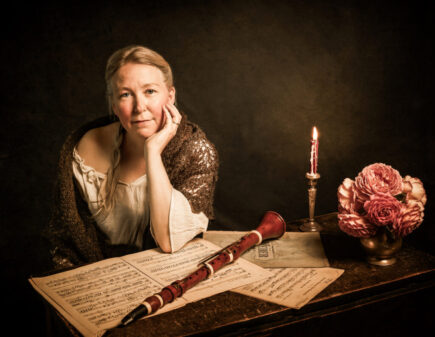
Thanks to an industrious and creative collaboration between previous professional clarinettist, Guy Cowley, now producer of handmade reproductions and his mentor, Daniel Banghan of Cambridge Woodwind Makers, Katherine Spencer has a rare basset clarinet. Based on the 1807 design of Jaques François Simiot, Katherine requested the use of boxwood and the inclusion of four additional semitone notes. The result is remarkable, the output of careful study of the composer’s score, the musician’s wishes and the expert artisanship of the manufacturer. This successful three party initiative in the twenty-first century replicates the friendship between Mozart, the clarinettist Anton Stadler and his woodworker Theodor Lotz. As principal clarinettist with the Orchestra of the Age of Enlightenment (OAE), Katherine is keen for this 40th anniversary season to be a memorable one. Judging by the response of the audience to her rare performance of Mozart’s Clarinet Concerto, the OAE team can confidently progress their tour to Queen Elizabeth Hall on Sunday 1 February.
Mozart’s concerto is just one of two works especially for the basset clarinet, the other is his Clarinet Quintet in A major, K. 581. Dressed in a fine bright red gown befitting the late eighteenth century, Katherine took her place on a podium with her flute and bassoon colleagues before she moved centre stage which she dominated for the next half an hour. She enjoyed a delightful Allegro duet with violin director Kati Debretzeni, using many a pause to great effect. Her stage presence is commanding, her control of pace exceptional with the fullest use of her unique instrument permitting the lowest notes probably ever heard in the Butterworth Hall in this concerto. Her opening to the Adagio was exceptionally gentle, the movement full of expressive phrasing with further careful pacing – a movement full of emotive feeling. Mozart’s score for the Rondo indicates a high tempo which Katherine observed, and she skilfully maximised the pauses, making them a hallmark of her presentation. She will be remembered for her delicate approach and a light touch. She clearly adores this new instrument, nicknamed ‘Grace, as it looks like an angel!’ Among her collection of 53 clarinets this one is her most prized.
A truly remarkable encore followed! Paying further tribute to Mozart’s talents, the orchestra chose to depict the drama of his opera, Die Entfuhrung aus dem Serail, with Act II aria excerpts supported by placards carried aloft across the stage by Sophie Adams, Projects Director with the orchestra. Placard expressions included Leave me alone, Thwack and Aieee as Osmin discovers he is no match for Blonde in a battle of wits. The pantomime continued with Blonde unable to resist a further dig at Osmin in Act III before he rushed defeated from the stage. This was great fun as an encore and an opportunity for the players to relax before tackling a work by Michael Haydn, brother of Joseph. Michael’s Divertimento in G is scored for a quintet of flute viola, violin, horn and cello with eight distinct parts required the horn player to make frequent changes of crook to his natural horn. This took time, disrupting the flow of the work and breaking the concentration of the audience. All very sad, given the fine playing by flautist Lisa Beznosiuk and viola and violin players.
However, Juan Crisóstomo de Arriaga’s Overture in F minor, which opened the programme, offered a fine natural horn fanfare to announce the arrival of this proud British period instrument orchestra. Basque-born Arriaga has been labelled the ‘Spanish Mozart’ for his huge but unfulfilled talent; he died at the age of 19. The young in the audience were well represented by West Coventry School, one of 20 Academy schools, with their current GCSE music students. Support staff expressed their keenness for their students to take advantage of every opportunity to witness such a remarkable orchestra and programme. A strike by many of the Academy staff, including the music teaching staff, ended yesterday. Fortunately, the strike did not interfere with this orchestra’s plans to visit a local school and community centre, part of their education initiative.
Mozart’s ability to combine elegance, wit and emotional depth is demonstrated in one of his most enduring works, Eine kleine Nachtmusik which when translated means, ‘a little night serenade’ – a title adapted for this programme to ‘a little light music’. The opening Allegro burst with confidence and clarity, the Romanze offered much warmth and the Menuetto offered elegance with the lively Rondo proving that Mozart’s enduring wit was still evident towards the end of his life as this was among his last works.
Clive Peacock