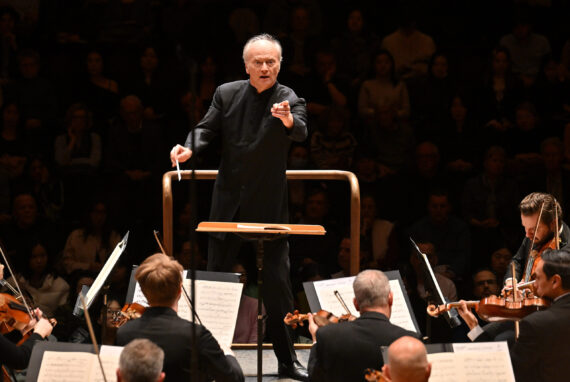
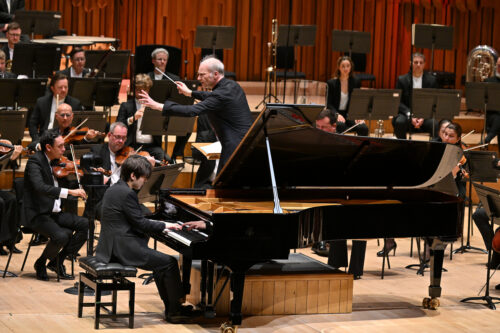
 United Kingdom Stravinsky, Chopin, Borodin: Seong-Jin Cho (piano), London Symphony Orchestra / Gianandrea Noseda (conductor). Barbican Hall, London, 12.2.2026. (JR)
Stravinsky – Divertimento from The Fairy’s Kiss (rev. 1949)
Chopin – Piano Concerto No.2, Op.21
Borodin – Symphony No.2
Stravinsky was well into his neo-Classical period when he composed the ballet music for The Fairy’s Kiss, a heartfelt tribute to Tchaikovsky. The ballet comprises some seventeen songs and piano pieces; the suite in this concert was devised several years after the ballet score and fuses long sections from each of the ballet’s four scenes. It does rather feel like a bag of sweets: small bites of melody. As a complete work, it is consequently rather uneven therefore but there is much to admire and amuse, especially the witty central sections. After a rather turgid start, it becomes a really enjoyable piece and an interesting 20-minute opening work to a concert. I can, however, see why it is not often played.
This concert marked the final performances in South Korean pianist Seong-Jun Cho’s LSO Artist Portrait series in the Barbican Hall. As a winner in 2015 of the International Chopin Piano Competition, and Artist-in-residence with the Berlin Philharmonic last season, much was expected of this performance of Chopin’s Second Piano Concerto and he did not disappoint. Predominantly young South Koreans came out in force for the event (the marvel of social media?) – Cho is still only in his very early thirties and clearly has a huge local fan club, the rapturous applause for him at the start and end of the concerto as evidence of that.
The popular Chopin concerto contains an abundance of themes, batted back and forth between soloist and orchestra. Never seemingly technically challenged, Cho wowed the audience with the rapid flurries of notes with the very lightest of touches; nor did he shy away from expressive power when called for. Noseda accompanied with fire for the boisterous passages and grace in the quieter sections: the orchestra impressed with plenty of sensitive playing in the woodwind and colour and silken sheen in the strings. The Larghetto was simply ravishing; the final jaunty Allegretto vivace was awesome, especially the section after the solo horn call towards the end of the work. Cho had the audience eating out of the palm of his hand: they were captivated. Cho has a clear close affinity to Chopin; and gave us a charming Chopin waltz (No.2, Op.70) by way of encore. (On April 2nd at 1pm you can catch him at St Luke’s for a lunchtime recital of Chopin waltzes or listen live on BBC Radio 3).
Borodin’s Second Symphony is an overtly dramatic work, its power and dynamism earning the work the nickname ‘Heroic’. The work is perfectly suited to Gianandrea Noseda’s liking of muscular works and frenetic pace. It is not often heard in the concert hall and is well worth an occasional outing. This performance was recorded for future release on LSO Live and will make a fine addition to anyone’s CD collection or downloads.
The opening movement, an Allegro moderato, is dark with thundering cellos and double basses conjuring up the world of Boris Godunov. After a charming Scherzo, it was Sérgio Pires (clarinet) and Timothy Jones (horn) who stole the show. The London Symphony Orchestra were at full pelt in the exuberant, rumbustious Finale. An enjoyable symphony to end an enjoyable concert. Much credit for this must go to the indefatigable Noseda, who has been the LSO’s Principal Guest Conductor for the last nine years. One notable and well-known quirk: at the podium he seems to manage with less intrusive pocket scores – he used these for both the Chopin and the Borodin, demonstrating his detailed knowledge of the scores. Noseda returns with the LSO on 26th February for a programme of Debussy, Berg and Rachmaninov.
John Rhodes
Featured Image: Gianandrea Noseda conducts the London Symphony Orchestra © LSO/Mark Allan