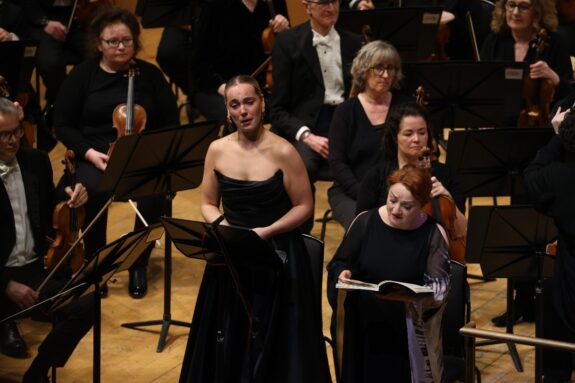
 Ireland Dvořák: Ailish Tynan (soprano), Niamh O’Sullivan (mezzo-soprano), Valentyn Dytiuk (tenor), Ashley Riches (bass), National Symphony Chorus Ireland (chorus director: David Young), National Symphony Orchestra / Jiří Rožeň (conductor). National Concert Hall, Dublin, 3.4.2026. (RB)
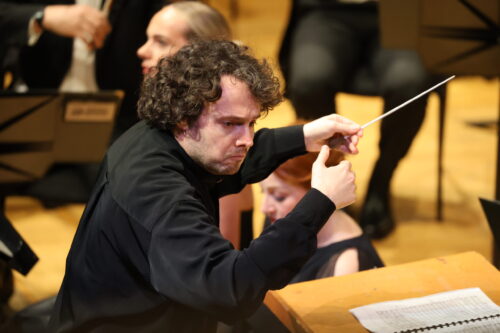
Dvořák – Stabat Mater
The National Symphony Orchestra and Chorus Ireland were joined by Czech conductor, Jiří Rožeň, for this Good Friday performance of Dvořák’s Stabat Mater. Irish Soprano, Alish Tynan, stepped in for Masabane Cecilia Rangwanasha who was indisposed.
Dvořák wrote his Stabat Mater over the course of 1876-77 as a reaction to the death of his first three children. It is a powerful and profoundly moving work imbued with sorrow and consolation. Following the work’s premiere in Prague in 1880, it was performed in London in 1883 and then at the Royal Albert Hall in London in 1884. It played a crucial role in helping Dvořák to achieve an international breakthrough. Nowadays, it is not performed as frequently in the concert hall as it once was, although there are a number of celebrated recordings, including several by the distinguished Czech conductor, Jiří Bĕlohlávek, who championed the work.
Jiří Rožeň is a passionate advocate of Czech music and his innate grasp of the Czech cultural idiom shone through in this performance. In the long opening movement, he displayed an excellent grasp of architecture, moving seamlessly from profound grief to heartfelt lyricism. He allowed the music to build to a series of intense and powerful climaxes. His pacing of the material was exemplary throughout: even in the more funereal, sombre moments of the work, he succeeded in sustaining the anguished feelings without allowing the tempo to drag. The balance of sound between the orchestra, choir and soloists was well judged.
The four soloists adopted slightly different approaches to the work. Ukrainian tenor, Valentyn Dytiuk, was the most overtly operatic of the four and his performance was redolent of Verdi while still conveying a strong sense of religious devotion. The two female soloists sang with a much cleaner sound, while the bass, Ashley Riches, was somewhere in the middle. Ideally, it is better for all four soloists to adopt a uniform approach although there was still much to admire in the solo performances.
It is always difficult to stand in for a performer who is indisposed; for the most part, Alish Tynan acquitted herself well. Her diction could have been a little clearer in the opening two movements and some of the top notes were not as effortless as they should be. I enjoyed her performance in ‘Fac, ut portem Christi mortem’ where she brought a tender Slavic lyricism to the music and she blended beautifully with Dytiuk. Niamh O’Sullivan was very good indeed and her diction was excellent throughout. She brought a rich warm tone to her solo in ‘Inflammatus et accensus’ and projected well above her orchestral partners. O’Sullivan and the National Symphony Orchestra Ireland (NSOI) did a superb job capturing the distinctive neo-Baroque feeling of this movement.
Valentyn Dytiuk skilfully negotiated Dvořák’s high vocal line without forcing the tone and his diction was generally very good. I liked his distinctive operatic sound and was impressed with the way he was able to apply this to the more intimate and devotional aspects of this work. He sang the solo line in ‘Fac me vere tecum flere’ with a heartfelt simplicity and beauty of tone. Ashley Riches gave a strong performance and was particularly impressive in the lower vocal register. He projected well above his orchestral partners although his diction could have been clearer on occasion. He brought a strong, sonorous tone to the bass solo in ‘Fac, ut ardeat’ and the contrast with the angelic choir accompanied by organ was very well handled.
The National Symphony Chorus Ireland had clearly been very well drilled by their chorus director, David Young. The diction and control of dynamics was superb throughout. In ‘Tui nati vulnerati’ they captured the grace and elegance of the music while at the same time conveying the luminous spirituality. Their a cappella singing in ‘Virgo virginum praeclara’ was exceptional, while the final fugal Amen had drive and dynamism. The NSOI also acquitted themselves well. The strings brought a grief-stricken intensity to the opening movement with its tortured chromaticism. Deborah Clifford’s mournful cor anglais ushered in ‘Quis est homo’ beautifully. The woodwind created intimate chamber music textures while skilfully accompanying and vying with the soloists. Rožeň coaxed some moments of gorgeous lyricism from the players, allowing Dvořák’s distinctive Czech voice to shine through.
Overall, this was a very musical and spiritual performance reflecting the spirit of Good Friday.
Robert Beattie \
Featured Image: Niamh O’Sullivan (mezzo-soprano), Alish Tynan (soprano) and the NSOI © National Concert Hall/Caoimhe O’Carroll