 United Kingdom BBC Proms 2026 [17] – Berlioz, Grande Messe des Morts, Op.5 (Requiem, 1837): Julien Henric (tenor), BBC Symphony Chorus, London Symphony Chorus and Orchestra / Sir Antonio Pappano (conductor). Royal Albert Hall, London, 15.8.2026. (CC)
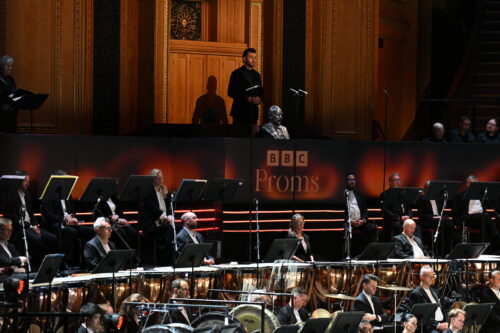
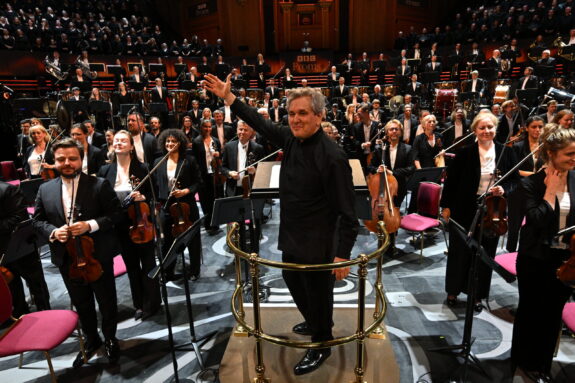
In a BBC Radio 3 interview tethered to this performance, Sir Antonio Pappano described Berlioz’s Grand Messe des Morts as a ‘Venus fly trap for conductors – you’re just drawn to it’. It is easy to see why: the sheer scale of ambition is like a mountain daring humans to climb it. Around 400 musicians graced the stage for this absolutely packed-out Prom, including around 250 singers and four brass ensembles, two below the singers, two with them, and 20 timpani shared between ten players. The wall of brass was almost as imposing as the wall of timpani.
But Pappano’s was a performance that emphasised the quiet as much as the ear-splitting. The strings’ opening ascent was rapt, the sopranos’ first entry during the Requiem aeternam as ethereal as one might hear, ever; their countermelody to ‘Dona eis, Domine’ was a moment of magic, too. Other traits quickly became apparent that were to define Pappano’s interpretation – he highlights the original in Berlioz’s scoring (while always directing it towards its Affekt: the timbral/harmonic lightening at the choir’s opening out at ‘luceat’, for example) as much as he highlights the piece’s rhythmic individualities (Berlioz’s wonderful syncopations and off-beat string ejaculations in the Lacrimosa). Pappano realises Berlioz’s layering of lines/groups, too, which enables more detail to come through.
Defining the work’s individual parts in this manner enabled a multicoloured tapestry to emerge: the super-smooth choral descent on ‘Christe eleison’ against the staccato ‘Kyrie’s became not only maximally effective, but notably Modern. This also requires a conductor who can hold the work’s (very) large-scale trajectory in his head, and this Pappano demonstrated fully – the closing return to the words ‘Requiem aeternam’ was more than satisfying.
The Dies irae is not a Verdian onslaught of infernal fury but requires celestial sopranos in perfect co-ordination with upper woodwind for the opening words – superb here (and you could hear a pin drop), the ensuing crescendo perfectly calibrated by Pappano over sinewy, entwining lines, the ‘Quantus tremor’ a vital waystation towards sonic overload, the first brass entrance annunciatory, majestic, a blossoming of magnificence, the Royal Albert Hall space soon saturated by apocalyptic brass. Congratulations to the gentlemen of the chorus for cutting through the assembled timpanists for their Tuba mirum; and how the horn stopping (rasping, really) imbued the ‘Mors stupebit’ with a sense of horror. But it was in the contrasts the drama really lay: ‘Judicanti responsura’ hushed, as ‘Creation rises again to answer to the judge’.
Some astonishing cor anglais playing from Thomas Hutchinson (first cor anglais player!) launches the bare-bones lines of the ‘Quid sum miser’ (What shall I, a wretch, then say?). The tenors’ control of line and balance with orchestra sounded exemplary in the hall (it sounds a bit less so in the broadcast, which is surely down to mic placement/mixing; the same goes for the tenors at the opening of the Lacrimosa, who absolutely gave it their all in the hall, and it projected perfectly). Again, the woodwind shone in their chords that launch the Rex tremendae, a movement which included the most perfectly judged shift of tempo at ‘Quis salvandos salvas gratis’ (Who freely savest the redeemed), a feat Pappano repeated between ‘De profundo lacu’ and the ‘Libera me’. Shadows abounded in this movement, which hovered around the choral counterpoint that launches the ‘Querens me’ (Seeking me, thou didst sit down wearily).
Pappano ensured Berlioz’s visionary scoring was always tethered to the text, and never mere effect (the low trills in the Lacrimosa a case in point). Part of that success was down to performance aspects: the violin line that opened the Offertorium was so sleek and together, the atmosphere fragile, enabling Berlioz’s additive technique to register fully, punctuated by perfectly together wind and brass; the upward couplets in the orchestra later in that same movement seemed to ‘worry’ at the music, creating a liminal space between the Light (accessed via the Archangel Michael) and the ‘Abyss’.
The revelation of the night was tenor Julien Henric, though, making his mark in his Proms debut with the most astonishing singing. Born in Lyon, Henric was a member of Geneva’s Grand Théâtre’s ‘Jeune Ensemble,’ 2020-22. He has recently sung at the Salzburg Festival and in Turin and goes on to sing the role of Laërte in Ambroise Thomas’s rarely staged Hamlet. After the darkness of the Hostias (with its simultaneous registral extremes between upper woodwind and trombones), the Sanctus felt like an ascent to the Heavens. Surrounded now by a halo of strings and flutes, Henric gently launched this most reverent of moments. ‘Deus Sabaoth’ certainly proved there his strength in his gentleness (arguably a touch too much in context), but this was a moment when time stopped, Berlioz at his most transcendent; the counterpoint that emerges in contrast was superbly done, rigorous, sopranos in particular solid as a rock. The unique sound of eight cymbal players brought a unique sound to this movement, certainly, but it is Henric who made his mark.
Perhaps the final choral ‘Hosanna in excelsis’ of the Sanctus suggests the scale of the final Agnus Dei, a sort of post-Handelian nod to oratorio. The final stretch, the ‘Agnus’, begins reverently, glowing woodwind chords complementing the choir’s lower voices, Berlioz seemingly experimenting with timbre and orchestral separation of register. But it was the grandeur of the return of the words ‘Requiem aeternam’ that brought power, shape and form.
An astonishing performance, a meeting of a master conductor, an orchestra on top form, choirs of stellar talent, and acoustic. My Prom of the season so far: much more to come, though.
Colin Clarke
Featured Image: Sir Antonio Pappano conducted Berlioz’s Requiem at the BBC Proms © BBC/Chris Christodoulou
What a brilliant knowledgeable review, I was there and loved it.
Absolutely!! So grateful I made the effort and secured a promming ticket in good time. My friend left it too late and missed out on a fabulous, truly outstanding performance.