
 United States Prokofiev, Rachmaninov: Alisa Weilerstein (cello), Pittsburgh Symphony Orchestra / Juraj Valčuha (conductor). Heinz Hall, Pittsburgh, 16.10.2026. (SJ)
Prokofiev – Sinfonia Concertante in E minor, Op.125
Encore: Bach – Sarabande from Cello Suite No.4 in E-flat major, BWV1010
Rachmaninov – Symphony No.2 in E minor, Op.27
Slovak-born conductor Juraj Valčuha returned to guest conduct the Pittsburgh Symphony Orchestra – the ensemble with which he made his US debut in 2005 – for an all-Russian program. Though the two large-scale works selected shared a geographic connection (and the key of E minor), they otherwise couldn’t have been more contrasting: from the acerbic realities of Soviet life as painted by Prokofiev to the richly Romantic canvas of Rachmaninov.
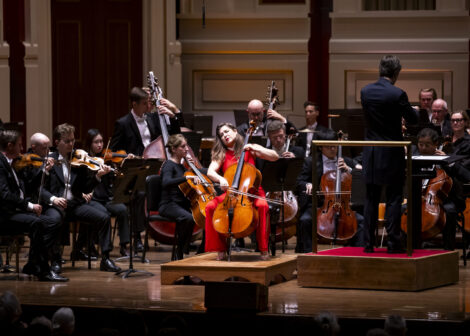
Prokofiev’s Sinfonia Concertante for cello and orchestra counts as one of the composer’s last major orchestral scores and is one of the most demanding works in the cello repertoire. Its composition history is almost as convoluted as the work itself, with origins that can be traced to a much earlier cello concerto that garnered a very tepid reception. At the urging of Mstislav Rostropovich, it underwent substantial revision and rework to morph into its final form. It has not appeared on a PSO program since a 1991 performance – and subsequent recording – by Yo-Yo Ma with Lorin Maazel. A challenging piece for performers and audience alike, soloist Alisa Weilerstein made a compelling case for it.
A bracing, caustic opening from the orchestra was unmistakably Prokofiev in temperament. Weilerstein answered with a robust, burnished tone, tinged with strife. She delivered the formidable solo part with bracing technique and artful phrasing, crisscrossing the range of her instrument with apparent effortlessness. Some playful passages provided contrast, but matters were generally bleak and grim, portraying a fractured reality. The expansive middle movement began with fiery, biting sarcasm, meandering into unexpected directions. Though somewhat unwieldy in conception, Weilerstein’s keen understanding of the work proved convincing.
The orchestra wasn’t relegated to mere accompaniment but served in equal partnership with the soloist. Extensive use of brass and percussion made the orchestration especially colorful, and the appearance of the celesta near the close had an otherworldly effect. Opening in world-weary stasis, the last movement pointed towards a haughty march and, in due course, a frenetic finale to close in a burst of virtuoso energy. As an encore, Weilerstein offered the meditative Sarabande from Bach’s Cello Suite No.4.
In Rachmaninov’s evergreen Symphony No.2, the angular gestures of Prokofiev became limber, flexible melodies and austerity gave way to lushness. A somber statement in the strings began, swelling to yearning passions. Valčuha shaped the symphony’s long arcs with a sure sense of pacing, guiding the PSO towards the work’s grand Romantic sweep. The scherzo was taken at a blazing tempo, perhaps a bit rushed, but the impassioned climaxes were suitably sumptuous. Michael Rusinek’s warm, long-breathed clarinet solo highlighted the sublime Adagio, a moment of repose before the vivacious finale wherein a distinctively Russian chorale led to the work’s final triumph.
Sam Jacobson