
 United Kingdom Mahler: BBC Symphony Orchestra / Philipp von Steinaecker (conductor). Barbican Hall, London, 27.11.2026. (AV-E)
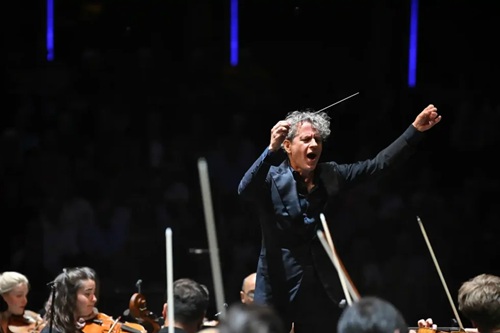
Mahler – Symphony No.5 in C minor
A change of conductor and symphony might have seemed an unwelcome double disappointment, but it proved a blessing in disguise. Semyon Bychkov, the originally advertised conductor, had to withdraw through illness, and Mahler’s Seventh Symphony was replaced by the Fifth. Philipp von Steinaecker stepped in at short notice, and the result was revelatory and rewarding. Judging by the Mahler performances I have heard from both conductors, von Steinaecker was palpably — and arguably — the more compelling conductor of the Fifth, with a consummate command of the score, an intensity of interpretation and a sheer conviction in the music-making that made this an absolutely outstanding account. I have never heard the BBC Symphony Orchestra play as well as it did under von Steinaecker.
The opening Trauermarsch had graveyard gravitas, swathed and saturated in menacing melancholia. Philip Cobb set the tragic tone with an opening trumpet solo of incisive attack and pulsating presence, its poignant potency and dreadful declamation evoking a funereal foreboding. Von Steinaecker paced the movement with a sure sense of its unfolding architecture, balancing the inexorable funeral-march tread and surging climaxes of clamorous catastrophe against pensive passages of stifled stillness. A commanding control of the wide dynamic range brought out the sharp and stark emotionally erratic contrasts between the tumultuous torrents and quieter, inward-looking episodes, the music shapeshifting from a roaring deluge to the most intimate introspection.
The Stürmisch bewegt erupted in a volcanic vortex of vivacious violence, a maniacal maelstrom of tsunami turbulence sweeping everything before it. Von Steinaecker drove the music forward with wild, ferocious force and febrile fervour. Murray Sedgwick’s timpani were a formidable presence, their dramatic rolls and sharply incisive strokes punctuating the movement’s violent upheavals and hammering home its climactic outbursts with visceral bite. Braying brass fanfares cut across the agitated string writing, while chattering woodwind figures darted through the texture, sharpening the movement’s restless, fractured character. The great chorale then burst forth in a blaze of brass splendour, bringing the movement to a cataclysmic culmination. Von Steinaecker magnificently mastered Mahler’s mercurial mutations between savage eruptions and tremulous tranquillity.
The Scherzo brought a complete change of character. Mahler’s dance writing is considerably more intricate than a straightforward waltz. The movement is built around a robust, distinctly Austrian Ländler, set against a more urbane Viennese waltz, which emerges in the first Trio, marked Etwas ruhiger (somewhat calmer). The distinction lies not simply in tempo but in their contrasting rhythmic emphases and styles. What I initially heard as a hybrid Ländler–Waltz seemed to owe something to von Steinaecker’s particular phrasing and shaping of the music, rather than to any actual merging of the two dance idioms. He retained something of the Viennese swing of the waltz, but his more rhythmically etched approach brought sharper definition to the contrasting rhythms, occasionally blurring the distinction between the rustic Ländler and the more urbane waltz. His use of portamento also contributed to the fluidity of the interpretation. The second Trio introduces a further, more pastoral dimension, with the prominent horn writing taking on an almost ruminative character. Mahler subsequently develops and interweaves the various musical ideas with considerable contrapuntal ingenuity, bringing the movement to an increasingly animated and complex coda. Remarkably, throughout this fifteen-minute movement the underlying metre remains consistently in 3/4, despite the extraordinary variety of rhythmic character and expression.
There is, too, a wider question about Mahler’s treatment of these forms. A waltz in Mahler does not necessarily mean an uncomplicated or conventional ballroom dance. His use of familiar dance idioms can carry layers of irony, parody and psychological ambiguity, sometimes exposing something darker beneath their outward gaiety. Theodor W. Adorno, the philosopher and musicologist, famously explored how Mahler takes nostalgic and seemingly trivial forms, such as the Ländler and waltz, and fractures and alienates them, exposing the anxiety beneath the surface of Viennese bourgeois culture. The mischievous mingling of earthy exuberance, urbane unctuousness and carnivalesque comedy gives Mahler’s dance writing a flamboyantly camp character, with bubbling burlesque buffoonery. Von Steinaecker brought considerable verve, rhythmic vitality and finesse to these shapeshifting dance characters.
The horn soloist stood beside von Steinaecker, as Mahler’s prominent corno obbligato part demands a presence beyond the ranks of the orchestra. The decision to position the player at the front was entirely vindicated: the sound carried with splendid clarity and projection, yet blended naturally with the orchestral texture without disturbing the balance. The horn playing was ripe and ravishing in its tonal richness, with a mellow, glowing sheen, superbly controlled phrasing and effortless security across the solo’s wide-ranging demands. The horn’s bold, swaggering calls and more reflective, ruminative passages were delivered with equal distinction. It was quite simply the finest performance of this homerically honeyed horn solo I have ever heard.
The Adagietto was a haven of serenity, its long-spun melody untouched by cloying saccharine sentimentality. Von Steinaecker avoided all languishing and luxuriating, allowing the music to breathe with an unforced tenderness and an almost weightless stillness. The strings traced its contours with silken restraint, while the harp contributed delicate, crystalline filigree. There was no self-indulgent lingering, but a rarefied, inward-looking eloquence, the music suspended in an atmosphere of exquisite quietude.
The Rondo-Finale burst into life with irrepressible verve, its contrapuntal intricacies dispatched with dazzling precision and buoyant élan. Von Steinaecker kept the music in perpetual motion, relishing its exuberant exchanges and sudden changes of direction without allowing the accumulating complexity to cloud the orchestral texture. The deep double basses gave the movement a particularly impressive foundation, their sonorous weight lending substance to the bubbling activity above. Brass fanfares and nimble woodwind entries animated the fugal writing, while the strings drove the music forward with tremendous energy. The final peroration gathered the orchestra into a triumphant blaze, bringing this outstanding performance to an exhilarating close.
The highly appreciative applause that followed went on for far longer than any I can recall at a concert. Yet the orchestra’s response was every bit as striking: the BBC Symphony Orchestra had plainly relished playing for von Steinaecker, throwing themselves into the performance with an evident enthusiasm and wholehearted commitment, and responding with playing of the highest calibre. The rapport between conductor and players was palpable, and I only hope that von Steinaecker will one day become the orchestra’s next Chief Conductor. While wishing Bychkov a speedy recovery, I am nevertheless glad that the good Lord gave us von Steinaecker in a paradigmatic performance of Mahler 5; it was, after all, part of God’s plan.
Alexander Verney-Elliott