
 United Kingdom Rimsky-Korsakov, Saint-Saëns, Rachmaninov: Javier Perianes (piano), Bournemouth Symphony Orchestra / Chloé Van Soeterstède (conductor). Lighthouse, Poole, 7.10.2026. (CK)
Rimsky-Korsakov – Overture, The Tsar’s Bride
Saint-Saëns – Piano Concerto No.5, ‘Egyptian’
Rachmaninov – Symphony No.1
In a friendly introduction in the programme book Chloé Van Soeterstède, the Bournemouth Symphony Orchestra’s lively Principal Guest Conductor, wrote that this season she is looking forward to introducing Lighthouse audiences to music that is less commonly played, though well deserving a hearing. Spot on; I had never heard any of these three pieces live in concert, and I probably hadn’t heard the first two at all. And whereas in London such a programme might attract a less than full house, the Bournemouth audience turned out in its usual droves to see and hear what Van Soeterstède and the orchestra were offering us.
Rimsky-Korsakov’s Verdian Overture The Tsar’s Bride prefaces a tale of tragedy and violence (Andrew Burn helpfully informed us in his programme note that ‘the opera ends with all its main protagonists dead’) in music of grim and martial temper; though it opens with attractive string writing supported by the horns (and interrupted by rasping trombones). There was a sinuous countertheme on the violins, and an ending of unexpected calm on strings, harp and flute. The BSO dispatched it with aplomb.
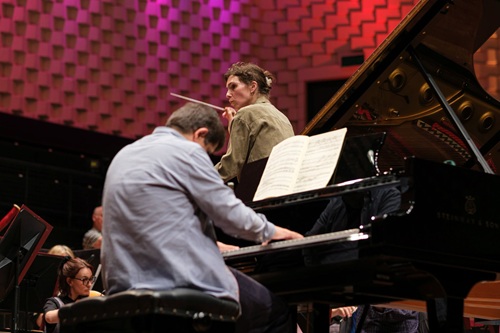
It was a delight to hear the young and engaging Spanish pianist Javier Perianes play Saint-Saëns’s Fifth Piano Concerto, known as the ‘Egyptian’ (it was written in Cairo). It begins with a bell-like theme played over pizzicato strings: but it wasn’t long before Perianes tore off in an explosion of pyrotechnics (one critic described Saint-Saëns’s concertos as ‘pleasant on the ear and murder on the fingers’). Music of sparkling brilliance, yes: though to my untutored ear a lot of it sounded like note-spinning. There was much to enjoy: a touch of the exotic in the Andante, with Ravelian glitter and athletic fantasy in the woodwind. The bell sounds, nagging away in the pianist’s right hand, put in regular appearances. The finale – apparently depicting a sea voyage – began splendidly, Perianes chugging away like ship’s engines before throwing out showers of notes like sparks. Astonishing virtuosity to the end; Perianes was cheered, and Van Soeterstède rightly brought the woodwind to their feet.
An enjoyable first half: but blown out of the water by the performance of Rachmaninov’s First Symphony that followed after the interval. It is a much tougher work than the universally beloved Second Symphony: and it is an astonishing work for a 22-year-old to have written (Mahler wrote his almost contemporary First Symphony between the ages of 24 and 28). We all know the story of its first performance, conducted by a probably inebriated Glazunov, which prompted the despairing composer to tear up the score: Robert Simpson, an early and convinced advocate of the work, wondered what music he might have gone on to write if the premiere had been a success.
This magnificent performance by Van Soeterstède and the Bournemouth Symphony Orchestra convinced me of the work’s greatness. So many beauties one could dwell on in each of the four movements: but the overwhelming impact of this performance stemmed from its singleness of vision, its strong, unwavering and uncompromising atmosphere, its dark energy, its brooding sense of something much stronger than melancholy. This unity is never monotony; the music journeys over a huge range of terrain. There is a motto theme which recurs in a variety of guises, always recognisable; a mysterious, shadowy scherzo; a slow movement strong on the lonely eloquence of solo woodwinds, gleams of light coming and going over a dark landscape…
Those with long memories may have recognised the beginning of the finale from its use as the theme tune for the BBC programme Panorama in the 1960s. ‘Beginning’ is too tame a word: there was a sense of theatre as the brass snapped to attention and the five percussionists sprang to their stations. What followed was magnificent: music of heft and brilliance, clad by Rachmaninov the superb orchestrator in colours of black and silver. Thoroughly Russian, with a Tchaikovskian sense of drama, including a doom-laden gong.
No praise can be too high for the playing of the BSO – the brass was outstanding – or for the clarity, tightness of focus and infallible sense of drama of Chloé Van Soeterstède’s conducting. Together they delivered the symphony to us with maximum force, whole and alive, and with forbidding power. It was unforgettable; and I am sure I was not the only one for whom this performance was something of an epiphany, throwing a bright – even harsh – light on the composer that Rachmaninov might have been. His popular works are popular for very good reasons; but this magnificent performance will perhaps make me listen differently to works like The Bells and The Isle of the Dead.
Wigglesworth’s Beethoven and Wagner last week (review here); Van Soeterstède’s Rachmaninov this. An extraordinary start to the Bournemouth Symphony Orchestra’s season. Of course they are limited by financial constraints: artistically there seem to be none.
Chris Kettle