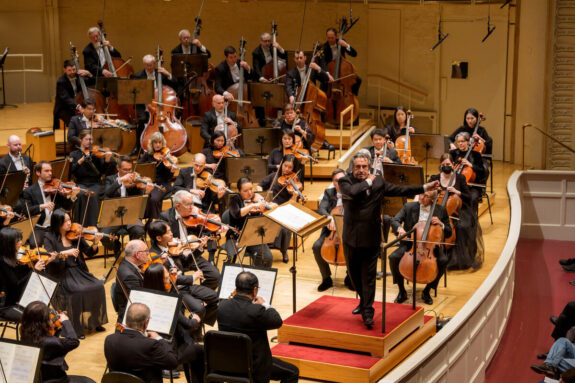
 United States Tchaikovsky, Rota: Chicago Symphony Orchestra / Riccardo Muti (conductor). Orchestra Hall, Chicago, 26.3.2026. (ZC)
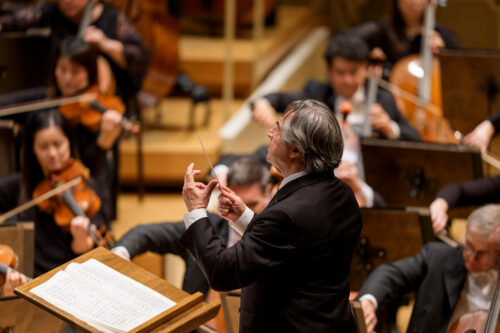
Tchaikovsky – Symphony No.3 in D major, ‘Polish’
Nino Rota – Suites from The Godfather and Il Gattopardo
Some classical works arrive on the concert stage like shy guests at a crowded party. They need a persuasive host to draw listeners in and reveal their charm lest the room move on to flashier attractions. Not every work carries the inevitable triumph of a Beethoven symphony, for example: his ‘Eroica’ can survive a rough night and still leave an audience on its feet. But Tchaikovsky’s own Third Symphony, known as the ‘Polish’, is not that kind of piece. It requires advocacy and at Chicago’s Orchestra Hall Riccardo Muti provided exactly that.
Muti has made a habit of championing works that sit just outside the standard repertory. Over his years with the Chicago Symphony Orchestra, he has turned his attention to Scriabin’s lush orchestral poems, unfamiliar Respighi works, Berlioz’s Lelio and all of Schubert’s symphonies, not just the two that need no advocate (the ‘Unfinished’ and the ‘Great’). Muti’s recent appearances with the CSO carry the feeling of a graceful farewell tour returning to favored scores. The ‘Polish’ Symphony fits this pattern perfectly. It is the least performed of Tchaikovsky’s six (or arguably seven) symphonies, and the CSO itself only first performed the work in 1940, under Igor Stravinsky’s baton. Its most recent outing at Orchestra Hall came in 2014 during one of Muti’s earlier Tchaikovsky surveys. Even principal trumpet Esteban Batallán marked the occasion on social media: with this performance, he had at last played all six in concert.
The Symphony No.3 stands apart from its siblings. Set in five movements rather than the usual four, it lacks the brooding intensity of the ‘Pathétique’ or the dramatic weight of the Fourth and Fifth. It is Tchaikovsky’s only symphony in a major key throughout, and it carries a lighter, more lyrical spirit. The nickname ‘Polish’ comes from the finale’s polonaise-style rhythm, though the music itself feels more broadly celebratory than strictly nationalistic.
The symphony opened with a low, funeral-style introduction passed through the orchestra like a rumor. It was immediately captivating: the playing had color, control and ensemble discipline in equal measure. From there, the first movement launched into a spirited sonata form, alternating major and minor themes with a sense of play that Muti shaped with care and confidence. The second and third movements belonged to the winds. The CSO’s first-desk players each had their moment, and they took full advantage. Tchaikovsky wrote for winds with uncommon sensitivity, and the CSO players provided a flowing, colorful counterpoint to the long string lines beneath them. It was chamber-music thinking applied to orchestral scale.
After a whirling, restless fourth movement, the short finale arrives like a burst of energy. Its polonaise rhythms demand sharpness, and the strings delivered razor-clean attacks. Yet Muti resisted turning the movement into pure spectacle. He continued to highlight inner details – brief exchanges among players and subtle color shifts. The result was raucous without being coarse. The audience rewarded the effort with applause after every movement, and the gesture felt genuine. A few patrons grew visibly restless by the third movement, but the enthusiasm spoke to the performance’s success. Muti had made a case for a work that rarely gets one.
After the intermission, the program moved to film music by Nino Rota. Muti studied with Rota in his youth, and the connection clearly matters to him. He offered suites drawn from Francis Ford Coppola’s The Godfather and Luchino Visconti’s masterpiece, Il Gattopardo (The Leopard). The pairing made sense. Both share a certain informal elegance with Tchaikovsky’s symphony, and neither one aspires to symphonic architecture. They unfold as sequences of memorable melodies and evocative scenes.
Muti seemed to enjoy himself here, especially the playful exchanges with concertmaster Robert Chen. Before the final piece, the conductor turned to the audience and asked, almost conversationally, whether anyone had seen The Leopard. A few hands went up. The moment broke the usual concert formality in a way that felt warm.
The playing was sumptuous. The love theme from The Godfather unfolded with a passion that could almost pass for Tchaikovsky in its sweeping lines and rich harmonies. Muti shaped each phrase with operatic instinct. He knows how to give melody space and weight without letting it sag. Music from The Leopard received similar treatment – elegant, nostalgic, occasionally bittersweet. At times the orchestral sound became so vivid that I found myself regretting that the films themselves were not projected behind the players.
Concerts like this remind us that the repertory is not a fixed canon. It lives through persuasion and through conductors willing to stand with conviction beside a deserving score. Muti has done this for decades. Here he did it once more, with clarity, affection and the unmistakable authority of long experience. The Chicago Symphony played at its considerable best. And a somewhat overlooked Tchaikovsky symphony received a performance that might, just possibly, earn it a few more hearings in the years ahead.
Zach Carstensen
Featured Image: Riccardo Muti leads the CSO in music by Tchaikovsky and Nino Rota © Todd Rosenberg