
 Germany Verdi, Requiem: Eleonora Buratto (soprano), Elīna Garanča (mezzo-soprano), Benjamin Bernheim (tenor), Riccardo Zanellato (bass), Saxon State Opera Chorus and Staatskapelle of Dresden / Daniele Gatti (conductor). Elbphilharmonie, Hamburg, 3.6.2926. (DM-D)
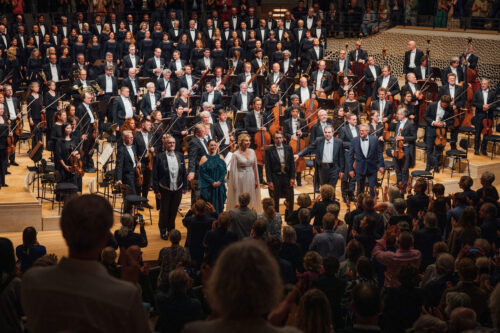
There are very rare occasions when you see, or in this case predominantly hear, a piece of great music and right from the start you sense that it cannot possibly be done better than this – differently yes, but surely this could very well be what the composer had in his mind in terms of the performance his dreams. For me, it was a 1979 Covent Garden Otello conducted by Carlos Kleiber starring Plácido Domingo and Margaret Price. In the same year Verdi’s Requiem at the Royal Albert Hall with Leontyne Price, Yvonne Minton, Veriano Luchetti, Martti Talvela and Sir Georg Solti conducting the London Philharmonic Orchestra. Christian Thielemann’s Lohengrin in Bayreuth last year came close (see review here), as does indeed this performance of Verdi’s Requiem. I was fortunate to attend it at the magnificent Elbphilharmonie in Hamburg. (See here for the review of the livestreamed performance from Barcelona a few weeks ago, with the same orchestra, conductor and soloists and a different chorus.)
The Sächsische Staatskapelle Dresden responded particularly well to their conductor, Daniele Gatti, who has worked with the orchestra on and off since 2000 – since 2024 he has been their chief conductor, following on from the 12-year-tenure in that role by Christian Thielemann. Gatti, conducting without a score, developed an overarching musical narrative for the 90-minute work, a broad encompassing structure, which provided a secure but never rigid perspective on the gamut of detail on display. Gatti’s interpretation was fuelled by the deepest respect for and admiration of the Requiem and its composer, approaching awe, and this he conveyed in the performance. This attitude enabled him to tease out both the gently floating melancholy inherent in music and requiem contexts, as well as the power of grief, the urgency of prayer and God’s endless power and grace. The overarching principles ensured the music never became superficially sentimental or bombastic.
The excellent vocal soloists and the very well-focused chorus were integral components of this heightened musical universe.
Eleonora Buratto was able to do much more than full justice to the range of emotions Verdi has created for the soprano to express. The gentle material was golden and velvety, beautifully blooming, with exquisite pianissimos and a wonderfully floated high B towards the end. Crescendos towards extended louder passages were well controlled, appeared effortless and allowed Buratto to soar with and above the orchestra. Elīna Garanča displayed a mesmerising higher range of her voice, crystal clear, carefully modulated and always fully rounded. Her lower register was astonishingly resonant across the full range of volume, resplendent with warmth and vocal bronze.
Benjamin Bernheim brought considerable vocal focus to the tenor part, singing with particular ardour and sheer inexhaustible reserves on long-sustained crescendos. Riccardo Zanellato impressed with the impeccable control of his huge bass, which allowed him to shape his delivery freely and beautifully across the full range of emotional impact.
At the end of this most impressive evening, the audience fully respected the long silence between the last sound and Gatti lowering his baton to signal the end of the performance.
Daniel Meyer-Dinkgräfe