
 United Kingdom Self and Handel: Kayla Nicol (violin), North Sea Voices and Orchestra, Ely Collegium / Susannah Self and Saba Safa (conductors). West Road Concert Hall, Cambridge 3.7.2026. (PC)
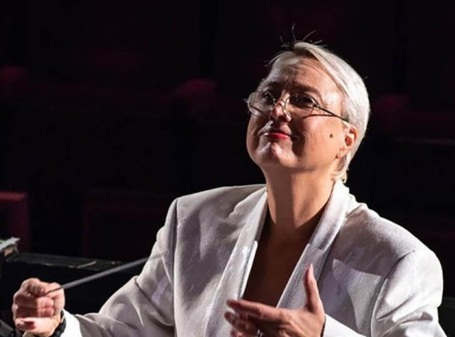
Susannah Self – Gloria (official premiere); Harbour (world premiere of original version for strings)
Handel – Dixit Dominus
Susannah Self’s Gloria (2025) is the latest of four choral settings of traditional Christian texts she has written in recent years. Her previous contributions to this series, Sea Requiem (2023), Stabat Mater (2024) and Magnificat (2025) were all first heard in Ely Cathedral and Gloria also received a preview performance in the Lady Chapel of that magnificent building last April. The official premiere of the Gloria took place in the West Road Concert Hall with North Sea Voices and Orchestra and Ely Collegium conducted by the composer.
Gloria draws upon the words of the traditional Anglican hymn of praise and also embraces a broader, more gnostic way of celebrating Creation through Nature by incorporating settings of non-liturgical sources, including verse by John Donne, the early epic poem the Bhagavad Gita and New Age text from the contemporary Shamanic poet, Seawolf. Lasting around 40 minutes, this substantial piece is written for soprano, alto, tenor and bass soloists, a solo vocal quintet, mixed choir, solo string quartet and string orchestra. A judicious use of subdivided string forces ensures the instrumental sonorities are varied and fresh-sounding, complementing effectively the diverse vocal groupings employed throughout the work.
Cast in fourteen sections, several following each other without a break and the last forming a climactic coda, Gloria was fluently crafted and exuberantly uplifting. All the contrasting episodes served as vital components of a compelling, overarching structural design. The opening ‘Gloria’ movement established the music’s inherently joyous spirit, offering radiantly eloquent string writing and subtle expressive shifts in vocal and choral lines, with effective use of the solo vocal quintet, who sang from within the choir. Introduced by shimmering tremolo strings, the fluid, harmonically adventurous soprano solo, ‘The light will shine’ was another highlight and the tenth number, ‘Just be’, for chorus and solo quintet also caught the ear with a lyrical introduction for string quartet followed by a directly communicative a cappella choral sequence.
The lasting impact was of a vibrant, vividly scored work that convincingly counterpoised buoyant exaltation with more intimate and thoughtful examples of thanksgiving. North Sea Voices and Orchestra and Ely Collegium impressed as a combined musical force and also in their characterful, spontaneous-sounding approach to solo passages. Susannah Self’s direction was inspiringly clear and supportive, always keeping the music flowing organically, while allowing individual gestures space to take effect. The hall’s sympathetic acoustics allowed the score’s numerous details to register, contributing towards a jubilant, triumphant premiere.
After the interval, Saba Safa conducted the first performance of the original, string orchestral version of Susannah Self’s Harbour (2022). Featuring a solo violinist who played throughout, this was a warmly melodic piece with the reflective tranquillity of a nocturne. Material shared between soloist and strings assisted in creating a sense of the violinist as first among equals rather than a lone protagonist pitted against the group. The music’s twists and turns never deflected from its calmly unfolding narrative, while the warmth of the string sonorities suggested the solace of sanctuary, particularly in the hushed, lightly-scored, haven-like closing bars. Kayla Nicol was an elegant, heartfelt soloist and she was ably supported by members of the North Sea Orchestra under Safa’s relaxed and lucid direction.
Susannah Self took up the baton again to round off the concert with an exhilarating account of Handel’s Dixit Dominus (1707). Boasting sprung rhythms and stylishly shaped phrasing, this exuberant performance crackled with nervous energy at times as the performers were pushed to the edge of their abilities to meet the youthful composer’s considerable technical demands. Poised, florid solos contrasted effectively with the sparkling choral numbers. Gaining immensely from the conductor’s brisk tempos, ear for contrapuntal detail and grasp of the music’s longer line, this vigorous reading made a dynamic conclusion to a richly rewarding musical event.
Paul Conway