 United States Aspen Music Festival 2026 [3]: Klein Music Tent, Harris Concert Hall, Aspen. (HS)
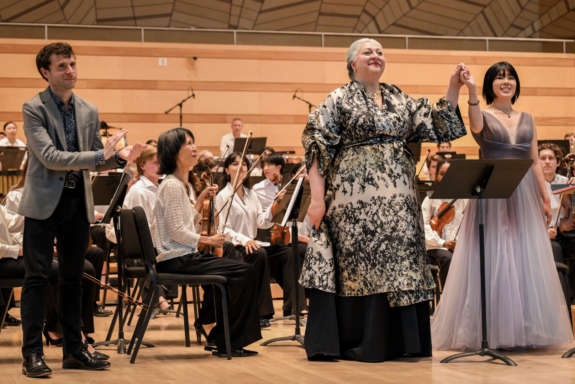
19.7.2026, Various: Christine Goerke, Chea Kang (sopranos), Augustin Hadelich (violin), Aspen Festival Orchestra / Cristian Măcelaru (conductor). Klein Music Tent
Dvořák – Carnival Overture
Matthew Aucoin – Two Thresholds (Symphony) (world premiere)
Barber – Violin Concerto
Encore: Robert Schumann – ‘Traumerei’
AspenEnescu – Romanian Rhapsody No.1 in A major
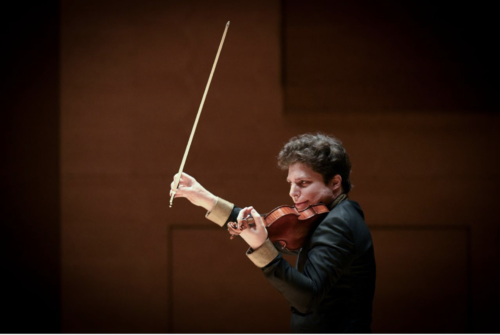
It is not news that Augustin Hadelich played an immaculate, astonishing Barber Violin Concerto on Sunday’s Aspen Festival Orchestra program, then topped it off with an encore of his sweet yet complex arrangement of Robert Schumann’s ‘Traumerei’. Hadelich channels the essence of music through his Guarnieri violin.
Matthew Aucoin’s stunningly ambitious first go at creating a symphony was something to chew on. Known primarily for vocal writing – his Eurydice made a big splash at Los Angeles Opera and Metropolitan Opera in this decade – he has always backed it up with imaginative writing for orchestra. The world premiere of the 35-minute Two Thresholds (Symphony) framed all that with vocal solos that become overlapping duets, beginning and ending the piece. The link between words and music is one of the thresholds in the title, and Mahler’s Fourth Symphony was an inspiration, the finale a gorgeous vision of heaven sung by a happy soprano. Aucoin’s text turned to his longtime muse, Pulitzer Prize-winning poet Jorie Graham (his former teacher). Poems of hers reflected impending death to start and a reverie on birth for the finale that managed to find solace in memories of mother.
In between, the orchestra swung between grinding sequences and oases of serenity that blended into each other ingeniously. Just when you think things are coming to a rest, the mood gradually swells up in the other direction. Colorful orchestrations turn slowly like a kaleidoscope. It is amazing writing and, for me, it’s going to require repeated hearings to understand it. The finale, introduced with bright bells and piercing light from the percussion, reached a series of glowing peaks. Duets, sung by the indomitable dramatic soprano Christine Goerke (who handled the low-lying lines written for mezzo-soprano Joyce DiDonato with ease) and a silver-voiced student soprano, Chea Kang, intertwined and harmonized as if it were a Richard Strauss opera.
At the end, holding hands, the singers found rapturous sound in the line ‘Only my soul walked everywhere without weight’. The bells, which had started out dropping by a fourth, landed on the tonic to underline a positive ending. (This was the first of at least four commissions planned for composers who have not yet written a symphony to do one. The rest have not been announced.)
After intermission, Hadelich’s Barber concerto delivered its own miraculous storytelling, highlighted by a sublime duet with oboist Elaine Douvas in the slow movement and Hadelich’s stunningly accurate and supple full-speed-ahead finale. Conductor Cristian Măcelaru could have tamped down the volume to allow the solo lines to come through more clearly both here and in the symphony, but the overall effect was full of life.
Both the opener, Dvořák’s Carnival Overture, and the program’s finale, Enescu’s Romanian Rhapsody in A major, benefited from intrepid rhythmic push, even if textures were sometimes awfully dense.
16.7.2026, Recital: Augustin Hadelich (violin). Harris Concert Hall
Telemann – Fantasie No.8 for Violin in E major
Perkinson – ‘Louisiana Blues Strut: A Cakewalk’, ‘Blue/s Forms’
Ysaÿe – Sonata for Unaccompanied Violin in G major
Paganini – Two selections from 24 Caprices
Tchaikovsky – Souvenir de Florence [Amy Lee (violin), Zhenwei Shi, Brady Mandeville (violas), Eric Kim, Alex Liu (cellos)]
Hadelich’s recital Thursday started with a lineup of short unaccompanied pieces that the violinist favors as encores, among them Coleridge-Taylor Perkinson’s jazzy ‘Louisiana Blues Strut: A Cakewalk’, ‘Blue/s Forms’, a Telemann fantasy and two Paganini Caprices. The best was Ysaÿe’s Sonata for Unaccompanied Violin in G major: no technical challenge was too much, and the fluency of the music was gripping.
With the help of students from the festival’s school and two outstanding pros – cellist Eric Kim and violist Zhenwei Shi – Tchaikovsky’s Souvenir de Florence delivered an exclamation point. The rhythms might have had a bit more emphasis, but the intertwining melodic lines were uplifting, and it ended with a flourish.
15.7.2026, Recital: Anthony Roth Costanzo (countertenor), Patrick Summers (piano). Harris Concert Hall
Handel – ‘Stille amare’ from Tolomeo, re d’Egitto; ‘Rompo i lacci’ from Flavio, re de’ Longobardi
Joel Thompson – ‘Supplication and Compensation’
Gregory Spears – ‘Fearsome this Night’ from Wolf-in-Skins
Liszt – ‘Im Rhein, im schönen Strome’, ‘Über allen Gipfeln ist Ruh’, ‘Hohe Liebe, No.1’, ‘Ihr Glocken von Marling’
Glass – ‘In the Arc of Your Mallet’ from Monsters of Grace
Gershwin – “The Man I Love”, ‘Embraceable You’, ‘I Got Rhythm’
Yvain – ‘My Man’
Encores: Bizet – ‘L’amour est un oiseau’ from Carmen; Mozart – ‘Crudel perche finora’ from Le nozze di Figaro
Countertenor deluxe Anthony Roth Costanzo, who stepped in to replace mezzo-soprano Joyce DiDonato in a recital after she suffered a rib injury, brought lots of fun to spruce up his hastily assembled program on Wednesday. With Aspen Opera Theater and VocalARTS co-director Patrick Summers at the piano, the program spanned serious Handel arias, a group of lovely contemporary songs and a joyful dip into the American songbook.
Best of all was a set of four songs by Liszt, especially the long, lithe lines of ‘Über allen Gipfeln’ and the simple resignation of ‘Hohe Liebe’, both perfect for Costanzo’s supple tone. I also marveled at the way the contemporary songs fit his voice and demeanor, in particular Joel Thompson’s ‘Supplication’ and Gregory Spears’s ‘Fearsome this Night’.
Costanzo can hold an audience by talking about what’s behind the songs or what they have meant to him. A group of Gershwin favorites completed the program nicely, but the encores were most worth the wait. First was the ‘Habañera’ from Bizet’s Carmen. Even better was an excerpt from his one-man version of Mozart’s Le nozze di Figaro. The Count/Susanna duet had him spinning from one spot to another as he switched from baritone to soprano, and it sent the audience home smiling.
17.7.2026, Bernstein, Fletcher: Robert McDuffie (violin), Darrett Adkins (cello), Tamara Mumford (mezzo-soprano), Aspen Chamber Symphony / Robert Spano (conductor). Klein Music Tent
Bernstein – Three Meditations from Mass; Symphony No.1, ‘Jeremiah’; Serenade after Plato’s Symposium
Alan Fletcher – An American Song
The other solo violinist of the weekend, Robert McDuffie, delivered some of his best playing here in Leonard Bernstein’s Serenade after Plato’s Symposium. Articulate and joyful, he and conductor Robert Spano outshone a program that began with a lugubrious cello version of music from Bernstein’s Mass and the downer ‘Jeremiah’ Symphony (the solo beautifully sung by Tamara Mumford).
There was even a poignant cast to festival CEO Alan Fletcher’s An American Song, an ingenious setting of ‘America the Beautiful’ overlaid with dozens of familiar American tunes.
13.7.2026, Loesser, Guys and Dolls (in concert): Aspen Festival Ensemble / Andy Einhorn (conductor) in cooperation with Theatre Aspen and DanceAspen. Klein Music Tent
Cast:
Sarah Brown – Julie Benko
Miss Adelaide – Bonnie Milligan
Nicely-Nicely – Michael James Scott
Nathan Detroit – Christopher Sieber
Sky Masterson – Ryan Vasquez
Frank Loesser’s 1950 Guys and Dolls was this year’s collaboration between the Festival and Theatre Aspen for a concert version of a Broadway musical. Six agile and beguiling dancers from DanceAspen joined in for extra flair, particularly in the ‘Havana’ sequence in Act I and a riotous ‘Crapshooter’s Dance’ in Act II. That, and the musical merits of a 47-piece orchestra bringing Loesser’s memorable score vividly to life, were the strongest elements of the performance.
The Broadway veterans in the cast delivered the songs well, especially scene-stealers Bonnie Milligan as a hefty Miss Adelaide and Michael James Scott as a lithe and cheeky Nicely-Nicely. The stars – Julie Benko as Sarah and Ryan Vasquez as her beau, Sky Masterson – were worthy, and Christopher Sieber as a bespectacled Nathan Detroit hit all the right marks.
As always with amplified vocal presentations in the vibrant space of the music tent, the problem was a sound system that reverberated so much that it blurred half the words sung and spoken in the rapid-fire style of this show. Conductor Andy Einhorn, who knows his way around Broadway music, set fast tempos that were true to the style but made it difficult to discern the funny internal rhymes and rhythms of the words.
Harvey Steiman
Featured Image: [front l-r] Composer Matthew Aucoin, sopranos Christine Goerke and Chea Kang © Diego Redel