 Ireland Bellini, Norma: Soloists, Chorus and Orchestra of Irish National Opera / Maurizio Benini (conductor). Gaiety Theatre, Dublin, 24.5.2026. (RB)
Bellini’s Norma is widely considered one of the pinnacles of the bel canto repertoire. The role of Norma is particularly linked in popular consciousness to Maria Callas, who sang it more than any other role. Many other great sopranos including Sutherland, Caballé and Bartoli have also put their own unique stamp on the role. This is the first time Irish National Opera have staged Norma or indeed any of Bellini’s works, so it represents a major milestone for the company.
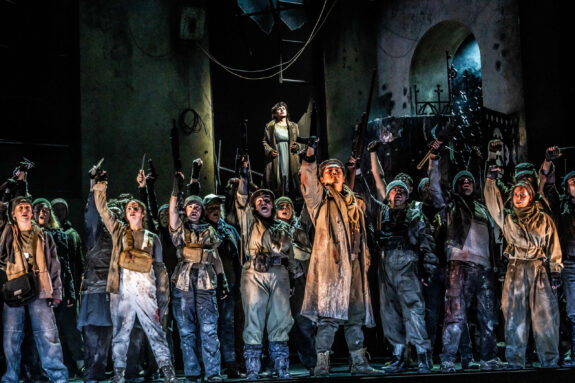
Orpha Phelan’s production transferred the action from a druid grove in 100BCE Gaul to a post-apocalyptic world. Madeline Boyd’s set was the interior of a dilapidated church at some unspecified point in the future. The stage of the Gaiety Theatre was strewn with rubbish, including discarded furniture, pallets, iron barriers and crates. It formed a makeshift defensive barricade for the chorus who stood behind it for the first few scenes before moving it to the sides of the stage for the subsequent scenes. The cast for the most part wore shoddy camouflage outfits, and they looked dirty and dishevelled. A few of them waved guns around and pointed rifles. Norma wore a more expensive-looking coat and when she took it off she revealed a bright blue dress with embroidered patterns underneath. It helped to mark out her specific role as a druid priestess in the opera. A strategically placed balcony provided a useful vantage point for her and other cast members to sing some of the big set piece numbers. Pollione and Flavio, who are the oppressive Romans in the original libretto, both had red Mohican haircuts to distinguish them from the rest of the cast.
The set and costumes succeeded in conjuring up a Mad Max-style, post-apocalyptic world. Given the conflict at the heart of this work between the druids and their Roman oppressors, it provided an interesting analogy through which to view the events of the opera. However, the groves, temples and braziers in the original libretto are an integral part of what makes this opera so appealing. Phelan’s desolate, post-apocalyptic world seemed rather at odds with this, and it did not conjure up the same mystical and ethereal atmosphere that one experiences in more traditional productions. The set was rather makeshift and scrappy, and it did not illuminate the work in new and original ways. Religion seemed to be largely absent in the dystopian setting which did not sit comfortably with some of the key scenes in the opera. While Phelan’s conception of the work was innovative and interesting the production designs did not really work.
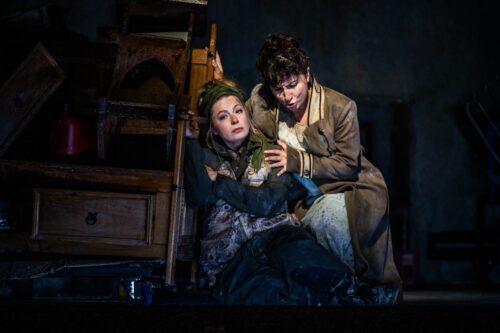
The performances from the two female leads were very good indeed. Norma is one of the most technically demanding roles in the whole of the operatic repertoire and Salome Jicia rose magnificently to the challenge. She was a composed and commanding presence in the opening scene. We witnessed the gradual disintegration of the character as she became enraged and jealous, harboured dark and homicidal thoughts about murdering her children, and plotted revenge against Pollione and Adalgisa. The transition to the final moment of self-sacrifice at the end of the opera was well handled. Jicia displayed enormous vocal stamina throughout. She did a brilliant job negotiating Bellini’s vocal fireworks and moved effortlessly from floating bel canto lines and exquisite filigree to passion and tenderness and moments of unbridled power with thrilling top notes. She sang ‘Casta diva’ with ravishing beauty of tone and the floating legato line was sublime, although I was not completely convinced by the phrasing at the climax to the aria.
Lyric soprano, Siobhan Stagg, was also hugely impressive in the role of Adalgisa. During the production, we witnessed her transition from an emotionally conflicted novice priestess to a loyal friend to Norma. Stagg sang with a mellifluous fluency and beauty of tone. Once again, Bellini’s demanding coloratura were brilliantly executed, and the long legato lines were executed with supreme elegance and refinement. Jicia and Stagg blended perfectly in the famous duets, creating a wonderful tapestry of sound. Both singers were highly attentive to phrasing and balance of sound. In the final section of the Act II duet, Norma’s two children (played by Ewan Gaster and Zoey Alvarano) played hopscotch and other games in front of the two female leads, helping to create a more upbeat mood.
Pollione is a difficult role to bring off as the character is thinly drawn and the vocal demands are considerable. I was not convinced that Mario Chang had fully got to grips with the role. There was no real chemistry between him and either of the female leads and there was scope for him to develop the character more. Chang was impressive in the upper vocal register, and the top notes were attacked with power and authority. His singing was less assured in the lower and middle registers, and there were moments when I would have welcomed greater dramatic weight and vocal heft. William Guanbo Su, Aaron O’Hare and Leanne Fitzgerald acquitted themselves well in their respective roles. Guanbo Su was particularly impressive in the role of Oroveso; he sang with a rich vocal resonance, cutting through large choral and orchestral forces.
Maurizio Benini is an expert in the bel canto repertoire, and he and the orchestra did a marvellous job in bringing Bellini’s glittering score to life. In the opening Sinfonia the driving orchestral tuttis contrasted well with the more lyrical themes in the woodwind. The strings created a wonderful cushion of sound in ‘Casta diva’ while the woodwind duets with the singers were exquisite. Benini excitingly whipped up the tension in the more dramatic scenes in the opera. The INO Chorus were firing on all cylinders throughout and they sang the opening military numbers with gusto and Act II’s famous ‘war chorus’ with elemental fury. By way of contrast, they provided a gorgeous hushed and prayerful backdrop to ‘Casta diva’.
Overall, I was not convinced the dystopian post-apocalyptic setting provided a suitable backdrop to the opera. However, the performances by the two female leads more than compensated for this and were nothing less than a vocal tour de force.
Robert Beattie
Featured Image: Salome Jicia (rear, Norma) with William Guanbo Su (front, Oroveso)
Creatives:
Director – Orpha Phelan
Set and Costume designer – Madeleine Boyd
Lighting designer – Matt Haskins
Choreographer – Adam Haigh
Chorus director – Richard McGrath
Cast:
Norma – Salome Jicia
Adalgisa – Siobhan Stagg
Pollione – Mario Chang
Oroveso – William Guanbo Su
Flavio – Aaron O’Hare
Clotilde – Leanne Fitzgerald
Norma’s Children – Ewan Gaster, Zoey Alvarano
I watched in full twice on consecutive days. Thoroughly enjoyed all of it. Is Pollione a heldentenor or a lyric role? The critics were scathing because the tenor was helden in a performance long ago by a Moldovan company.