
 United Kingdom Beethoven, Ravel, Bach and Saint-Saëns: Joshua Bell (violin), Peter Dugan (piano). Wigmore Hall, London, 17.11.2026. (CSa)
Beethoven – Violin Sonata No.5 in F ‘Spring’
Ravel – Violin Sonata No.2 in G
JS Bach – V. Chaconne from Partita No.2 in D minor, BWV 1004
Saint-Saẽns – Violin Sonata No.1 in D minor, Op.75
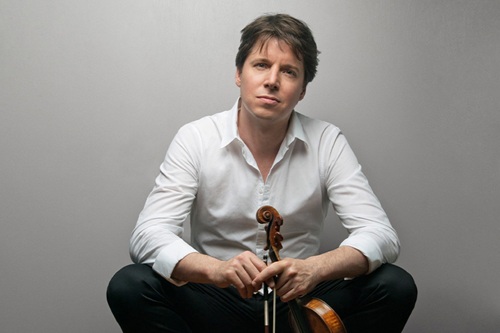
In an unexpectedly dramatic but fortunately short moment during the opening Allegro of Beethoven’s Spring Sonata, Joshua Bell halted the performance, brought his hand to his chest, and swiftly left the platform. Returning minutes later, he explained apologetically that he had suffered a rare episode of atrial fibrillation, but after his medication he was ready to carry on. ‘I must be getting old’ quipped the 58-year-old violinist – a remark that provoked a gentle laugh from a particularly sympathetic audience at Wigmore Hall. Taking up his Gibson ex-Huberman Stradivarius and together with pianist Peter Dugan, Bell started afresh. What followed was not only an interpretation of extraordinary freshness and vitality, but a model of composure, good humour and professionalism.
Bell belongs to the great Romantic tradition of violin playing, rich in tonal colour, cantabile phrasing and lyricism. He found an excellent partner in Peter Dugan, the young American pianist whose playing injected a propulsive energy and rhythmic verve of his own. Theirs was a finely balanced musical conversation, each alert to the other’s phrasing, nuancing and shifts of mood. This was particularly evident in a luminous account of the Adagio, an impish Scherzo and a particularly joyous final Allegro of the Spring Sonata, where the duo’s interplay was acutely responsive and fully alive to every subtlety.
Ravel’s Second Violin Sonata, written between 1923 and 1927, filled the remainder of the first half and inhabited a very different soundworld. In the first movement – an Allegretto – violin and piano deftly used Ravel’s unusual harmonic combinations to create a delicately coloured, almost mysterious tension which seemed to float across the auditorium. The blues-inflected Moderato – a reflection of Ravel’s infatuation with jazz – was sharply defined by catchy syncopation and some exceptionally well executed banjo-like pizzicato passages, while the third movement (Perpetuum mobile), taken at almost breakneck speed, witnessed a simply dazzling display of virtuosity.
After a well-deserved interval, Bell appeared alone to play what is generally regarded as one of greatest and most momentous achievements in the history of Western music, and certainly one of the most intellectually and physically challenging, Bach’s Chaconne from his Partita No.2. An otherwise intense and finely rendered performance was interrupted by a largely unnoticed mishap. Bell stopped playing after 10 minutes to adjust the D string of his violin which he pronounced to be a quarter down. ‘it’s not my lucky day!’ he told us ruefully, before pressing on masterfully to give a powerful and deeply moving conclusion.
The formal programme ended with Camille Saint-Saëns’s Violin Sonata No.1 in D minor. A virtuosic work of high Romanticism, its singing quality was perfectly suited to the rich, golden tone of Bell’s violin. In the turbulent opening Allegro agitato, he harnessed the restless urgency of the music while Dugan, listening intently to his partner, undergirded the violin’s melodies with energy and sensitivity. A tender and gorgeously lyrical Adagio gave way to an Allegretto of teasing, almost coquettish charm, which transitioned to a finale of such dazzling brilliance that only concertgoing etiquette kept one firmly in one’s seat. Once released, the ecstatic audience cried out for more and was duly rewarded with two encores: Fauré’s dreamy Après un rêve, and Wieniawski’s glittering Polonaise brillante. This was a glorious note on which to end an evening of heartfelt musicianship and seamless precision.
Chris Sallon