
 United Kingdom Haydn, Frank, and Schubert: Takács Quartet (Edward Dusinberre, Harumi Rhodes [violins], Richard O’Neill [viola], Mihai Marica [cello]). Wigmore Hall, London, 18.11.2026. (MB)
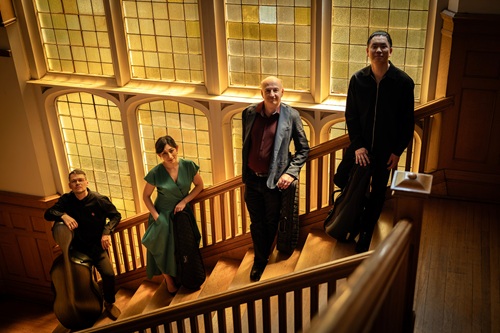
Haydn – String Quartet in C major, Op.20 No.2, Hob.III:32
Gabriela Lena Frank – Quijotadas
Schubert – String Quartet No.14 in D minor, D 810, ‘Death and the Maiden’
Imagine Western art music without Haydn. I cannot, still less so the string quartet. Nowhere are his seemingly limitless powers of invention more astounding. That was certainly how it felt in this Wigmore Hall performance of the C major quartet, Op.20 No.2, from the Takács Quartet. Character was immediately established at the beginning of every movement: both something we somehow recognised from prior acquaintance, whether we had it, and something new and refreshing. In the first movement, roots in the Baroque church sonata were unmistakeable, yet so was its contemporary invention: a true string quartet. Here was an emerging, emancipatory genre, yet to be codified and resisting any post hoc attempt to do so. Metre, rhythm, harmony were inseparable, music ever-changing and ever-consequent — nowhere more so than in a development section for which Sturm und Drang might be a starting-point but labels were beside the point. The second movement ‘spoke’ eloquently, roots again in earlier music, Baroque arioso most evident. This was a reading of great emotional and intellectual intensity, all arising from the notes, nothing applied from without. Minuet and Trio were likewise full of surprises, all making perfect sense after the event. Release was staggered in the finale: initially evident, fugue as flight (fuga), yet also screwing up sotto voce tension to require a second dose as the switch was flicked from monochrome to colour. Glorious Haydn.
Would that I could enthuse about Gabriela Lena Frank’s five-movement Quijotadas (2007), a Don Quixote tribute that wore influences too obviously on its sleeve and considerably outstayed its welcome. There was no doubting the commitment of the Takács Quartet’s performance, and certain passages had a vaguely quixotic interest, yet it was unclear what might be made of it without its programme. Maybe it would have made better sense as film music, since the narrative remained stubbornly external, whether in ‘mystery’, menace, or mountain song: vignettes and longer episodes with little in the way of musical cause.
We were on surer ground, permitting greater genuine flights of fantasy from it, in Schubert’s ‘Death and the Maiden’ Quartet. Its first movement began as it – and the work as a whole – meant to go on: urgent, dramatic, with a fine, generative balance between Classical and Romantic. Sonata form was experienced, rather than demonstrated, initially in a line closer to Mozart than to Haydn and Beethoven, but it was difficult not to liken it to Beethoven at the moment of return. In a sense, the coda encapsulated, even intensified all that had gone before: exhaustion, further defiance, further exhaustion. The theme of the second movement was almost hallucinatory, both austere and tearful, with just the right, brief hints at consolation. A fantastic first variation developed in a way that anticipated Robert Schumann, Romantics such as ETA Hoffmann, his Kreisler in particular, to mind, whilst retaining its Classical underpinning: in other words, a properly Schubertian relationship. Through the noble pathos of the second variation, the fury of the third, and post-Mozartian major-mode sweetness in the fourth, the final variation combined and dramatised tendencies and tensions from what had passed before. That in turn seemed to prefigure, perhaps even necessitate the interplay between dark, at times even grim Scherzo and haunted, yet more relaxed trio. A febrile, keenly directed tarantella danced, if anything more dangerously still, on the knife-edge between minor and major, possessed through rather than despite Schubert’s ambiguities.
Mark Berry