
 United States Schubert: Anne Sofie von Otter (mezzo-soprano), Kristian Bezuidenhout (fortepiano). Cal Performances, Hertz Hall, University of California Berkeley, 5.10.2025. (HS)
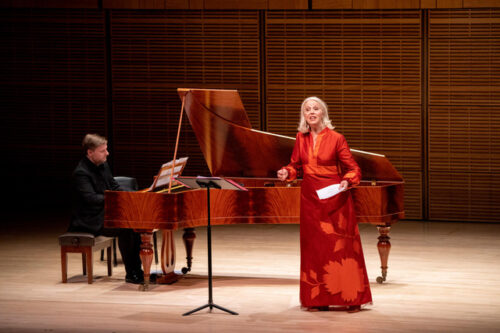
Schubert – Schwanengesang; Impromptu in C minor No.1; Andante from Sonata in A major
There is usually a tradeoff as classical singers age, not unlike star athletes who perfect their knowledge of the game even as their physical abilities diminish. Such great artists as Anne Sofie von Otter can hold an audience in thrall even as they turn 70.
Von Otter has always phrased the words with uncanny accuracy and understanding of their meaning, and that was the linchpin of her gemlike performance of Schubert’s Schwanengesang in the University of California Berkeley’s intimate Hertz Hall. If her voice no longer has the silky texture and savory piquancy in the upper range that it had in earlier years, she demonstrated how a lifetime of singing lieder can transmit what the music is all about with accuracy, tone and attitude.
A master of the fortepiano, Kristian Bezuidenhout provided just the right level of volume to let us hear every nuance of her voice. The tinkly texture of the slightly smaller fortepiano created a perfect balance with von Otter’s velvety high notes and still-impressive richness below, advantages that yielded the greatest emotional impact in the scarier songs in Schubert’s collection.
Written in 1828 and published posthumously in 1829, the 14 songs tend toward the lugubrious, most of them centering on impending death. Among those most often excerpted, ‘Ständchen’ beseeches a lover to please and ‘Abschied’ expresses regret at leaving home. Despite the songs’ veneer of positivity, Von Otter found the melancholy in both.
Even more striking were more frightening songs. ‘Die Stadt’ could serve as a hazy scene-setter in a murder film with its interplay of spooky harmonies and a last line about losing a lover in the scene described. The fit between the understated fortepiano and a voice that could float like hers was magical. In ‘Der Doppelgänger’, the low register viscerally emphasized the pain in the song’s description of a familiar figure and the horror at the realization that it actually was the narrator.
The contrast between these songs and more lyrical ones was especially telling. After her deft shading of the pastel scene-painting in ‘Frühlingssehnsucht’ and ‘Aufenthalt’, ‘In der Ferne’ followed with ominous warnings to beware of the perils of setting off on one’s own. The song ends with a musical climax, after which came the first of two breaks in which Bezuidenhout offered brief performances of Schubert keyboard works. The Impromptu in C minor No.1 extended the melancholy. Later, the Andante from the Sonata in A major delivered a sort of calm before the storm.
‘Das Fischermädchen’ preceded the Andante, von Otter sailing lightly over the gentle description of a young girl willing to risk stormy seas to bring in the fish, the reference to death in that one subtler than most of the other songs.
The entire program, without intermission, took only a bit over one hour. For her single encore, von Otter offered Schubert’s ‘Abschied von der Erde’, a spoken word ‘melodrama’, a death scene in a play for which Schubert supplied music. It not only fit the death-is-nigh theme of Schwanengesang, it underlined von Otter’s ability to convey drama and meaning without even singing a note.
Harvey Steiman